
Imagine catching a common cold. Your body doesn’t just sit idly by—it actively fights off the virus. This invisible defense is your immune system in action. Among its many components, the adaptive immune system plays a crucial role in recognizing and remembering harmful invaders, preparing your body for future infections.
Understanding the adaptive immune system is vital because it directly affects your health, recovery from illnesses, and the effectiveness of vaccines. For students, caregivers, and wellness enthusiasts, knowing how this system works can guide healthier lifestyle choices, preventive strategies, and treatment decisions.
In this article, you will learn what the adaptive immune system is, how it functions, its types, causes of dysfunction, symptoms, diagnosis, treatment, prevention, and its real-life impact. By the end, you will have a clear understanding of this vital health mechanism.
What is the Adaptive Immune System?
The adaptive immune system is a specialized part of your body’s defense that identifies and targets specific pathogens such as bacteria, viruses, or toxins. Unlike the innate immune system, which responds generally to threats, the adaptive immune system “remembers” invaders, enabling faster and stronger responses in future encounters.
In simple terms, it’s like a personal security system that not only fights intruders but also keeps a record of their “faces” for future protection.
Example: When you receive a flu shot, your adaptive immune system recognizes the weakened virus and creates memory cells. Later, if you encounter the real virus, your body responds quickly, often preventing illness. This memory is what makes vaccines effective.
Causes and Risk Factors
A healthy adaptive immune system depends on several factors. Certain conditions and lifestyle choices can weaken it, making you more prone to infections.
Main causes:
- Chronic illnesses such as diabetes or autoimmune diseases
- Immunodeficiency disorders
Lifestyle-related factors:
- Poor nutrition
- Lack of sleep
- Excessive stress
- Sedentary lifestyle
Genetic or environmental factors:
- Inherited immune system disorders
- Exposure to harmful chemicals or toxins
- Repeated infections during childhood
Symptoms and Warning Signs
Problems in the adaptive immune system may not be obvious at first, but some warning signs include:
Early symptoms:
- Frequent colds or infections
- Slow wound healing
- Persistent fatigue
Advanced symptoms:
- Severe infections that are difficult to treat
- Autoimmune reactions, such as joint pain or rashes
- Swollen lymph nodes or persistent fever
When to see a doctor:
- Recurrent or unusually severe infections
- Autoimmune symptoms
- Unexplained weight loss or chronic fatigue
How It Works in the Body
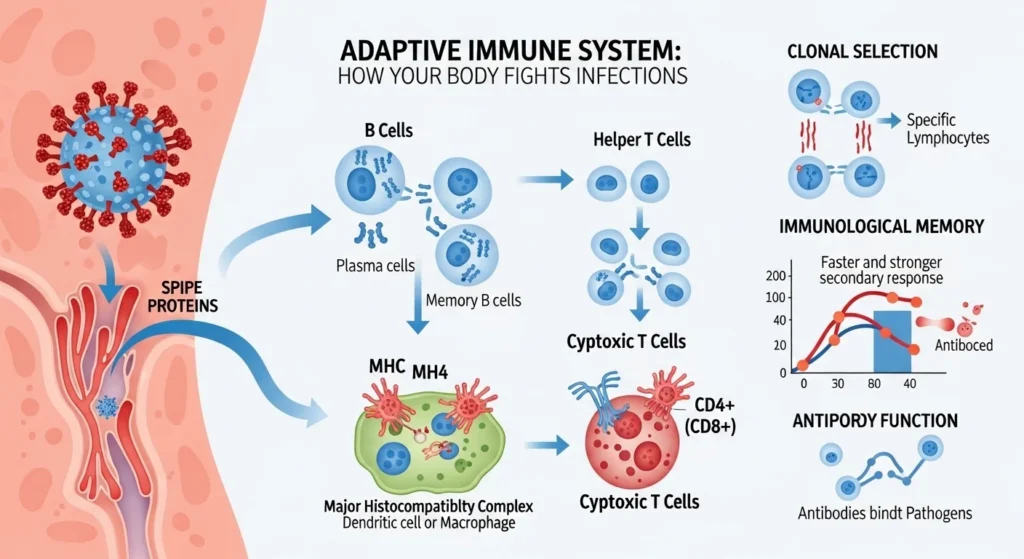
The adaptive immune system follows a step-by-step process:
- Recognition – Specialized white blood cells identify harmful invaders.
- Activation – Immune cells multiply and prepare to attack.
- Response – Antibodies and cytotoxic cells neutralize or destroy pathogens.
- Memory – Memory B and T cells store information about the invader for future defense.
Analogy: Think of it as a security team: the first time an intruder enters, the team learns their identity. Next time, the response is faster and more precise.
Types of Adaptive Immunity
Humoral Immunity
This type uses B cells to produce antibodies that circulate in the blood and lymph, neutralizing toxins and bacteria.
Example: After a hepatitis vaccine, your B cells produce antibodies that prevent infection.
Cellular Immunity
This involves T cells that directly attack infected or abnormal cells.
Example: Cytotoxic T cells destroy virus-infected cells, while helper T cells support other immune functions.
Both types work together for a strong, coordinated defense.
Diagnosis and Medical Tests
Doctors can evaluate the adaptive immune system through:
- Blood tests: Measure antibody levels and white blood cell counts.
- Immunoglobulin tests: Identify deficiencies in antibodies (IgG, IgA, IgM).
- Lymphocyte profiling: Checks the number and function of B and T cells.
Interpretation:
- Low antibody levels may indicate immune deficiency.
- Abnormal T-cell counts may suggest a risk for infections or autoimmune conditions.
Treatment Options
Adaptive immune system dysfunction can be managed with several approaches:
Medical treatments:
- Immunotherapy for autoimmune diseases or cancers
- Intravenous immunoglobulin (IVIG) for deficiencies
Medications:
- Anti-inflammatory drugs
- Immune modulators
Therapy options:
- Vaccinations to strengthen immunity
- Targeted therapy for autoimmune conditions
Lifestyle changes:
- Balanced diet rich in vitamins and minerals
- Regular exercise
- Adequate sleep
- Stress management techniques
Surgery (rare cases):
- Severe immune organ dysfunction (e.g., spleen removal)
Prevention Tips
Strengthening your adaptive immune system involves healthy habits:
- Diet: Eat fruits, vegetables, lean proteins, and whole grains
- Exercise: Regular moderate activity improves immune efficiency
- Sleep: Aim for 7–9 hours per night
- Mental wellness: Reduce stress through meditation, hobbies, and social support
- Vaccinations: Keep up with routine immunizations to train your immune system
Advantages and Disadvantages
Advantages:
- Provides long-term protection through immune memory
- Recognizes and fights specific pathogens efficiently
- Enhances vaccine effectiveness
Disadvantages:
- Can trigger autoimmune diseases if the system attacks healthy cells
- Slow initial response during first exposure to a new pathogen
- Overreaction may cause allergies or excessive inflammation
Applications / Real-Life Impact
The adaptive immune system affects daily life in several ways:
- Health: Prevents recurrent infections and severe illnesses
- Work and family: Reduces sick days and ensures better overall functioning
- Social and emotional: Boosts confidence and reduces anxiety about falling ill
Example: Children with well-trained adaptive immunity through vaccines and healthy lifestyles often experience fewer school absences.
Common Questions & Practical Solutions
Q1: Can the adaptive immune system be cured?
A: It is not a disease. Dysfunction can be managed with treatment and lifestyle adjustments.
Q2: Is it dangerous?
A: A weakened adaptive immune system increases infection risk and can complicate illnesses.
Q3: Can it be prevented?
A: You can strengthen it through diet, exercise, sleep, vaccinations, and stress management.
Future Trends and Medical Advances
Medical research continues to explore ways to enhance adaptive immunity:
- New vaccines: Targeting difficult viruses like HIV and emerging pathogens
- Immunotherapy: Treats cancer by boosting immune response
- Gene editing: Potential to correct inherited immune deficiencies
- Digital health: AI predicts immune responses for personalized care
- Preventive medicine: Focus on early detection and proactive immunity boosting
These innovations promise stronger protection and improved health outcomes in the coming decades.
Conclusion
The adaptive immune system is your body’s specialized defense, recognizing and remembering harmful invaders to keep you healthy. Understanding how it works helps prevent illness, guide treatment, and improve overall well-being. By maintaining a healthy lifestyle, staying up-to-date on vaccines, and monitoring symptoms, you can support your immune system and reduce the risk of severe infections. Awareness and early action are keys to staying resilient and healthy in daily life.