
Imagine waking up in the morning and feeling a sharp pain in your lower back when you try to get out of bed. Many people experience this uncomfortable situation at some point in their lives. Back pain can affect simple daily activities such as sitting, walking, lifting objects, or even sleeping comfortably.
The topic Causes of Back Pain and Relief is very important because back pain is one of the most common health problems worldwide. It affects people of all ages, including office workers, manual laborers, athletes, and elderly individuals. Poor posture, heavy lifting, long hours of sitting, and lack of exercise are some of the common reasons people experience back pain.
Back pain does not only affect physical health. It can also impact productivity, mood, and overall quality of life. When pain becomes chronic, it may limit a person’s ability to work, exercise, or perform daily tasks.
In this article, you will learn about the causes of back pain and relief, including common back pain causes, early back pain symptoms, and effective back pain treatment methods. You will also discover useful back pain prevention tips and understand the advantages and disadvantages of different treatment options.
What is Causes of Back Pain and Relief?
Medical Definition
Causes of Back Pain and Relief refers to the medical understanding of factors that lead to back pain and the methods used to reduce or eliminate that pain.
Simple Explanation
Back pain occurs when muscles, bones, nerves, or joints in the spine become strained, injured, or irritated. Relief methods aim to reduce discomfort and restore normal movement.
How It Affects the Body
The spine supports the body and allows movement such as bending, twisting, and lifting. When parts of the spine or surrounding muscles are damaged, pain signals are sent to the brain, causing discomfort or stiffness.
Practical Real-Life Example
For example, a person who sits at a computer for many hours with poor posture may develop lower back pain. Over time, this strain on the muscles can cause stiffness and pain that requires treatment and lifestyle changes.
Causes and Risk Factors
Understanding back pain causes helps prevent long-term problems.
Main Causes
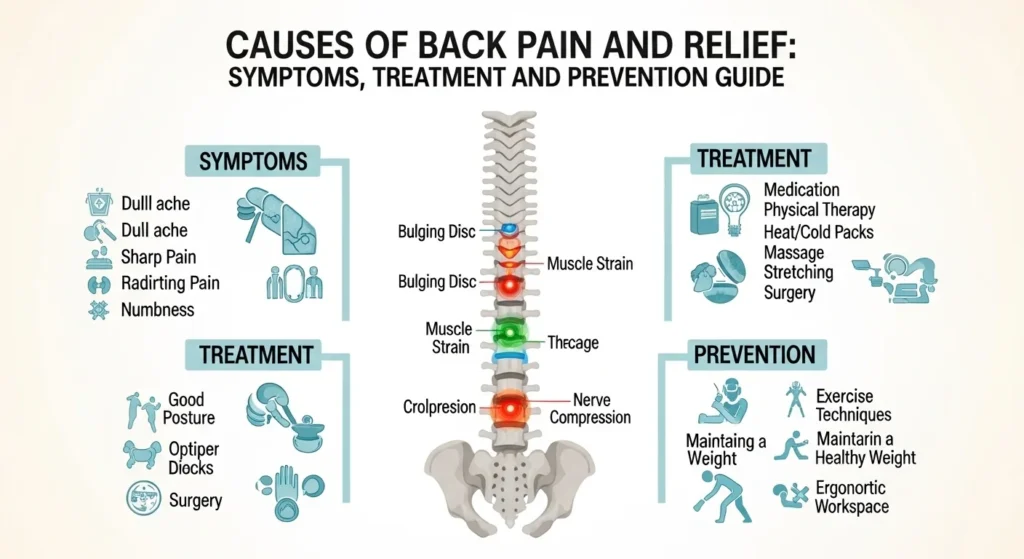
Some common causes of back pain include:
- Muscle strain from heavy lifting
- Sudden movements or injuries
- Herniated discs (when a spinal disc moves out of place)
- Poor posture while sitting or standing
- Degenerative spine conditions related to aging
Lifestyle-Related Factors
Certain daily habits increase the risk of back pain:
- Sitting for long hours without movement
- Lack of regular exercise
- Improper lifting techniques
- Obesity or excess body weight
Environmental or Genetic Factors
Other risk factors may include:
- Physically demanding jobs
- Family history of spine problems
- Poor ergonomic workplace setup
Recognizing these back pain causes allows individuals to take preventive action.
Symptoms and Warning Signs
Recognizing back pain symptoms early can help prevent severe complications.
Early Symptoms
Early signs of back pain may include:
- Mild stiffness in the lower back
- Muscle soreness after activity
- Difficulty bending or twisting
- Temporary discomfort when sitting or standing
Advanced Symptoms
If the condition worsens, symptoms may include:
- Persistent sharp or dull pain
- Pain spreading to the legs (sciatica)
- Numbness or tingling in the legs
- Limited movement of the spine
When to See a Doctor
Medical attention may be necessary if:
- Pain lasts more than a few weeks
- Pain becomes severe or constant
- Weakness or numbness appears in the legs
- Pain occurs after a fall or injury
Healthcare professionals can evaluate the condition and recommend proper back pain treatment.
How It Works in the Body
Understanding how back pain develops helps explain why relief methods are necessary.
Step-by-Step Process
- Muscle or Tissue Strain
Heavy lifting or sudden movements may strain muscles or ligaments.
- Inflammation
The injured area becomes inflamed, causing swelling and pain.
- Nerve Irritation
If a spinal disc presses on a nerve, it may cause pain that spreads to other areas.
- Reduced Mobility
Pain and stiffness make it difficult to move normally.
Simple Analogy
Think of the spine as a flexible support column for the body. If one part becomes damaged or strained, the entire structure may feel unstable or painful.
Types / Classification of Back Pain
Back pain can be classified based on the affected area.
Acute Back Pain
Acute back pain usually develops suddenly and lasts for a short period, typically a few days or weeks. It often occurs due to muscle strain or minor injury.
Chronic Back Pain
Chronic back pain lasts longer than three months and may result from long-term conditions such as arthritis or spinal disc problems.
Radicular Pain
This type occurs when a spinal nerve becomes compressed, causing pain that radiates down the leg.
Diagnosis and Medical Tests
Doctors use different methods to diagnose back pain.
Medical Evaluation
Healthcare providers may examine:
- Medical history
- Physical movement and posture
- Muscle strength and flexibility
Common Medical Tests
If necessary, doctors may recommend:
- X-rays to examine bone structure
- MRI scans to view soft tissues and discs
- CT scans for detailed spine images
- Nerve tests to detect nerve damage
Understanding Test Results
These tests help identify the exact cause of back pain and guide proper back pain treatment.
Treatment Options
There are several back pain treatment options depending on the severity of the condition.
Medical Treatments
Doctors may recommend:
- Pain-relief medications
- Anti-inflammatory medicines
- Muscle relaxants
These help reduce pain and inflammation.
Physical Therapy
Physical therapy helps strengthen back muscles and improve posture.
Common therapy techniques include:
- Stretching exercises
- Strength training
- Posture correction
Lifestyle Changes
Lifestyle adjustments can support recovery:
- Maintaining good posture
- Regular physical activity
- Avoiding heavy lifting
Surgery
Surgery may be recommended in rare cases when other treatments fail, especially for severe disc problems or nerve compression.
Prevention Tips
Practicing healthy habits can support back pain prevention.
Healthy Posture
- Sit with a straight back
- Use ergonomic chairs at work
- Avoid slouching while using devices
Exercise and Physical Activity
Regular exercise helps strengthen muscles that support the spine.
Helpful exercises include:
- Walking
- Swimming
- Yoga or stretching
Diet and Weight Management
Maintaining a healthy body weight reduces pressure on the spine.
A balanced diet supports bone and muscle health.
Stress Management
Mental stress can cause muscle tension, which may worsen back pain. Relaxation techniques may help reduce tension.
Advantages and Disadvantages
Understanding back pain advantages and disadvantages of treatment options helps patients make informed decisions.
Advantages of Early Treatment
- Faster recovery
- Reduced risk of chronic pain
- Improved mobility and comfort
- Better overall quality of life
Disadvantages of Ignoring Back Pain
Ignoring symptoms may lead to:
- Long-term spine problems
- Nerve damage
- Reduced ability to perform daily activities
Timely care improves recovery outcomes.
Applications / Real-Life Impact
Back pain can significantly affect everyday life.
Impact on Daily Activities
Simple actions such as walking, bending, or sitting may become difficult.
Impact on Work
Back pain can reduce productivity, especially in jobs that require physical activity or long hours of sitting.
Social and Emotional Effects
Chronic pain may affect mood, sleep quality, and emotional well-being.
Proper back pain treatment helps restore comfort and independence.
Common Questions & Practical Solutions
Q1: Can back pain be cured completely?
Many cases of back pain improve with proper treatment, exercise, and lifestyle changes.
Q2: Is back pain dangerous?
Most back pain is not serious, but persistent or severe pain should be evaluated by a healthcare professional.
Q3: Can back pain be prevented?
Yes. Maintaining good posture, regular exercise, and proper lifting techniques can support back pain prevention.
Future Trends and Medical Advances
Medical research continues to improve treatments for back pain.
Advanced Physical Therapy Techniques
New rehabilitation methods are helping patients recover faster.
Improved Imaging Technology
Advanced imaging tools allow doctors to diagnose spine problems more accurately.
Regenerative Medicine
Researchers are studying therapies that may help repair damaged spinal tissues.
Digital Health Monitoring
Wearable devices and mobile applications may help track posture and physical activity to support back health.
Conclusion
Understanding the causes of back pain and relief is important for maintaining long-term health and mobility. Back pain can occur due to muscle strain, poor posture, injuries, or age-related changes in the spine.
Recognizing back pain symptoms early allows individuals to seek appropriate back pain treatment and avoid complications. Many treatment options, including physical therapy, lifestyle changes, and medical care, can help relieve pain and restore normal movement.
Practicing healthy habits such as maintaining good posture, exercising regularly, and managing body weight can greatly improve back pain prevention. If back pain persists or becomes severe, consulting a qualified healthcare professional is the safest approach.
By understanding the causes and taking preventive measures, individuals can reduce the risk of chronic pain and maintain a healthier, more active lifestyle.