
Imagine brushing your hair in the morning and noticing a large amount of hair on the brush. For many people, this situation can be stressful and worrying. Hair is an important part of personal appearance, and excessive hair loss often affects confidence and emotional well-being.
Hair fall is a very common health concern affecting both men and women. It can happen at any age due to different reasons such as poor nutrition, stress, hormonal changes, genetics, or medical conditions. While losing a small amount of hair daily is normal, excessive hair loss may indicate an underlying problem that needs attention.
Understanding the causes of hair fall and solutions is important because early care can prevent further damage and improve hair health. Many people ignore early signs of hair loss until the problem becomes more noticeable.
In this article, you will learn about the causes of hair fall and solutions, including the main reasons behind hair loss, common symptoms, diagnosis methods, treatment options, prevention tips, and modern medical advances. This guide will help you understand how to manage hair fall safely and effectively while maintaining healthy hair.
2. What is Causes of Hair Fall and Solutions?
The term causes of hair fall and solutions refers to understanding why hair loss happens and how it can be prevented or treated.
Hair fall, medically called hair loss or alopecia, occurs when hair sheds faster than it grows. Hair normally grows in cycles, and losing about 50–100 hairs per day is considered normal. However, when the hair growth cycle becomes disturbed, excessive hair fall may occur.
Hair grows from tiny structures in the skin called hair follicles. These follicles produce hair through a natural growth process. When follicles become weak or damaged, hair becomes thin, breaks easily, or stops growing.
For example, a person experiencing high stress for several months may notice increased hair shedding while washing or combing their hair. Similarly, poor diet lacking vitamins and minerals can weaken hair roots and cause hair fall.
Understanding the causes of hair fall and solutions helps individuals identify the problem early and take steps to restore healthy hair growth.
3. Causes and Risk Factors
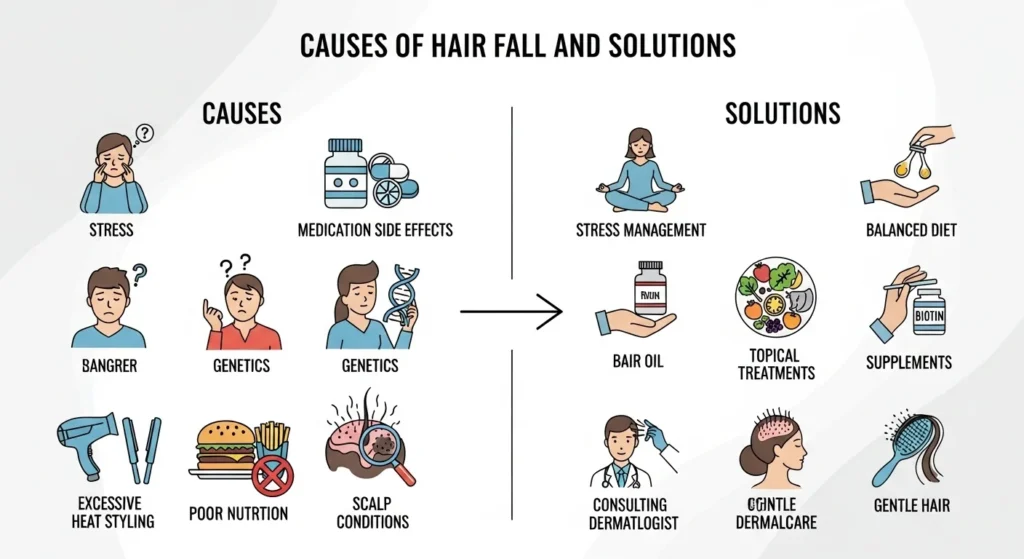
There are many hair fall causes that affect people differently. These can be related to lifestyle, health conditions, genetics, or environmental factors.
Hormonal Changes
Hormones play an important role in hair growth.
Hormonal imbalance can occur due to:
- Pregnancy
- Thyroid disorders
- Menopause
- Hormonal medications
These changes may weaken hair follicles and increase hair loss.
Poor Nutrition
Hair requires nutrients to grow properly. Lack of important nutrients can cause hair thinning.
Common nutritional deficiencies include:
- Iron deficiency
- Protein deficiency
- Vitamin D deficiency
- Vitamin B12 deficiency
- Zinc deficiency
Stress
Physical or emotional stress can disrupt the hair growth cycle. Severe stress may cause sudden hair shedding after a few months.
Genetic Factors
Family history plays a major role in hair loss. Genetic hair loss is commonly known as pattern baldness.
Medical Conditions
Certain health problems can trigger hair fall, including:
- Thyroid disease
- Scalp infections
- Autoimmune disorders
- Hormonal disorders
Hair Care Habits
Some daily habits may damage hair roots:
- Frequent use of heat styling tools
- Tight hairstyles
- Harsh chemical treatments
- Excessive hair coloring
Environmental Factors
Pollution, poor water quality, and UV radiation can weaken hair and scalp health.
4. Symptoms and Warning Signs
Recognizing hair fall symptoms early can help prevent severe hair loss.
Early Symptoms
- Increased hair shedding during combing
- Hair strands on pillow or clothes
- Gradual thinning of hair
- Weak and brittle hair
Advanced Symptoms
- Visible scalp through hair
- Receding hairline
- Bald patches
- Significant decrease in hair volume
When to See a Doctor
Consult a healthcare professional if:
- Hair loss is sudden or severe
- Bald patches appear
- Hair fall occurs with itching or pain
- Hair loss follows illness or medication
Early diagnosis helps identify the underlying cause and improve treatment success.
5. How Hair Loss Works in the Body
To understand the causes of hair fall and solutions, it is helpful to understand the hair growth cycle.
Hair grows in three stages:
1. Anagen Phase (Growth Phase)
This is the active growth stage where hair grows continuously for several years.
2. Catagen Phase (Transition Phase)
Hair stops growing and follicles shrink during this short phase.
3. Telogen Phase (Resting Phase)
Hair eventually falls out and new hair begins to grow.
If too many hair follicles enter the resting phase early, excessive hair fall may occur.
Think of hair growth like a garden. If the soil lacks nutrients or water, plants stop growing properly. Similarly, hair follicles need proper nutrition and care to remain healthy.
6. Types of Hair Loss
Hair loss can occur in different forms. Understanding the types helps determine appropriate hair fall treatment.
Androgenetic Alopecia
This is the most common type of hair loss.
It is related to genetics and hormones and often causes:
- Male pattern baldness
- Female pattern thinning
Telogen Effluvium
This condition occurs when many hair follicles enter the resting phase due to stress, illness, or nutritional deficiency.
Hair loss is usually temporary.
Alopecia Areata
This is an autoimmune condition where the immune system attacks hair follicles.
It often causes sudden round bald patches.
Traction Alopecia
This type occurs due to tight hairstyles that pull on hair roots over long periods.
7. Diagnosis and Medical Tests
Doctors diagnose hair loss by examining the scalp and reviewing medical history.
Common diagnostic methods include:
Physical Examination
Doctors examine hair density, scalp health, and pattern of hair loss.
Hair Pull Test
A small amount of hair is gently pulled to check how easily it falls out.
Blood Tests
Blood tests help detect:
- Iron deficiency
- Thyroid problems
- Vitamin deficiencies
Scalp Biopsy
In rare cases, doctors may examine a small sample of scalp tissue to identify specific conditions.
8. Treatment Options
Several hair fall treatment options are available depending on the cause.
Medical Treatments
Doctors may recommend medications that help stimulate hair growth or slow hair loss.
Medications
Certain approved medications can help strengthen hair follicles and improve hair density.
Medications should only be used under medical supervision.
Therapy Options
Some non-surgical treatments include:
- Laser therapy
- Platelet-rich plasma therapy
- Scalp treatments
These therapies may stimulate hair follicles and improve growth.
Lifestyle Changes
Improving lifestyle habits often helps reduce hair fall.
Important changes include:
- Balanced diet
- Stress management
- Proper hair care
- Adequate sleep
Hair Transplant Surgery
For severe hair loss, hair transplant surgery may be considered. This procedure moves healthy hair follicles from one area of the scalp to another.
9. Prevention Tips
Following proper hair fall prevention methods can significantly improve hair health.
Healthy Hair Habits
- Wash hair gently
- Avoid tight hairstyles
- Limit heat styling
- Use mild shampoos
Nutrition
Healthy hair requires essential nutrients.
Recommended foods include:
- Eggs
- Fish
- Nuts
- Fruits
- Vegetables
- Whole grains
Exercise
Regular physical activity improves blood circulation to the scalp.
Mental Wellness
Stress management through meditation, relaxation, or hobbies may reduce hair fall.
10. Advantages and Disadvantages
Understanding causes of hair fall and solutions advantages and disadvantages helps individuals make informed decisions.
Advantages of Early Treatment
- Prevents severe hair loss
- Improves hair growth
- Maintains scalp health
- Boosts confidence
Risks of Ignoring Hair Loss
- Permanent hair thinning
- Bald patches
- Reduced hair growth
- Emotional stress
Treatment Limitations
Some treatments require time and patience before results appear. Not all treatments work for every individual.
11. Applications / Real-Life Impact
Hair health plays an important role in daily life.
Personal Confidence
Hair loss can affect self-esteem and body image.
Social Impact
People experiencing severe hair loss may feel uncomfortable in social situations.
Work Environment
Professional appearance may influence confidence in workplace interactions.
Proper hair care and treatment can significantly improve emotional well-being.
12. Common Questions & Practical Solutions
Q1: Can causes of hair fall and solutions cure hair loss completely?
Some types of hair loss are reversible, especially those caused by stress or nutrition problems. Genetic hair loss may require long-term management.
Q2: Is hair fall dangerous?
Hair fall itself is usually not dangerous, but it may indicate an underlying health condition.
Q3: Can hair fall be prevented?
Yes, healthy lifestyle habits, balanced diet, and proper hair care can reduce the risk of excessive hair fall.
Q4: How long does hair regrowth take?
Hair growth is slow. Visible improvement may take several months.
Q5: Do natural remedies help hair growth?
Some natural remedies may support scalp health, but medical advice is recommended for persistent hair loss.
13. Future Trends and Medical Advances
Hair loss research is advancing rapidly.
Stem Cell Research
Scientists are studying stem cell technology to regenerate hair follicles.
Regenerative Medicine
Advanced therapies aim to repair damaged follicles and stimulate new hair growth.
Personalized Hair Treatments
Modern technology allows personalized treatment plans based on genetic and scalp analysis.
Improved Preventive Care
Future healthcare strategies may focus more on early diagnosis and prevention of hair loss.
14. Conclusion
Understanding the causes of hair fall and solutions is essential for maintaining healthy hair and preventing long-term hair loss. Hair fall can occur due to many reasons such as poor nutrition, stress, hormonal changes, genetics, or medical conditions.
Recognizing early hair fall symptoms and identifying the underlying causes can help individuals take appropriate action. Healthy lifestyle habits, balanced nutrition, proper hair care, and medical treatments can significantly improve hair health.
Although some types of hair loss are temporary and reversible, others may require professional medical care. Consulting a healthcare professional ensures proper diagnosis and safe treatment.
Taking early steps toward hair fall prevention and maintaining overall health can protect hair follicles and support natural hair growth for many years.