
Imagine a middle-aged person who feels healthy but suddenly experiences chest discomfort while walking upstairs. At first, they ignore it, thinking it is just fatigue or stress. Later, the discomfort becomes more frequent, and a medical checkup reveals a heart problem. Situations like this are common around the world, and they highlight how important heart health really is.
Heart disease is one of the leading health problems affecting millions of people globally. It can affect people of different ages, although the risk often increases with unhealthy lifestyle habits such as poor diet, lack of exercise, smoking, and chronic stress. Understanding heart disease causes and prevention is essential because many heart problems develop slowly over time without clear early symptoms.
Heart disease does not only affect the physical body; it can also impact emotional well-being, family life, and work productivity. Early awareness and prevention can significantly reduce the risk of serious complications such as heart attacks or long-term heart damage.
In this article, you will learn about heart disease causes and prevention, common symptoms, how the condition affects the body, available treatments, and practical steps people can take to protect their heart health.
2. What is Heart Disease Causes and Prevention?
Heart disease causes and prevention refers to understanding the factors that lead to heart disease and the lifestyle habits that help reduce the risk of developing it.
Medical Definition
Heart disease is a general term for conditions that affect the heart and blood vessels, including problems with blood circulation, heart rhythm, or heart muscle function.
Simple Explanation
In simple terms, heart disease occurs when the heart or the blood vessels that supply the heart do not work properly. This can make it difficult for the heart to pump blood effectively throughout the body.
How It Affects the Body
The heart pumps oxygen-rich blood to every organ. When heart disease develops:
- Blood flow may become blocked or reduced
- The heart muscle may weaken
- The heart rhythm may become irregular
These changes can reduce oxygen supply to important organs.
Practical Real-Life Example
For example, when fatty deposits build up inside blood vessels, blood flow to the heart becomes restricted. This can eventually lead to chest pain or a heart attack.
3. Causes and Risk Factors
Understanding heart disease causes helps people take preventive actions.
Main Causes
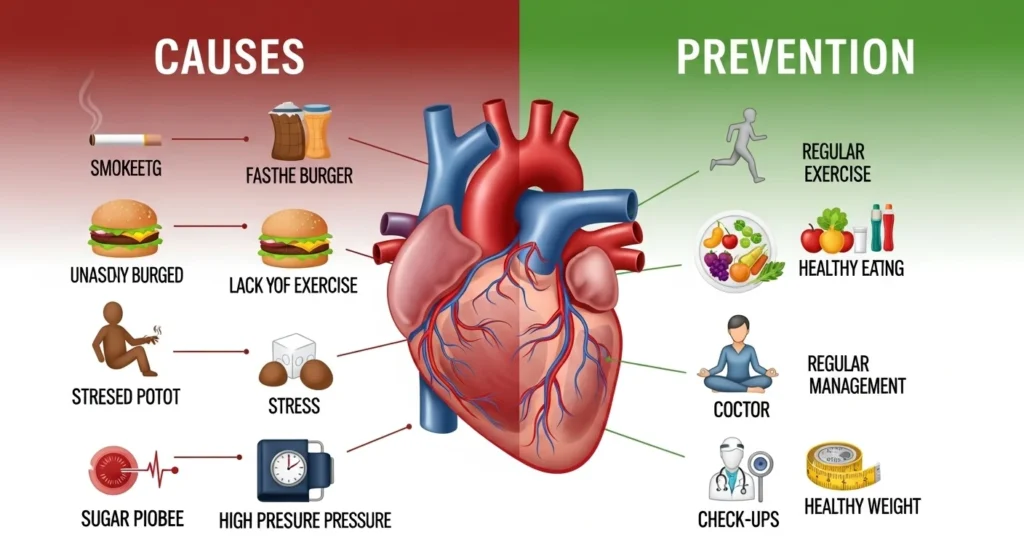
- Blocked arteries due to fat deposits (cholesterol buildup)
- High blood pressure, which strains the heart
- High cholesterol levels
- Diabetes, which damages blood vessels over time
Lifestyle-Related Factors
Many heart disease cases are related to daily habits.
- Smoking or tobacco use
- Lack of physical activity
- Unhealthy diet high in saturated fats
- Excess body weight
- Chronic stress
- Poor sleep patterns
Genetic or Environmental Factors
Some risk factors are beyond personal control.
- Family history of heart disease
- Increasing age
- Certain inherited conditions
- Environmental pollution
While these factors increase risk, healthy lifestyle choices can still reduce the chances of heart disease.
4. Symptoms and Warning Signs
Recognizing heart disease symptoms early can help prevent serious complications.
Early Symptoms
- Mild chest discomfort
- Shortness of breath during physical activity
- Fatigue or weakness
- Dizziness
- Irregular heartbeat
Advanced Symptoms
- Persistent chest pain
- Pain in the arms, neck, jaw, or back
- Severe shortness of breath
- Swelling in legs or ankles
- Sudden extreme fatigue
When to See a Doctor
Seek medical advice if symptoms such as chest pain, breathing difficulty, or unusual fatigue occur frequently. Immediate medical attention is necessary if severe chest pain appears suddenly.
5. How It Works in the Body
Understanding the biological process helps explain heart disease causes and prevention.
Step-by-Step Process
- Fat buildup in arteries
Fat and cholesterol accumulate inside blood vessels. - Narrowing of arteries
The buildup reduces the space for blood to flow. - Reduced oxygen supply
Less oxygen reaches the heart muscle. - Heart strain
The heart must work harder to pump blood. - Possible complications
This process may eventually lead to heart attacks or other heart problems.
Simple Analogy
Think of arteries like water pipes. If grease and dirt build up inside the pipes, water cannot flow easily. Similarly, blocked arteries reduce blood flow to the heart.
6. Types / Classification
Heart disease includes several different conditions.
Coronary Artery Disease
This is the most common type of heart disease. It occurs when arteries supplying blood to the heart become narrow or blocked.
Heart Rhythm Disorders (Arrhythmias)
Arrhythmias occur when the electrical signals controlling the heartbeat become irregular. The heart may beat too fast, too slow, or unevenly.
Heart Valve Disease
Heart valves control blood flow inside the heart. If these valves become damaged or weak, blood may not circulate properly.
Heart Failure
Heart failure does not mean the heart stops working completely. Instead, the heart becomes too weak to pump blood effectively.
7. Diagnosis and Medical Tests
Doctors use several tests to identify heart disease.
Medical Evaluation
A doctor may review:
- Medical history
- Family history
- Lifestyle habits
- Physical examination
Common Medical Tests
Electrocardiogram (ECG)
Records the electrical activity of the heart.
Blood Tests
Measure cholesterol levels and other markers.
Echocardiogram
Uses ultrasound waves to create images of the heart.
Stress Test
Evaluates how the heart works during physical activity.
What Test Results Mean
These tests help doctors detect abnormal heart rhythms, reduced blood flow, or structural problems in the heart.
8. Treatment Options
Heart disease treatment depends on the specific condition and its severity.
Medical Treatments
Doctors may recommend medications to control blood pressure, cholesterol, or heart rhythm.
Medications
Common medications may include drugs that:
- Lower cholesterol
- Reduce blood pressure
- Prevent blood clots
These medications must always be taken under medical supervision.
Therapy Options
Lifestyle therapy is often part of heart disease treatment.
This includes:
- Exercise programs
- Stress management techniques
- Dietary improvements
Surgery
In severe cases, procedures such as bypass surgery or angioplasty may be necessary to restore blood flow.
9. Prevention Tips
Heart disease prevention focuses on healthy daily habits.
Healthy Habits
- Avoid smoking
- Maintain a healthy body weight
- Manage stress effectively
- Get regular health checkups
Diet Recommendations
- Eat more fruits and vegetables
- Choose whole grains
- Limit saturated fats and processed foods
- Reduce excessive salt intake
Exercise Suggestions
Regular physical activity strengthens the heart.
Health experts often recommend at least moderate exercise several days per week.
Mental Wellness Tips
- Practice relaxation techniques
- Maintain social connections
- Manage work-life balance
These habits support both heart health and overall well-being.
10. Advantages and Disadvantages
Understanding heart disease advantages and disadvantages of early treatment is important.
Advantages of Early Detection
- Better treatment outcomes
- Reduced risk of heart attack
- Improved quality of life
- Lower healthcare complications
Risks of Ignoring Heart Disease
- Severe heart damage
- Increased risk of heart attack
- Reduced physical ability
- Higher medical complications
Taking preventive steps early significantly improves long-term health.
11. Applications / Real-Life Impact
The impact of heart disease extends beyond physical health.
Impact on Daily Life
People with heart disease may need to adjust their daily routines and physical activities.
Impact on Work or Family
Fatigue and health concerns may affect work productivity and family responsibilities.
Social and Emotional Effects
Chronic health conditions can cause emotional stress and anxiety. Support from family and healthcare professionals is important.
12. Common Questions & Practical Solutions
Q1: Can heart disease be cured?
Some heart conditions can be managed effectively, but long-term lifestyle changes and medical care are often necessary.
Q2: Is heart disease dangerous?
Yes, untreated heart disease can lead to serious complications such as heart attacks or heart failure.
Q3: Can heart disease be prevented?
Many cases can be prevented through healthy lifestyle choices, regular exercise, and medical checkups.
Q4: Who is at higher risk?
People with high blood pressure, high cholesterol, diabetes, smoking habits, or family history have a higher risk.
13. Future Trends and Medical Advances
Medical science continues to improve heart disease prevention and treatment.
New Treatments
Advanced medications and minimally invasive procedures are improving patient outcomes.
Research Developments
Scientists are studying genetic factors and lifestyle influences that contribute to heart disease.
Technology in Healthcare
Wearable devices can now monitor heart rate, physical activity, and other health indicators.
Preventive Medicine
Healthcare systems increasingly focus on prevention programs that encourage healthy lifestyles and early screening.
14. Conclusion
Understanding heart disease causes and prevention is essential for protecting long-term health. Heart disease often develops gradually, but many risk factors are related to lifestyle habits that people can improve. Recognizing early symptoms, maintaining a healthy diet, staying physically active, and managing stress are important steps toward better heart health.
Regular medical checkups help detect potential problems early and allow healthcare professionals to recommend appropriate treatment if needed. Although some risk factors such as age or genetics cannot be changed, healthy choices can significantly reduce the risk of heart disease.
By increasing awareness and encouraging preventive habits, individuals and communities can work together to support healthier hearts and improve overall quality of life.