
Imagine sitting down to a family meal, enjoying your favorite foods, but afterward feeling bloated, uncomfortable, and sluggish. This happens to many people every day. Poor digestion can turn simple eating into a source of frustration and tiredness.
Good digestion is key to overall health. It helps your body absorb nutrients for energy, strong immunity, and clear thinking. When digestion slows or struggles, it can lead to low energy, weight changes, mood swings, and even affect sleep. Many face issues like occasional constipation, gas, or indigestion due to busy lives, stress, or diet habits.
In this article, you will learn how to improve digestion naturally. We cover what digestion involves, common causes of poor digestion, warning signs, how the body processes food, natural ways to support it, prevention tips, and more. These steps are safe for most people and can make a real difference in daily comfort and well-being. Always talk to a healthcare professional if symptoms persist.
What is Digestion?
Digestion is the process where your body breaks down food into smaller parts it can use for energy, growth, and repair. It turns what you eat into nutrients like sugars, proteins, and fats that enter your bloodstream.
In everyday terms, think of digestion as a factory line: food enters, gets broken apart, useful parts are taken, and waste leaves. This happens mainly in the gastrointestinal (GI) tract, a long tube from mouth to anus.
It affects the whole body. Good digestion means better nutrient uptake, steady energy, and a balanced gut microbiome (the community of helpful bacteria in your intestines). Poor digestion can cause discomfort and affect mood or immunity.
For example, after eating a big meal too quickly, you might feel heavy and bloated because food isn’t broken down well. This shows how digestion impacts daily life.
Causes and Risk Factors
Poor digestion often comes from everyday habits, though some factors are harder to control. Here are the main ones:
- Poor diet choices: Eating too many processed foods, high sugar, or fatty items slows things down and irritates the gut.
- Low fiber intake: Fiber helps move food through the system; without enough, constipation is common.
- Dehydration: Not drinking enough water makes stool hard and slows movement.
- Lack of exercise: Sitting too much reduces gut muscle activity.
- Stress and anxiety: High stress affects gut nerves, leading to slower or irregular digestion.
- Gut microbiome imbalance (dysbiosis): From antibiotics, illness, or poor diet, this disrupts helpful bacteria.
- Food intolerances: Like lactose (in dairy) or gluten, causing gas or bloating.
- Medications or aging: Some drugs or natural age changes can affect gut function.
Lifestyle factors like irregular meals or overeating play a big role. Genetics or environment may increase risk, but habits often matter most.
Symptoms and Warning Signs
Early signs of poor digestion are usually mild but noticeable:
- Bloating or gas after meals
- Occasional constipation (fewer than 3 bowel movements a week)
- Loose stools or diarrhea
- Heartburn or acid reflux
- Feeling full too soon or uncomfortably full after eating
Advanced symptoms may include:
- Persistent abdominal pain or cramping
- Unexplained weight loss or gain
- Fatigue from poor nutrient absorption
- Frequent nausea or vomiting
See a doctor if you have blood in stool, severe pain, black stools, unexplained weight changes, or symptoms lasting weeks. These could signal something needing medical check.
How Digestion Works in the Body
Digestion is like a step-by-step journey through your GI tract. Here’s a simple breakdown:
- Mouth: Chewing breaks food into smaller pieces. Saliva adds moisture and starts breaking down carbs with enzymes.
- Esophagus: A muscular tube pushes food down to the stomach using wave-like movements (peristalsis).
- Stomach: Acts like a mixer. Acid and enzymes break proteins and kill some germs. Food turns into a semi-liquid called chyme.
- Small intestine: Most nutrients absorb here. Enzymes from pancreas and bile from liver/gallbladder help digest fats, proteins, and carbs. Nutrients enter blood.
- Large intestine: Absorbs water and salts. Helpful bacteria ferment leftover fiber, making vitamins and short-chain fatty acids. Waste forms stool.
- Rectum and anus: Stool leaves the body.
This process takes 24-72 hours. Good habits keep it smooth, like a well-oiled machine.
Diagnosis and Medical Tests
Doctors start with your history and symptoms. They may do a physical exam.
Common tests include:
- Blood tests: Check for inflammation, anemia, or nutrient lacks.
- Stool tests: Look for infections, blood, or bacteria imbalance.
- Endoscopy: A camera checks esophagus, stomach (upper endoscopy).
- Colonoscopy: Examines large intestine for issues.
- Imaging like ultrasound or CT: Views organs.
Results help rule out conditions like IBS or infections. Most natural improvements don’t need tests unless symptoms are severe.
Treatment Options
For mild issues, focus on natural changes. Medical options exist for underlying problems.
- Lifestyle changes: Main approach—more fiber, water, exercise, stress management.
- Medications: Antacids for heartburn, laxatives for short-term constipation, or probiotics (discuss with doctor).
- Therapy options: Like cognitive behavioral therapy for stress-related gut issues.
- Surgery: Rare, only for serious structural problems.
Always consult a professional before starting treatments.
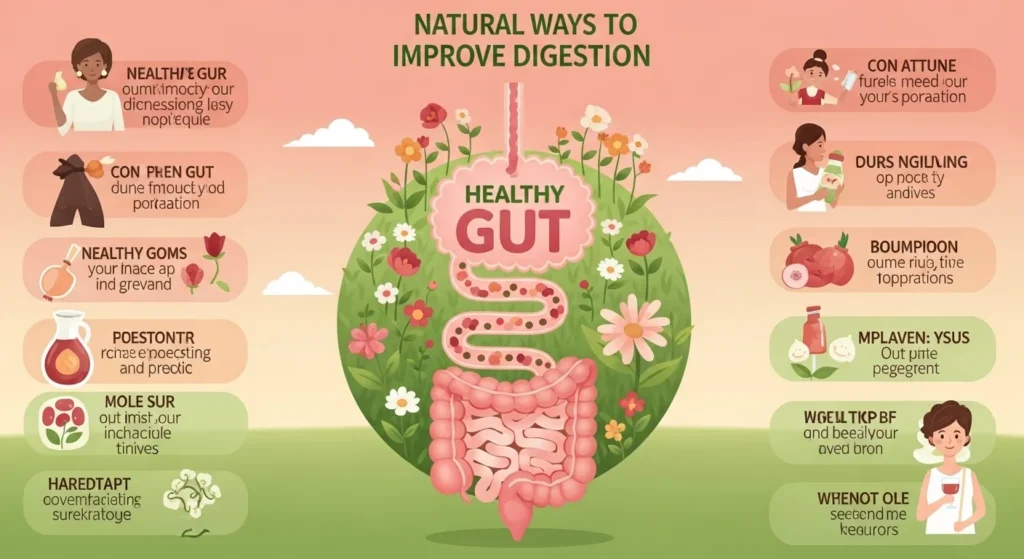
Prevention Tips
Prevent poor digestion with these habits:
- Eat high-fiber foods: Aim for 25-30g daily from fruits, veggies, whole grains, beans.
- Stay hydrated: Drink plenty of water to soften stool and aid movement.
- Exercise regularly: 30 minutes most days, like walking, to stimulate gut.
- Eat mindfully: Chew slowly, eat smaller meals, avoid overeating.
- Include probiotics: Yogurt, kefir, or fermented foods for good bacteria.
- Manage stress: Try deep breathing, yoga, or good sleep.
- Limit triggers: Cut processed foods, excess fat, spice, or caffeine if they bother you.
These build long-term gut health.
Advantages and Disadvantages
Advantages of improving digestion naturally:
- Better energy and mood
- Fewer discomforts like bloating
- Stronger immunity and nutrient absorption
- Lower risk of chronic issues
Disadvantages or risks of ignoring it:
- Ongoing discomfort affects daily life
- Possible nutrient lacks leading to fatigue
- Higher chance of conditions like IBS
Natural methods have few downsides but take time. Quick fixes like extreme diets can cause issues.
Applications / Real-Life Impact
Better digestion improves daily routines. You feel lighter after meals, have steady energy for work or family, and sleep better without discomfort.
It reduces stress on caregivers helping others eat. Fitness trainers see better performance. Socially, less worry about bloating means more confidence.
Emotionally, relief from symptoms boosts mood and reduces anxiety tied to gut issues.
Common Questions & Practical Solutions (FAQ Style)
Q1: Can poor digestion be improved naturally?
Yes, most cases improve with diet, hydration, exercise, and stress reduction. Results come in weeks with consistency.
Q2: Is poor digestion dangerous?
Usually not, but ongoing issues can lead to complications. See a doctor for severe or lasting symptoms.
Q3: Can it be prevented?
Yes—eat fiber-rich foods, drink water, move daily, eat slowly, and manage stress.
Q4: Do probiotics help?
They can support gut bacteria in yogurt or supplements, but food sources are best. Check with a doctor.
Future Trends and Medical Advances
Gut health research grows fast. In 2025-2026, fiber takes center stage for microbiome support, with “fibermaxxing” trends emphasizing diverse plant foods.
Postbiotics (inactive good bacteria) offer stable benefits for immunity, mood, and digestion without live culture issues.
Precision approaches personalize based on microbiome testing. Advances link gut to brain health, aging, and metabolic issues.
Technology like apps track diet for gut-friendly choices. Preventive focus rises with more evidence on natural methods.
Conclusion
Improving digestion naturally involves simple steps: eat more fiber, drink water, move your body, eat mindfully, and manage stress. These support the gut’s natural process, boost nutrient use, and enhance daily life.
Start small for lasting changes. Listen to your body and seek professional advice for concerns. Good digestion leads to better energy, mood, and health. Take charge today for a more comfortable tomorrow.