
Imagine a typical office worker who spends most of the day sitting in front of a computer. Meals often come from fast food restaurants, exercise is rare, and sleep is irregular. Over time, weight slowly increases. At first, it may not seem serious, but after a few years the person starts feeling tired, develops joint pain, and may even face health conditions like high blood pressure or diabetes.
This situation is becoming very common worldwide. Obesity is no longer only a cosmetic concern—it is a major health issue affecting millions of people of all ages. According to global health organizations, obesity increases the risk of heart disease, diabetes, and many other chronic illnesses.
Understanding the causes of obesity and prevention is extremely important for maintaining long-term health. Many people gain weight gradually without realizing the factors responsible for it.
In this article, you will learn what obesity is, its main causes, symptoms, how it affects the body, available treatments, and most importantly, practical prevention strategies. The goal is to help readers understand obesity clearly and take informed steps toward a healthier lifestyle.
2. What is Obesity?
Obesity is a medical condition in which a person has excessive body fat that may negatively affect health. It usually occurs when the body stores more calories than it burns over a long period of time.
Doctors often measure obesity using a tool called Body Mass Index (BMI). BMI compares a person’s weight with their height. A BMI of 30 or higher is generally considered obese.
In simple terms, obesity happens when the body receives more energy from food than it uses for daily activities and metabolism. The extra energy is stored as fat.
How Obesity Affects the Body
Excess body fat can affect several systems in the body:
- Heart and blood vessels
- Hormone balance
- Joints and bones
- Metabolism and blood sugar levels
Over time, this can lead to serious conditions such as diabetes, heart disease, and breathing problems.
Real-Life Example
A person who regularly eats high-calorie foods, drinks sugary beverages, and rarely exercises may slowly gain weight. If this pattern continues for years, it can eventually lead to obesity.
Understanding obesity causes and prevention helps people avoid these long-term health risks.
3. Causes and Risk Factors
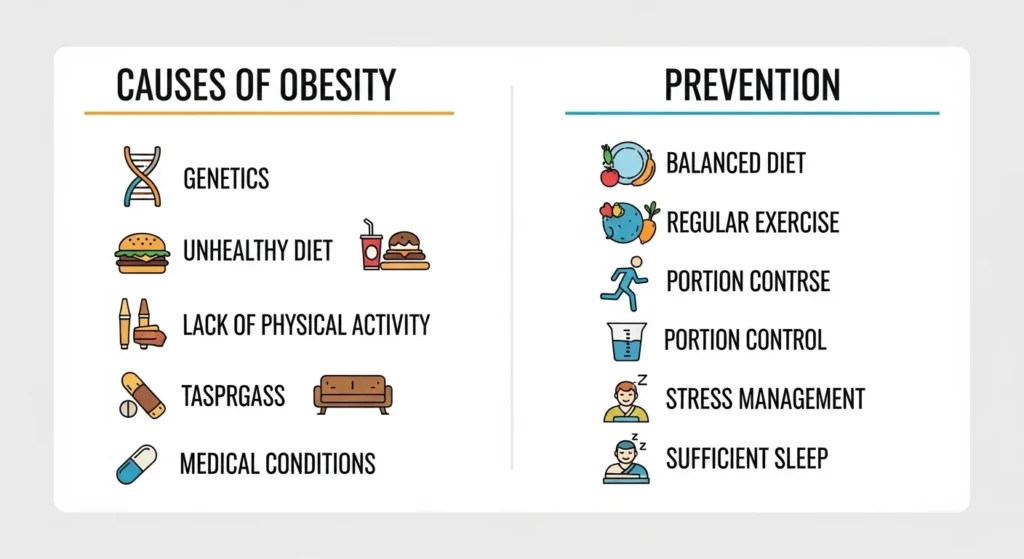
There is no single reason for obesity. It usually develops from a combination of lifestyle, genetic, and environmental factors.
1. Unhealthy Diet
Eating foods high in sugar, fat, and calories can lead to weight gain.
Examples include:
- Fast food
- Sugary drinks
- Processed snacks
- Large portion sizes
When the body receives more calories than it burns, fat storage increases.
2. Lack of Physical Activity
A sedentary lifestyle is one of the most common obesity causes.
Examples include:
- Sitting for long hours
- Limited exercise
- Excessive screen time
Without physical activity, the body burns fewer calories.
3. Genetic Factors
Some people inherit genes that influence how their bodies store fat or regulate hunger.
This does not mean obesity is unavoidable, but it can increase risk.
4. Hormonal Problems
Certain hormone disorders can contribute to weight gain. For example:
- Thyroid problems
- Hormonal imbalance
These conditions may slow metabolism.
5. Emotional Eating
Stress, depression, and anxiety sometimes cause people to eat more food, especially high-calorie comfort foods.
6. Poor Sleep
Lack of sleep can affect hunger hormones, increasing appetite and cravings.
7. Environmental Factors
Modern lifestyles also contribute to obesity:
- Easy access to fast food
- Limited physical activity in daily routines
- Busy schedules
Understanding these causes of obesity and prevention helps individuals take control of their health.
4. Symptoms and Warning Signs
Obesity often develops slowly, so people may not notice the early signs.
Early Symptoms
- Gradual weight gain
- Fat accumulation around the waist
- Reduced physical endurance
- Feeling tired quickly
Advanced Symptoms
If obesity continues, more serious symptoms may appear:
- Shortness of breath
- Joint pain
- High blood pressure
- Sleep problems
- Increased sweating
When to See a Doctor
Medical advice should be considered if:
- BMI is above the healthy range
- Weight gain continues despite lifestyle changes
- Other health conditions appear
Early diagnosis improves the success of obesity treatment and prevention.
5. How Obesity Works in the Body
The obesity process in the body is mainly related to energy balance.
Think of the body like a fuel system.
- Food provides energy (calories).
- Physical activity burns energy.
If the body receives more energy than it uses, the extra calories are stored as fat.
Step-by-Step Process
- High-calorie food intake increases energy supply.
- Low activity reduces energy usage.
- Extra calories are stored in fat cells.
- Fat cells grow larger over time.
- Hormones and metabolism become affected.
This imbalance gradually leads to obesity and related health conditions.
6. Types / Classification of Obesity
General Obesity
Fat is distributed throughout the body.
This type is often linked to excessive calorie intake and lack of physical activity.
Abdominal Obesity
Fat accumulates around the stomach and waist.
This type is considered more dangerous because it increases the risk of heart disease and diabetes.
Childhood Obesity
Occurs in children and teenagers.
It may result from poor diet, lack of exercise, or family lifestyle habits.
Early prevention is very important in these cases.
7. Diagnosis and Medical Tests
Doctors diagnose obesity using several methods.
Body Mass Index (BMI)
BMI compares weight and height to estimate body fat levels.
Waist Circumference
Measuring waist size helps determine abdominal fat.
Higher waist measurements may indicate increased health risks.
Blood Tests
Doctors may check:
- Blood sugar levels
- Cholesterol levels
- Hormone balance
These tests help identify health conditions related to obesity.
8. Treatment Options
Effective obesity treatment usually combines medical support with lifestyle changes.
Lifestyle Changes
The first step is improving daily habits.
- Balanced diet
- Regular exercise
- Proper sleep
Medical Treatment
Doctors may recommend medications that help control appetite or metabolism.
These medications must only be used under professional supervision.
Behavioral Therapy
Some people benefit from counseling or therapy that helps manage emotional eating.
Surgery
In severe cases, weight loss surgery may be considered.
Examples include:
- Gastric bypass
- Bariatric surgery
Surgery is usually recommended only when other treatments are not successful.
9. Prevention Tips
Preventing obesity is easier than treating it.
Here are practical obesity prevention strategies.
Healthy Diet
- Eat more fruits and vegetables
- Choose whole grains
- Limit sugary drinks
- Control portion sizes
Regular Exercise
Experts recommend at least 150 minutes of physical activity per week.
Examples include:
- Walking
- Cycling
- Swimming
- Sports
Healthy Lifestyle Habits
- Sleep 7–9 hours per night
- Reduce stress
- Stay hydrated
Small daily habits can significantly reduce obesity risk.
10. Advantages and Disadvantages
Benefits of Early Prevention
- Lower risk of heart disease
- Better energy levels
- Improved mental health
- Increased life expectancy
Risks of Ignoring Obesity
- Diabetes
- High blood pressure
- Joint problems
- Reduced quality of life
Understanding obesity advantages and disadvantages helps motivate healthier choices.
11. Applications / Real-Life Impact
Obesity affects many aspects of life.
Daily Life
Excess weight can make everyday activities more difficult, such as climbing stairs or walking long distances.
Work Productivity
Fatigue and health problems may reduce work efficiency.
Social and Emotional Impact
Some individuals experience:
- Low self-confidence
- Social stress
- Emotional struggles
Support from family, friends, and healthcare professionals is important.
12. Common Questions & Practical Solutions
Q1: Can obesity be cured?
Obesity can be managed effectively through lifestyle changes, medical treatment, and long-term healthy habits.
Q2: Is obesity dangerous?
Yes. If untreated, it increases the risk of serious health problems such as heart disease, diabetes, and stroke.
Q3: Can obesity be prevented?
Yes. Healthy eating, regular exercise, proper sleep, and stress management are key obesity prevention strategies.
Q4: How fast should weight loss happen?
Healthy weight loss is usually gradual. Rapid weight loss is not always safe.
Medical guidance is recommended.
13. Future Trends and Medical Advances
Healthcare research is continuously improving obesity management.
Personalized Medicine
Doctors are exploring treatments tailored to a person’s genetics and metabolism.
Digital Health Technology
Fitness trackers and health apps help people monitor:
- Physical activity
- Calories
- Sleep patterns
New Medications
Researchers are developing new drugs that help regulate appetite and metabolism.
Preventive Healthcare
Public health programs increasingly focus on education, early detection, and healthier environments.
These innovations may greatly improve future obesity treatment and prevention strategies.
14. Conclusion
Obesity is a complex health condition that affects millions of people worldwide. It develops gradually through a combination of unhealthy diet, lack of physical activity, genetics, and lifestyle factors.
Understanding the causes of obesity and prevention is essential for protecting long-term health. Obesity does not only affect appearance—it increases the risk of serious diseases such as heart disease, diabetes, and joint problems.
Fortunately, many cases of obesity can be prevented or managed through healthy habits. Balanced nutrition, regular physical activity, adequate sleep, and stress management are powerful tools for maintaining a healthy weight.
Early awareness and medical guidance also play an important role. If weight gain becomes a concern, consulting a healthcare professional can help identify safe and effective treatment options.
By making informed lifestyle choices and promoting health education, individuals and communities can reduce obesity rates and improve overall well-being.