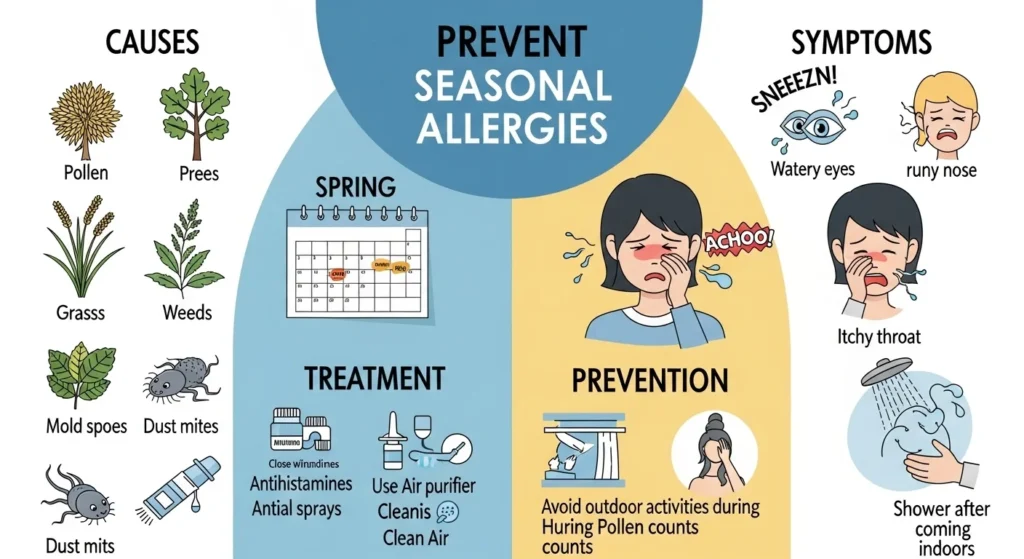

Every spring, millions of people wake up sneezing, with itchy eyes and runny noses. For some, the beauty of blooming flowers or fresh greenery comes with a hidden cost: seasonal allergies. Sneezing, congestion, and fatigue can turn enjoyable days into uncomfortable ones, affecting productivity, mood, and sleep.
Seasonal allergies, also called hay fever or allergic rhinitis, are more than a minor nuisance—they can disrupt daily life and lower quality of life. Understanding how to prevent them is essential for maintaining comfort, energy, and overall health.
In this article, you will learn what seasonal allergies are, their causes, common symptoms, effective treatment options, prevention strategies, and how they impact everyday life. This guide is designed for health students, wellness bloggers, fitness trainers, caregivers, and anyone seeking practical ways to stay allergy-free.
What are Seasonal Allergies?
Medical Definition: Seasonal allergies are immune system reactions to airborne substances, such as pollen or mold spores, that occur at specific times of the year.
Simple Explanation: Your body mistakenly identifies harmless particles like pollen as dangerous invaders. This triggers an immune response, releasing chemicals such as histamine, causing sneezing, itching, and congestion.
Impact on the Body: The allergic response inflames the nasal passages, eyes, and airways, leading to symptoms that can affect sleep, energy levels, and daily functioning.
Practical Example: Walking through a park during spring can trigger sneezing fits, watery eyes, and a runny nose for allergy-prone individuals.
Causes and Risk Factors
Several factors contribute to seasonal allergies, ranging from environmental triggers to genetic predispositions.
Main Causes:
- Pollen from trees, grasses, and weeds
- Mold spores in soil, leaves, or damp areas
- Dust or outdoor allergens during specific seasons
Lifestyle-Related Factors:
- Spending long periods outdoors during high pollen days
- Lack of protective measures like masks or eyewear
- Poor indoor air quality due to dust or mold
Genetic or Environmental Factors:
- Family history of allergies or asthma
- Living in regions with high pollen or seasonal variations
- Early exposure to allergens in childhood
Summary in Bullet Points:
- Pollen from plants
- Mold spores and damp environments
- Dust and outdoor allergens
- Genetic predisposition
- Environmental exposure and seasonal changes
Symptoms and Warning Signs
Recognizing allergy symptoms early helps manage and prevent complications.
Early Symptoms:
- Sneezing and runny nose
- Itchy, watery eyes
- Nasal congestion
Advanced Symptoms:
- Fatigue and difficulty concentrating
- Sinus pressure or headaches
- Worsening asthma symptoms in some individuals
When to See a Doctor:
- Persistent symptoms despite over-the-counter treatments
- Severe breathing difficulties or asthma flare-ups
- Signs of sinus infection (fever, thick nasal discharge)
How Seasonal Allergies Work in the Body
Seasonal allergies involve a chain reaction in the immune system.
- Exposure: You inhale allergens like pollen or mold spores.
- Immune Response: The body identifies allergens as harmful, triggering antibody production (IgE).
- Histamine Release: Immune cells release histamine, causing inflammation in the nasal passages, eyes, and throat.
- Symptoms Appear: Sneezing, itching, congestion, and watery eyes result from this reaction.
Analogy: Think of your immune system as a security alarm. Seasonal allergens are like harmless visitors that trigger the alarm unnecessarily, causing discomfort.
Types / Classification of Seasonal Allergies
Spring Allergies
Triggered primarily by tree pollen. Common symptoms include sneezing and itchy eyes.
Summer Allergies
Often caused by grass pollen, leading to congestion, fatigue, and watery eyes.
Fall Allergies
Weed pollens like ragweed are common, causing nasal and eye irritation.
Mold-Related Allergies
Can occur in damp environments year-round but peak during certain seasons when spores increase.
Diagnosis and Medical Tests
How Doctors Diagnose:
- Medical history and symptom review
- Physical examination of nasal passages, throat, and eyes
Common Medical Tests:
- Skin prick test to identify specific allergens
- Blood tests measuring IgE antibody levels
- Nasal smear test for inflammation markers
Understanding Test Results:
- Positive skin test indicates sensitivity to specific allergens
- Elevated IgE levels suggest a strong allergic response
- Helps guide targeted treatment and prevention strategies
Treatment Options
Medical Treatments:
- Allergen avoidance strategies
- Prescription nasal sprays or eye drops
Medications:
- Antihistamines reduce sneezing and itching
- Decongestants relieve nasal blockage
- Corticosteroid nasal sprays for inflammation control
Therapy Options:
- Immunotherapy (allergy shots) to gradually desensitize the immune system
- Sublingual tablets for specific allergens
Lifestyle Changes:
- Keep windows closed during high pollen periods
- Use air purifiers and clean filters regularly
- Shower and change clothes after outdoor exposure
Surgery (if applicable):
- Rarely required, only in cases of severe nasal obstruction or chronic sinus issues
Prevention Tips
Healthy Habits:
- Monitor pollen forecasts and plan outdoor activities accordingly
- Wear sunglasses and hats to reduce eye exposure
- Wash hands and face frequently
Diet Recommendations:
- Include antioxidant-rich foods to support immune health
- Hydrate adequately to help thin mucus and reduce congestion
Exercise Suggestions:
- Indoor workouts during peak pollen times
- Gentle outdoor exercise when pollen levels are low
Mental Wellness Tips:
- Stress management through meditation or yoga can reduce immune overreaction
- Maintain adequate sleep to support overall immune function
Advantages and Disadvantages
Advantages of Preventive Measures:
- Reduced allergy symptoms and improved quality of life
- Lower reliance on medications
- Fewer complications like sinus infections or asthma flare-ups
Risks of Ignoring Allergies:
- Chronic discomfort affecting sleep, work, and social life
- Potential worsening of asthma
- Increased risk of secondary infections
Pros and Cons Summary:
- Pros: Effective symptom control, improved daily functioning
- Cons: Requires consistent lifestyle adjustments and monitoring
Applications / Real-Life Impact
Impact on Daily Life:
- Better concentration and productivity
- Comfort during seasonal changes
Impact on Work or Family:
- Fewer sick days and less absenteeism
- Improved family time with outdoor activities
Social and Emotional Effects:
- Reduced irritability and mood swings caused by discomfort
- Increased confidence in participating in social events
Common Questions & Practical Solutions
Q1: Can seasonal allergies be cured?
A1: Not completely, but symptoms can be managed and reduced with medications and lifestyle adjustments.
Q2: Are they dangerous?
A2: Generally not life-threatening, but severe reactions or asthma complications can be serious.
Q3: Can they be prevented?
A3: Yes, with proper allergen avoidance, early treatment, and lifestyle changes.
Future Trends and Medical Advances
- Development of personalized immunotherapy based on genetic testing
- Innovative antihistamine formulations with fewer side effects
- Smart home technology to monitor indoor allergens
- Research on the microbiome’s role in allergy prevention
Conclusion
Preventing seasonal allergies requires awareness, proactive measures, and lifestyle adjustments. Simple steps like monitoring pollen levels, maintaining clean indoor environments, and timely use of medications can reduce symptoms significantly. With proper prevention and management, individuals can enjoy seasonal changes without discomfort. Early diagnosis, consistent prevention strategies, and consultation with healthcare professionals are key to maintaining quality of life during allergy seasons.