
Imagine finishing a long workday while your mind is still full of worries about deadlines, family responsibilities, and financial pressures. Many people experience this feeling every day. Stress has become a common part of modern life, affecting students, workers, parents, and even young adults.
While a small amount of stress can sometimes motivate people to perform better, constant stress can negatively affect both physical and mental health. Long-term stress may lead to headaches, sleep problems, digestive issues, fatigue, and emotional imbalance. If stress is not managed properly, it can gradually reduce overall quality of life.
Fortunately, there are many safe and natural ways to manage stress without relying only on medications. Healthy habits, relaxation techniques, proper nutrition, and regular physical activity can significantly improve emotional well-being.
In this article, you will learn how to reduce stress naturally, including the causes of stress, common symptoms, natural treatment methods, prevention strategies, and the advantages and disadvantages of different stress-management approaches. This guide is designed to help beginners understand stress and develop practical techniques to manage it in daily life.
What is How to Reduce Stress Naturally?
How to reduce stress naturally refers to healthy, non-medical methods that help the body and mind relax and recover from pressure or emotional tension.
From a medical perspective, stress is the body’s natural response to challenging situations. When the brain senses danger or pressure, it releases hormones such as cortisol and adrenaline. These hormones prepare the body to react quickly, a response often called the “fight-or-flight response.”
In simple terms, stress is the feeling of mental or physical tension when someone faces challenges, worries, or difficult situations.
How Stress Affects the Body
When stress occurs frequently, it can affect many body systems:
- The brain becomes overactive with constant worry.
- The heart rate increases.
- Muscles become tense.
- Sleep patterns may become disturbed.
Over time, chronic stress can weaken the immune system and reduce overall energy levels.
Real-Life Example
For example, a student preparing for important exams may experience stress due to fear of failure or heavy study schedules. Learning how to reduce stress naturally can help the student stay calm, focused, and mentally balanced.
Causes and Risk Factors
Understanding how to reduce stress naturally causes begins with identifying the common sources of stress.
Main Causes
Some common causes include:
- Work pressure and deadlines
- Financial difficulties
- Family responsibilities
- Academic stress
These situations can create emotional strain when they continue for long periods.
Lifestyle-Related Factors
Certain daily habits can increase stress levels:
- Lack of sleep
- Poor diet
- Excessive screen time
- Lack of physical activity
- Irregular daily routines
These factors may weaken the body’s ability to handle pressure.
Genetic Factors
Some people may be more sensitive to stress because of genetic factors affecting mood regulation and emotional response.
Environmental Factors
Environmental influences may also contribute to stress:
- Noisy or crowded environments
- High competition at work or school
- Limited social support
- Major life changes
Recognizing these triggers is the first step toward effective stress management.
Symptoms and Warning Signs
Recognizing how to reduce stress naturally symptoms helps individuals take action before stress becomes severe.
Early Symptoms
Early signs of stress may include:
- Mild headaches
- Difficulty concentrating
- Feeling tired frequently
- Irritability or mood swings
- Trouble sleeping
These symptoms often appear when stress begins to build up.
Advanced Symptoms
If stress continues for a long time, more serious symptoms may appear:
- Chronic fatigue
- Anxiety or depression
- High blood pressure
- Digestive problems
- Frequent illness
When to See a Doctor
Medical advice should be considered if:
- Stress causes panic attacks
- Sleep problems continue for weeks
- Depression or anxiety becomes severe
- Stress interferes with daily activities
A healthcare professional can recommend appropriate stress treatment or therapy.
How Stress Works in the Body
To understand how to reduce stress naturally, it is helpful to understand the biological process behind stress.
Step 1: Stress Trigger
A stressful event activates the brain’s alarm system.
Step 2: Hormone Release
The brain signals the adrenal glands to release stress hormones like cortisol and adrenaline.
Step 3: Physical Reaction
These hormones cause:
- Faster heartbeat
- Rapid breathing
- Increased alertness
Step 4: Recovery Phase
Normally, the body returns to a relaxed state after the stressful event passes.
However, when stress occurs constantly, the body remains in a state of tension.
Simple Analogy
Think of stress like a car engine running at high speed. If it never slows down, the engine eventually becomes damaged.
Types of Stress
Acute Stress
Acute stress is short-term stress caused by temporary situations.
Examples include:
- Preparing for a presentation
- Taking an exam
- Meeting deadlines
This type of stress usually disappears after the situation ends.
Chronic Stress
Chronic stress lasts for a long period and can affect overall health.
Examples include:
- Long-term financial problems
- Ongoing work pressure
- Relationship conflicts
Learning how to reduce stress naturally treatment methods is especially important for chronic stress.
Diagnosis and Medical Tests
Doctors usually diagnose stress through medical evaluation and patient discussions.
Medical History Review
Healthcare providers ask about:
- Lifestyle habits
- Work or family pressures
- Emotional symptoms
Psychological Assessment
Mental health questionnaires may help measure stress and anxiety levels.
Physical Examination
Doctors may check:
- Blood pressure
- Heart rate
- Sleep patterns
These evaluations help determine the overall impact of stress on the body.
Laboratory Tests
Sometimes tests may be recommended to rule out other conditions such as thyroid problems or hormonal imbalance.
Treatment Options
Several treatment approaches can help manage stress effectively.
Medical Treatments
In some cases, doctors may recommend professional counseling or therapy for severe stress.
Medications
Medications may be used for related conditions such as anxiety or depression. However, natural stress management methods are often preferred first.
Therapy Options
Common therapies include:
- Cognitive behavioral therapy (CBT)
- Stress management counseling
- Mindfulness therapy
These methods help individuals understand and manage emotional responses.
Lifestyle Changes
Healthy lifestyle habits are essential for how to reduce stress naturally treatment:
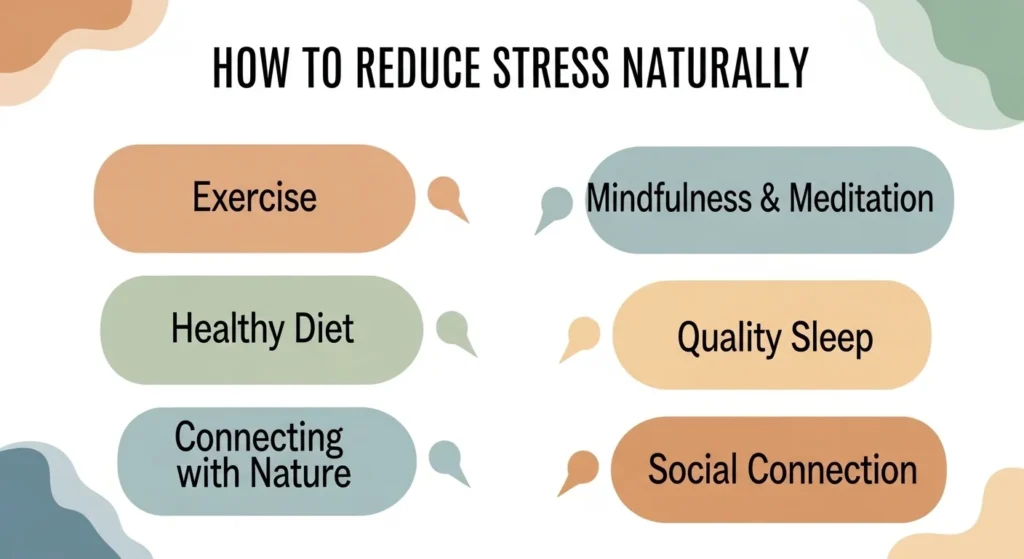
- Regular physical activity
- Balanced nutrition
- Adequate sleep
- Relaxation techniques
Surgery
Stress itself does not require surgery, but medical conditions related to stress may require medical treatment.
Prevention Tips
Practicing how to reduce stress naturally prevention strategies can help maintain long-term mental health.
Healthy Habits
- Maintain a regular sleep schedule
- Take short breaks during work
- Spend time in nature
- Limit excessive caffeine intake
Diet Recommendations
Healthy foods support emotional stability.
Helpful choices include:
- Fruits and vegetables
- Whole grains
- Nuts and seeds
- Adequate hydration
Exercise Suggestions
Physical activity is one of the best natural stress reducers.
Examples include:
- Walking
- Yoga
- Stretching exercises
- Light aerobic workouts
Mental Wellness Tips
Mental relaxation practices include:
- Deep breathing exercises
- Meditation
- Journaling thoughts
- Spending time with loved ones
Advantages and Disadvantages
Understanding how to reduce stress naturally advantages and disadvantages helps people choose suitable strategies.
Advantages
Natural stress management offers many benefits:
- Improves mental clarity
- Supports physical health
- Reduces reliance on medications
- Encourages healthier lifestyle habits
Disadvantages
Some challenges may include:
- Results may take time
- Requires consistency and discipline
- Severe stress may require professional support
Despite these limitations, natural stress reduction techniques are widely recommended for long-term wellness.
Applications / Real-Life Impact
Learning how to reduce stress naturally can positively affect different areas of life.
Impact on Daily Life
Stress management helps individuals maintain emotional balance and improve overall mood.
Impact on Work and Family
Reduced stress improves concentration, productivity, and communication with family members.
Social and Emotional Effects
People who manage stress effectively often experience:
- Better relationships
- Higher confidence
- Improved emotional resilience
Common Questions & Practical Solutions (FAQ)
Q1: Can stress be completely cured?
Stress cannot always be completely eliminated, but it can be effectively managed using healthy coping strategies.
Q2: Is stress dangerous?
Occasional stress is normal, but chronic stress may increase the risk of health problems.
Q3: Can stress be prevented?
Many stress triggers cannot be avoided, but healthy habits can reduce their impact.
Q4: What is the fastest natural way to reduce stress?
Deep breathing, short walks, and relaxation techniques can help calm the body quickly.
Q5: Does exercise help reduce stress?
Yes, regular physical activity releases endorphins, which improve mood and reduce tension.
Future Trends and Medical Advances
Modern healthcare continues to explore better stress management techniques.
New Treatments
Researchers are developing new therapies that combine psychology, mindfulness, and lifestyle medicine.
Research Developments
Studies are investigating the relationship between stress, brain health, and immune system function.
Technology in Healthcare
Technology now supports stress management through:
- Meditation mobile applications
- Wearable stress monitoring devices
- Online therapy platforms
Preventive Medicine
Healthcare professionals increasingly promote stress prevention through lifestyle education and wellness programs.
Conclusion
Understanding how to reduce stress naturally is essential for maintaining both physical and mental well-being. Stress is a natural response to life challenges, but when it becomes constant, it can negatively affect many areas of health.
By recognizing how to reduce stress naturally causes, symptoms, treatment methods, prevention strategies, and advantages and disadvantages, individuals can develop effective ways to manage stress. Simple habits such as regular exercise, balanced nutrition, relaxation techniques, and healthy sleep patterns can make a significant difference.
If stress becomes overwhelming or begins to affect daily life, consulting a healthcare professional is recommended. With the right strategies and consistent self-care, people can reduce stress naturally and enjoy a healthier, more balanced life.