
Imagine waking up early in the morning with a sharp pain in your stomach. You may feel uncomfortable, unable to eat properly, and worried about what caused the pain. Many people experience stomach pain at some point in their lives. It can happen after eating unhealthy food, during stress, or due to digestive problems.
Stomach pain is one of the most common health complaints worldwide. Sometimes the pain is mild and goes away on its own, but in other cases it may signal a more serious health problem. Because the stomach is part of the digestive system, problems with digestion, infections, or inflammation can lead to discomfort.
Understanding safe and effective stomach pain remedies is important for maintaining digestive health and preventing complications. When people know the causes and symptoms of stomach pain, they can take the right steps to treat and prevent it.
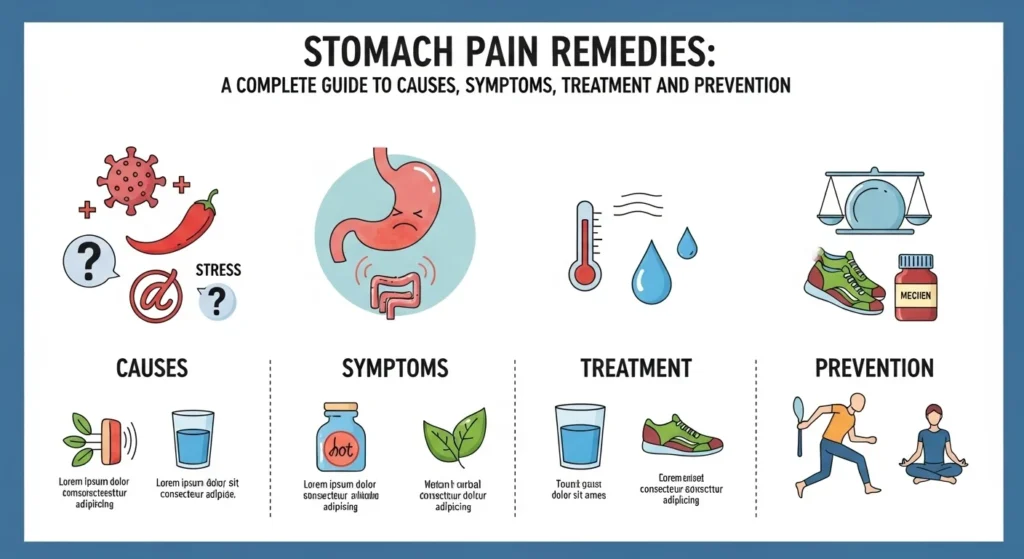
In this article, you will learn about stomach pain remedies, including stomach pain causes, stomach pain symptoms, stomach pain treatment, and stomach pain prevention strategies. The guide will also explain how stomach pain develops in the body, when to seek medical help, and practical lifestyle tips to improve digestive health.
2. What is Stomach Pain?
Stomach pain refers to discomfort, cramping, or aching in the abdomen, which is the area between the chest and the pelvis. The pain may occur in the upper stomach, lower abdomen, or the entire belly area.
In medical terms, stomach pain is often related to the digestive system, including the stomach, intestines, liver, or pancreas.
Simple Explanation
The stomach plays an important role in digesting food. When something disturbs this process—such as infection, inflammation, gas buildup, or indigestion—it can cause pain or discomfort.
The pain may be mild, moderate, or severe, depending on the cause.
Practical Example
For example, a person who eats very spicy or oily food late at night may experience stomach pain and bloating. The digestive system becomes irritated, leading to temporary discomfort.
Simple stomach pain remedies, such as drinking warm water or resting, may help relieve mild symptoms.
3. Causes and Risk Factors
Understanding stomach pain causes helps identify the correct treatment and prevention methods.
Main Causes
Common medical causes include:
- Indigestion: Difficulty digesting food can lead to discomfort or burning sensations.
- Gas buildup: Excess gas in the intestines may cause bloating and pain.
- Stomach infections: Bacteria or viruses can irritate the stomach lining.
- Food poisoning: Eating contaminated food may lead to stomach cramps.
Lifestyle-Related Factors
Certain habits increase the risk of stomach pain.
- Eating very spicy or oily foods
- Skipping meals
- Overeating
- Drinking excessive caffeine
- Lack of sleep
- High stress levels
Environmental or Genetic Factors
Other factors may include:
- Family history of digestive disorders
- Poor food hygiene
- Exposure to contaminated water
Understanding these risk factors helps reduce the chances of stomach pain.
4. Symptoms and Warning Signs
Recognizing stomach pain symptoms helps determine whether the condition is mild or requires medical attention.
Early Symptoms
Early signs may include:
- Mild abdominal discomfort
- Bloating
- Gas
- Feeling full quickly
- Mild nausea
Advanced Symptoms
More serious symptoms may include:
- Severe abdominal pain
- Vomiting
- Fever
- Persistent diarrhea
- Blood in stool
These symptoms may indicate a more serious digestive issue.
When to See a Doctor
Medical help should be considered if:
- Pain lasts more than two days
- Severe pain appears suddenly
- Pain is accompanied by vomiting or fever
- There is unexplained weight loss
Early medical evaluation helps prevent complications.
5. How It Works in the Body
The digestive system processes food through several steps. When something disrupts this process, stomach pain may occur.
Step-by-Step Process
- Food enters the stomach.
- The stomach releases digestive acids and enzymes.
- Food is broken down into smaller particles.
- Nutrients move into the intestines for absorption.
If the stomach lining becomes irritated or inflamed, pain may occur.
Simple Analogy
Think of the stomach as a food processing machine. If the machine receives poor-quality materials or becomes overloaded, it may stop working smoothly. This can lead to digestive discomfort.
6. Types / Classification
Stomach pain can appear in different forms depending on the underlying cause.
Acute Stomach Pain
Acute pain develops suddenly and usually lasts for a short time.
Common causes include:
- food poisoning
- gas buildup
- indigestion
Chronic Stomach Pain
Chronic pain lasts for a long time or occurs repeatedly.
Possible causes include:
- digestive disorders
- stomach ulcers
- long-term inflammation
Identifying the type of pain helps guide proper treatment.
7. Diagnosis and Medical Tests
Doctors use several methods to identify the cause of stomach pain.
Medical History
Doctors first ask about symptoms, diet habits, and previous health conditions.
Physical Examination
The abdomen may be gently pressed to locate areas of pain.
Common Medical Tests
Some tests may include:
- Blood tests: Detect infections or inflammation.
- Stool tests: Identify digestive infections.
- Ultrasound imaging: Check internal organs.
- Endoscopy: A small camera is used to examine the stomach lining.
Understanding Test Results
Test results help doctors identify the exact cause and recommend the appropriate stomach pain treatment.
8. Treatment Options
There are several stomach pain treatment approaches depending on the cause.
Medical Treatments
Doctors may recommend medications to reduce pain or inflammation.
Examples include medicines that:
- reduce stomach acid
- treat infections
- relax stomach muscles
Medication use should always follow professional medical guidance.
Lifestyle Changes
Lifestyle improvements are often the most effective stomach pain remedies.
Helpful changes include:
- eating smaller meals
- avoiding spicy or oily foods
- drinking enough water
- managing stress
Home Remedies
Some gentle remedies may help mild stomach discomfort:
- warm herbal tea
- light meals such as rice or toast
- resting the stomach after heavy meals
These remedies are suitable only for mild symptoms.
Surgical Treatment
Surgery is rarely required but may be necessary for serious conditions such as appendicitis or severe ulcers.
9. Prevention Tips
Practicing stomach pain prevention strategies can protect digestive health.
Healthy Eating Habits
- Eat balanced meals
- Avoid excessive spicy or fatty foods
- Maintain regular meal times
Hydration
Drinking sufficient water supports proper digestion.
Exercise
Moderate physical activity improves digestion and reduces stress.
Stress Management
Relaxation techniques such as meditation and breathing exercises help prevent digestive discomfort.
10. Advantages and Disadvantages
Understanding stomach pain remedies advantages and disadvantages helps people choose safe approaches.
Benefits of Early Treatment
- Quick relief from discomfort
- Prevention of serious digestive problems
- Improved digestive health
Risks of Ignoring Symptoms
- worsening pain
- digestive complications
- delayed diagnosis of serious conditions
Early attention to symptoms is always recommended.
11. Applications / Real-Life Impact
Digestive health strongly affects everyday life.
Impact on Daily Activities
Stomach pain can reduce energy levels and affect concentration.
Impact on Work and Family Life
Frequent discomfort may interfere with work productivity and family responsibilities.
Emotional and Social Effects
Chronic digestive issues may lead to anxiety or stress about eating certain foods.
Maintaining good digestive health supports both physical and emotional well-being.
12. Common Questions & Practical Solutions
Q1: Can stomach pain be cured?
Many cases can be treated successfully, especially when the underlying cause is identified and managed properly.
Q2: Is stomach pain dangerous?
Most stomach pain is mild and temporary. However, severe or persistent pain may require medical evaluation.
Q3: Can stomach pain be prevented?
Yes. Healthy eating habits, proper hygiene, and stress management significantly reduce the risk of digestive discomfort.
13. Future Trends and Medical Advances
Medical science continues to improve digestive healthcare.
Advanced Diagnostic Tools
Modern imaging technologies allow doctors to detect digestive problems more accurately.
Personalized Nutrition
Researchers are developing diet plans based on individual digestive needs.
Preventive Healthcare
Health experts increasingly focus on early lifestyle changes to prevent digestive disorders.
These developments will help people manage stomach health more effectively.
14. Conclusion
Stomach pain is a common health problem that can affect people of all ages. It may result from indigestion, infections, stress, or other digestive issues. Understanding stomach pain causes, stomach pain symptoms, stomach pain treatment, and stomach pain prevention strategies helps individuals manage their digestive health effectively.
Simple stomach pain remedies, such as balanced nutrition, hydration, and healthy lifestyle habits, can relieve mild discomfort and prevent future problems. However, persistent or severe stomach pain should never be ignored.
Consulting a qualified healthcare professional ensures accurate diagnosis and proper treatment. By maintaining healthy habits and paying attention to early symptoms, individuals can protect their digestive system and improve overall well-being.