
Imagine going for a routine health check-up and your doctor tells you that your cholesterol levels are high. Many people hear this and immediately feel worried, but they may not fully understand what cholesterol actually is or why it matters. Cholesterol is often discussed in connection with heart disease, but it also plays an important role in the body.
In today’s world, unhealthy diets, lack of physical activity, and stressful lifestyles have increased the number of people with high cholesterol levels. Millions of adults and even young people are affected by cholesterol-related health problems. Understanding cholesterol can help people make better choices for their heart and overall health.
The topic “What is Cholesterol? Good vs Bad Cholesterol” is important because cholesterol directly affects blood vessels, heart function, and long-term health. When cholesterol levels are balanced, the body works normally. But when levels become too high, it can increase the risk of heart disease and stroke.
In this article, you will learn what cholesterol is, how it works in the body, cholesterol causes, cholesterol symptoms, medical tests, treatment options, prevention strategies, and the difference between good and bad cholesterol.
2. What is Cholesterol?
Cholesterol is a waxy, fat-like substance found in the blood and in every cell of the body. It is produced by the liver and also obtained from certain foods.
Medical Definition
Cholesterol is a type of lipid (fat) that circulates in the bloodstream and helps build cells, produce hormones, and create vitamin D.
Simple Explanation
In simple terms, cholesterol is a substance your body needs to stay healthy. It helps form cell membranes and supports important body processes. However, too much cholesterol in the blood can cause health problems.
Cholesterol travels through the bloodstream in small packages called lipoproteins, which carry cholesterol to different parts of the body.
Practical Real-Life Example
For example, if someone regularly eats foods high in saturated fats such as fried foods, fatty meats, and processed snacks, their cholesterol levels may increase. Over time, this extra cholesterol can build up in the blood vessels and reduce healthy blood flow.
This is why understanding good vs bad cholesterol is essential for maintaining heart health.
3. Causes and Risk Factors
There are many cholesterol causes related to lifestyle, genetics, and health conditions.
Lifestyle-Related Causes
- Unhealthy diet – Eating foods high in saturated and trans fats increases cholesterol levels.
- Lack of physical activity – Regular exercise helps control cholesterol.
- Smoking – Smoking damages blood vessels and lowers good cholesterol.
- Excess alcohol consumption – Too much alcohol can increase cholesterol and triglyceride levels.
Medical Conditions
Some health conditions can also increase cholesterol levels.
- Diabetes
- Obesity
- Hypothyroidism
- Kidney disease
Genetic Factors
Sometimes high cholesterol runs in families. This condition is called familial hypercholesterolemia, where the body cannot remove cholesterol efficiently.
Environmental Factors
- Stress
- Poor sleep
- Sedentary lifestyle
These factors together can increase the risk of high cholesterol.
4. Symptoms and Warning Signs
One important fact about cholesterol symptoms is that high cholesterol usually does not cause obvious symptoms.
Early Symptoms
Most people with high cholesterol feel completely normal. There are usually no early warning signs.
Advanced Symptoms
If cholesterol levels remain high for many years, it can lead to serious health conditions such as:
- Chest pain (angina)
- Shortness of breath
- Heart attack
- Stroke
These symptoms occur because cholesterol builds up in arteries and blocks blood flow.
When to See a Doctor
It is important to see a doctor if:
- You have a family history of heart disease
- You are overweight
- You have high blood pressure or diabetes
Regular blood tests can detect cholesterol problems before symptoms appear.
5. How Cholesterol Works in the Body
Understanding how cholesterol works in the body helps explain why balanced levels are important.
Step-by-Step Process
- Cholesterol Production
- The liver produces cholesterol naturally.
- Transportation in Blood
- Cholesterol travels through blood using lipoproteins.
- Cell Usage
- Cells use cholesterol to build membranes and hormones.
- Excess Cholesterol
- Extra cholesterol can stick to artery walls.
- Plaque Formation
- Over time, cholesterol deposits form plaque that narrows arteries.
Simple Analogy
Think of arteries like water pipes in a house. If grease builds up inside the pipes, water flow becomes restricted. Similarly, cholesterol buildup can block blood flow in arteries.
This blockage increases the risk of heart disease.
6. Types / Classification
Cholesterol is mainly classified into two major types.
LDL Cholesterol (Bad Cholesterol)
LDL stands for Low-Density Lipoprotein.
Explanation
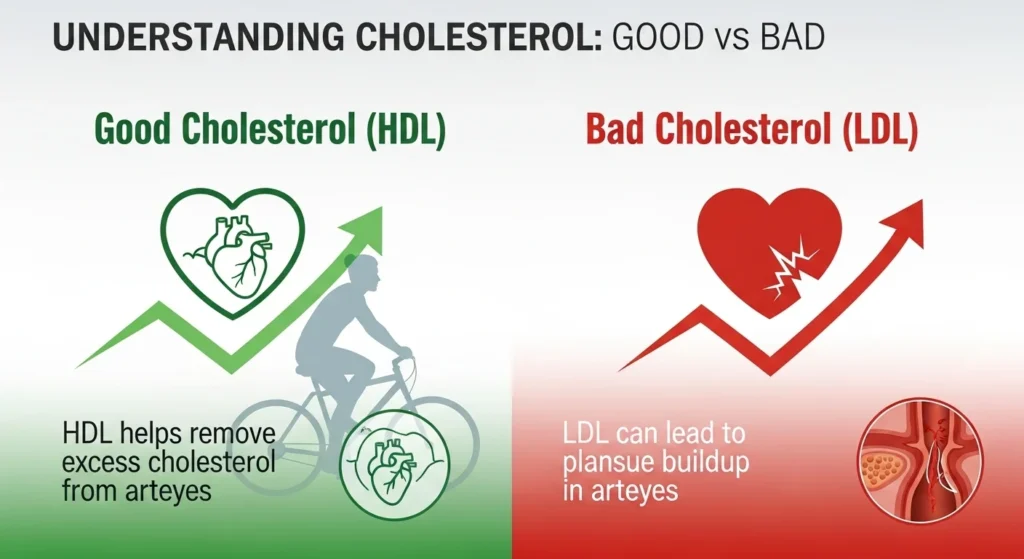
LDL cholesterol is often called bad cholesterol because it carries cholesterol from the liver to the arteries. Excess LDL can stick to artery walls and form plaque.
Health Risks
High LDL cholesterol increases the risk of:
- Heart disease
- Stroke
- Blocked arteries
HDL Cholesterol (Good Cholesterol)
HDL stands for High-Density Lipoprotein.
Explanation
HDL cholesterol is known as good cholesterol because it removes excess cholesterol from the bloodstream and carries it back to the liver.
Health Benefits
Higher HDL levels help:
- Protect the heart
- Reduce plaque buildup
- Improve blood vessel health
Maintaining a healthy balance between HDL and LDL is essential.
7. Diagnosis and Medical Tests
Doctors diagnose cholesterol problems through simple blood tests.
Lipid Profile Test
The most common test is called a lipid profile.
This test measures:
- Total cholesterol
- LDL cholesterol
- HDL cholesterol
- Triglycerides
What Test Results Mean
General guidelines:
- Total cholesterol: less than 200 mg/dL (normal)
- LDL cholesterol: lower is better
- HDL cholesterol: higher is better
Doctors analyze these results along with other health factors.
Regular cholesterol testing is recommended for adults every few years.
8. Treatment Options
Cholesterol treatment focuses on lowering bad cholesterol and improving heart health.
Lifestyle Changes
Doctors often recommend lifestyle changes first.
- Healthy diet
- Regular exercise
- Weight management
- Smoking cessation
Medications
If lifestyle changes are not enough, doctors may prescribe medications such as:
- Statins
- Cholesterol absorption inhibitors
- PCSK9 inhibitors
These medicines help reduce cholesterol production or improve its removal from the body.
Medical Monitoring
Regular check-ups are important to track cholesterol levels and adjust treatment when necessary.
9. Prevention Tips
Cholesterol prevention focuses on maintaining a healthy lifestyle.
Healthy Diet
Choose foods that support heart health:
- Fruits and vegetables
- Whole grains
- Nuts and seeds
- Fish rich in omega-3 fatty acids
Limit:
- Fried foods
- Processed snacks
- Sugary drinks
Exercise
Regular physical activity helps increase good cholesterol.
Recommended activities include:
- Walking
- Cycling
- Swimming
- Strength training
Healthy Weight
Maintaining a healthy body weight reduces cholesterol risk.
Stress Management
Reducing stress through relaxation, meditation, or hobbies also supports heart health.
10. Advantages and Disadvantages
Understanding cholesterol advantages and disadvantages helps explain its role in the body.
Advantages of Cholesterol
- Helps build healthy cells
- Supports hormone production
- Aids vitamin D production
- Important for digestion
Disadvantages of High Cholesterol
- Increases heart disease risk
- Causes artery blockage
- Can lead to stroke
- May cause long-term cardiovascular problems
Balanced cholesterol levels are essential for health.
11. Applications / Real-Life Impact
Cholesterol has a significant impact on everyday life.
Impact on Daily Health
People with high cholesterol must make dietary and lifestyle changes to maintain health.
Impact on Work and Productivity
Heart-related problems caused by high cholesterol can affect work performance and physical stamina.
Social and Emotional Impact
Living with cholesterol problems may cause stress or anxiety about future health risks.
However, proper management allows people to live normal and healthy lives.
12. Common Questions & Practical Solutions
Q1: Can cholesterol be cured?
High cholesterol cannot always be permanently cured, but it can be effectively controlled through lifestyle changes and medical treatment.
Q2: Is high cholesterol dangerous?
Yes. If untreated, high cholesterol can increase the risk of heart disease, heart attack, and stroke.
Q3: Can cholesterol be prevented?
Yes. Healthy eating, regular exercise, avoiding smoking, and maintaining a healthy weight help prevent cholesterol problems.
Q4: How often should cholesterol be checked?
Most adults should check cholesterol levels every 4–6 years, or more often if they have risk factors.
13. Future Trends and Medical Advances
Medical science continues to develop better ways to manage cholesterol.
New Medications
Advanced cholesterol-lowering drugs are being developed to target specific proteins involved in cholesterol production.
Genetic Research
Researchers are studying genetic factors that influence cholesterol levels and heart disease risk.
Technology in Healthcare
Digital health tools and wearable devices help monitor heart health and encourage healthy lifestyles.
Preventive Medicine
Public health programs focus on early detection and lifestyle education to reduce cholesterol-related diseases.
14. Conclusion
Cholesterol is an essential substance in the body, but maintaining the right balance between good and bad cholesterol is crucial for long-term health. While cholesterol supports many important functions, excessive levels—especially high LDL cholesterol—can increase the risk of serious heart conditions.
In this article, we explored What is Cholesterol? Good vs Bad Cholesterol, including cholesterol causes, cholesterol symptoms, diagnosis, treatment options, and prevention strategies. We also discussed how cholesterol works in the body and how lifestyle choices influence cholesterol levels.
The good news is that cholesterol levels can often be managed through healthy eating, regular exercise, and routine medical check-ups. Early detection and preventive care play a major role in protecting heart health.
Always consult healthcare professionals for proper diagnosis and treatment, and adopt a healthy lifestyle to maintain balanced cholesterol levels and overall well-being.