
Imagine lying in bed at night, feeling tired but unable to fall asleep. You close your eyes and try to relax, yet your mind keeps racing. Hours pass, and you still cannot sleep. The next morning you feel exhausted, irritable, and unable to focus on daily tasks. This situation is common for millions of people around the world who struggle with insomnia.
Sleep is essential for good physical and mental health. It helps the body repair itself, supports brain function, and improves mood and concentration. When a person cannot sleep properly, it affects their productivity, relationships, and overall well-being. Over time, long-term sleep problems may increase the risk of other health issues such as anxiety, depression, heart disease, and weakened immunity.
Understanding insomnia is important because many people ignore it until it becomes severe. Learning about its causes, symptoms, and treatment options can help individuals manage sleep problems early and improve their quality of life.
In this article, you will learn what insomnia is, insomnia causes, insomnia symptoms, insomnia treatment, and insomnia prevention tips. The goal is to provide simple, medically responsible information that helps readers understand and manage sleep problems effectively.
What is Insomnia?
Insomnia is a sleep disorder in which a person has difficulty falling asleep, staying asleep, or waking up too early and being unable to sleep again.
In simple words, insomnia means not getting enough quality sleep even when you have the opportunity to sleep.
People with insomnia may feel tired during the day, have trouble concentrating, and experience mood changes. The condition can occur occasionally or become a long-term problem.
Insomnia affects the body in several ways. Lack of sleep can disturb the brain’s normal functioning, reduce energy levels, and weaken the immune system. Sleep also helps regulate hormones, memory, and emotional balance. When sleep is disrupted regularly, these processes may not work properly.
For example, a university student who stays awake at night worrying about exams may find it difficult to sleep. After several nights of poor sleep, the student may feel exhausted, stressed, and unable to focus during classes. This is a common real-life example of insomnia affecting daily life.
Causes and Risk Factors
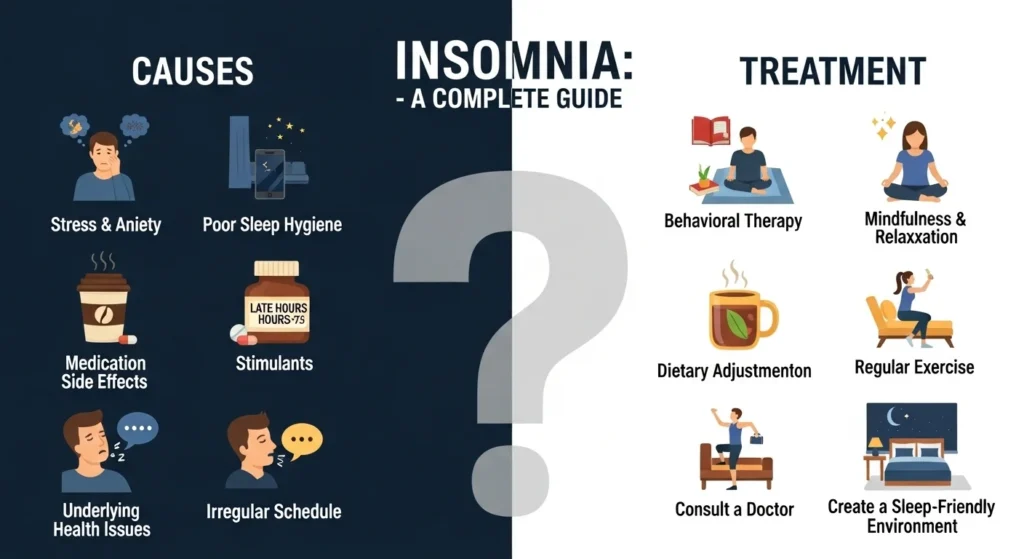
Understanding insomnia causes is important for effective treatment. Insomnia can occur due to several factors related to lifestyle, health, or environment.
Common Causes of Insomnia
• Stress related to work, studies, or family problems
• Anxiety and excessive worrying
• Depression or emotional distress
• Irregular sleep schedules
• Jet lag or shift work
• Excessive screen time before bed
• Poor sleep environment such as noise or bright light
Lifestyle Risk Factors
Certain habits can increase the risk of insomnia:
• Drinking too much caffeine or energy drinks
• Smoking or alcohol use
• Using smartphones or computers late at night
• Lack of physical activity
• Eating heavy meals before bedtime
Medical and Environmental Factors
Some medical conditions can also contribute to insomnia:
• Chronic pain conditions
• Respiratory problems such as asthma
• Hormonal changes
• Certain medications
• Aging-related sleep changes
Often, insomnia results from a combination of these factors rather than a single cause.
Symptoms and Warning Signs
Recognizing insomnia symptoms early can help prevent long-term sleep problems.
Early Symptoms
• Difficulty falling asleep at night
• Taking more than 30 minutes to fall asleep
• Waking up frequently during the night
• Feeling restless or uncomfortable while trying to sleep
Advanced Symptoms
If insomnia continues for a long time, symptoms may worsen:
• Waking up very early in the morning
• Feeling tired even after sleeping
• Daytime fatigue and sleepiness
• Difficulty concentrating or remembering things
• Mood changes such as irritability or sadness
When to See a Doctor
A person should consider consulting a healthcare professional if:
• Sleep problems continue for several weeks
• Insomnia affects daily life or work performance
• Severe fatigue or mood changes occur
• There are signs of anxiety or depression
A doctor can help identify underlying causes and recommend appropriate treatment.
How Insomnia Works in the Body
Sleep is controlled by the brain through a natural cycle called the sleep-wake cycle. This cycle is regulated by the body’s internal clock, also known as the circadian rhythm.
Normally, the brain releases a hormone called melatonin at night, which signals the body that it is time to sleep. When this process works properly, a person feels sleepy at night and awake during the day.
However, insomnia can disturb this natural system.
Several factors can interfere with the sleep process:
• Stress hormones like cortisol remain high
• The brain stays active due to anxiety or overthinking
• Artificial light from screens suppresses melatonin
• Irregular schedules confuse the body clock
An easy analogy is to think of the brain as a sleep switch. When everything is balanced, the switch turns off at night and allows the body to rest. In insomnia, the switch stays partially turned on, making it difficult to fall asleep.
Types of Insomnia
Acute Insomnia
Acute insomnia is short-term sleep difficulty that lasts for a few days or weeks. It often occurs during stressful situations such as exams, travel, or emotional events.
Most people recover once the stressful situation passes.
Chronic Insomnia
Chronic insomnia occurs when sleep problems happen at least three nights per week for three months or longer. This type may require medical evaluation and treatment.
Onset Insomnia
Onset insomnia refers to difficulty falling asleep at the beginning of the night. It is often related to anxiety, stress, or excessive screen time.
Maintenance Insomnia
Maintenance insomnia occurs when a person wakes up during the night and cannot fall asleep again.
Diagnosis and Medical Tests
Doctors diagnose insomnia mainly through medical history and sleep evaluation.
The process may include:
• Discussion about sleep habits
• Review of lifestyle and stress levels
• Evaluation of medical history
• Sleep questionnaires
In some cases, additional tests may be recommended.
Common Medical Tests
Sleep Study (Polysomnography)
This test records brain activity, breathing, heart rate, and movement during sleep.
Actigraphy
A small wearable device tracks sleep patterns over several days.
These tests help doctors understand sleep patterns and rule out other sleep disorders.
Treatment Options
Effective insomnia treatment often involves a combination of medical care and lifestyle changes.
Medical Treatments
Doctors may prescribe medications in some cases to help regulate sleep. These medicines should only be used under medical supervision.
Therapy Options
One of the most effective treatments is Cognitive Behavioral Therapy for Insomnia (CBT-I). This therapy helps people change negative thoughts and habits related to sleep.
Lifestyle Changes
Simple changes in daily habits can significantly improve sleep quality:
• Maintain a consistent sleep schedule
• Avoid caffeine in the evening
• Reduce screen exposure before bedtime
• Create a comfortable and quiet sleep environment
These lifestyle adjustments are often the first step in insomnia treatment.
Prevention Tips
Practicing good sleep habits can help with insomnia prevention.
Healthy Sleep Habits
• Go to bed and wake up at the same time every day
• Keep the bedroom dark and quiet
• Use comfortable bedding and pillows
Diet Recommendations
• Avoid caffeine in the evening
• Limit alcohol consumption
• Eat light meals before bedtime
Exercise Suggestions
Regular physical activity improves sleep quality. However, intense exercise should be avoided close to bedtime.
Mental Wellness Tips
• Practice relaxation techniques such as deep breathing
• Try meditation or mindfulness
• Reduce stress before bedtime
Advantages and Disadvantages
Understanding the insomnia advantages and disadvantages helps explain the importance of early management.
Advantages of Early Treatment
• Improved sleep quality
• Better mental health
• Increased productivity
• Reduced risk of chronic health conditions
Risks of Ignoring Insomnia
• Long-term fatigue
• Increased stress and anxiety
• Reduced concentration and memory
• Higher risk of health problems such as heart disease
Early treatment helps prevent these complications.
Applications / Real-Life Impact
Insomnia can affect many areas of daily life.
Impact on Daily Activities
People with insomnia often feel tired during the day, making it difficult to complete routine tasks.
Impact on Work or Study
Lack of sleep can reduce concentration, creativity, and decision-making ability. This may affect job performance or academic results.
Social and Emotional Effects
Chronic insomnia may lead to mood swings, irritability, and difficulty maintaining relationships.
Because sleep affects both physical and mental health, managing insomnia is important for overall well-being.
Common Questions & Practical Solutions
Q1: Can insomnia be cured?
In many cases, insomnia can be effectively managed with proper treatment, healthy sleep habits, and stress management.
Q2: Is insomnia dangerous?
Short-term insomnia is common, but long-term insomnia may increase the risk of mental and physical health problems.
Q3: Can insomnia be prevented?
Yes, maintaining a regular sleep schedule, reducing stress, and practicing good sleep hygiene can help prevent insomnia.
Future Trends and Medical Advances
Medical research continues to explore new ways to improve sleep health.
New Treatments
Scientists are developing medications that target sleep-regulating brain pathways more precisely.
Sleep Technology
Modern sleep tracking devices and wearable technology help monitor sleep patterns and provide useful health data.
Preventive Medicine
Healthcare professionals are increasingly focusing on lifestyle changes, stress management, and early intervention to prevent chronic insomnia.
These advances may improve sleep management in the future.
Conclusion
Insomnia is a common sleep disorder that affects millions of people worldwide. It occurs when a person has difficulty falling asleep, staying asleep, or waking up feeling rested. Poor sleep can affect physical health, emotional balance, and daily productivity.
Understanding insomnia causes, insomnia symptoms, insomnia treatment, and insomnia prevention is essential for managing sleep problems effectively. Many cases of insomnia can improve with healthy sleep habits, stress management, and professional medical guidance when necessary.
Early awareness and proper treatment can prevent insomnia from becoming a long-term health problem. If sleep difficulties continue for an extended period, consulting a healthcare professional is an important step toward better sleep and improved overall health.