
Imagine waking up every morning feeling extremely tired, even after a full night’s sleep. You may notice sudden weight gain, mood changes, or constant anxiety without understanding why. Many people experience these symptoms but do not realize that a small gland in the neck may be responsible. This gland is called the thyroid, and when it does not work properly, it can lead to thyroid disorder.
Thyroid problems affect millions of people around the world. The thyroid gland controls important body functions such as metabolism, energy levels, heart rate, and body temperature. When it becomes overactive or underactive, it can disturb the body’s natural balance and lead to a wide range of health problems.
Understanding thyroid health is very important because early detection can help prevent serious complications. Many people live normal and healthy lives when thyroid conditions are diagnosed and treated on time.
In this article, you will learn what thyroid disorder is, thyroid disorder causes, thyroid disorder symptoms, thyroid disorder treatment, and thyroid disorder prevention. We will also discuss how it affects the body, available treatments, and ways to maintain healthy thyroid function.
2. What is Thyroid Disorder?
A thyroid disorder is a medical condition that occurs when the thyroid gland produces either too much or too little thyroid hormone.
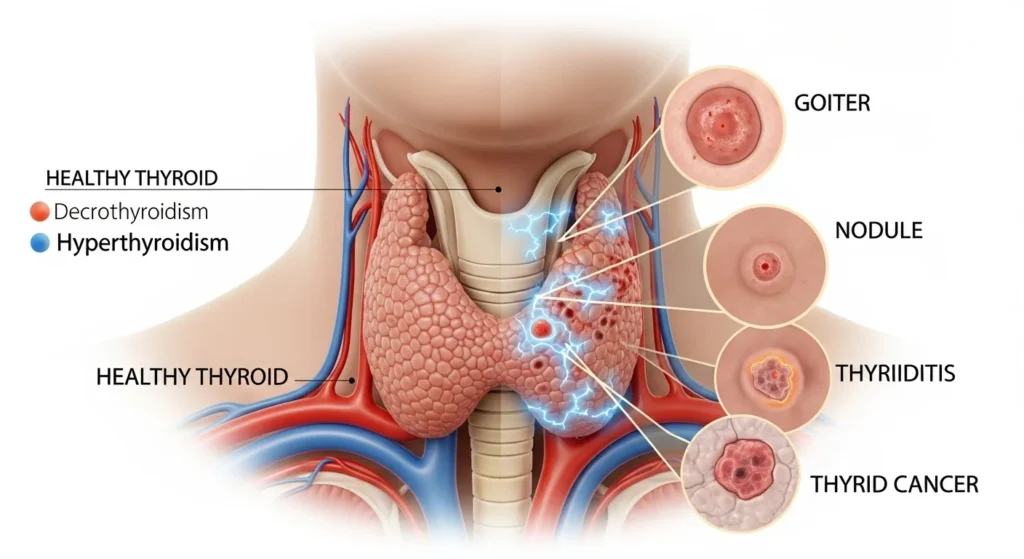
The thyroid gland is a small, butterfly-shaped gland located at the front of the neck. It produces hormones that control how the body uses energy. These hormones help regulate metabolism, heart rate, body temperature, and many other vital processes.
In simple terms, the thyroid works like the body’s energy control system. If it produces too many hormones, the body speeds up. If it produces too few hormones, the body slows down.
When this hormone balance is disturbed, it leads to thyroid disorders that can affect physical health, mood, and daily functioning.
Real-Life Example
For example, a person with an underactive thyroid may feel tired all the time, gain weight easily, and feel cold even in warm weather. On the other hand, someone with an overactive thyroid may feel restless, lose weight quickly, and experience rapid heartbeat.
These symptoms show how thyroid hormones influence many systems in the body.
3. Causes and Risk Factors
There are many thyroid disorder causes. Some are related to genetics, lifestyle habits, or immune system problems.
Common Causes
• Autoimmune diseases
Conditions like Hashimoto’s disease or Graves’ disease cause the immune system to attack the thyroid gland.
• Iodine imbalance
Too much or too little iodine in the diet can affect thyroid hormone production.
• Thyroid inflammation
Inflammation of the thyroid gland can disrupt normal hormone levels.
• Thyroid nodules
Small lumps in the thyroid gland may increase or decrease hormone production.
Lifestyle-Related Risk Factors
• Poor diet lacking essential nutrients
• High stress levels
• Smoking
• Lack of regular medical check-ups
Genetic and Environmental Factors
• Family history of thyroid disease
• Radiation exposure to the neck area
• Certain medications affecting hormone levels
• Hormonal changes during pregnancy or menopause
Understanding these causes helps people take preventive steps and seek medical advice early.
4. Symptoms and Warning Signs
The thyroid disorder symptoms vary depending on whether the thyroid gland is overactive or underactive.
Early Symptoms
• Unusual tiredness
• Mild weight changes
• Mood swings
• Difficulty concentrating
• Sensitivity to temperature
Advanced Symptoms
• Rapid or irregular heartbeat
• Severe fatigue
• Hair thinning or hair loss
• Swelling in the neck (goiter)
• Depression or anxiety
• Muscle weakness
When to See a Doctor
You should consult a healthcare professional if you experience:
• Long-term fatigue without clear reason
• Sudden weight gain or weight loss
• Persistent mood changes
• Swelling in the neck area
• Heart palpitations or unusual heartbeat
Early diagnosis makes treatment easier and prevents complications.
5. How It Works in the Body
To understand thyroid disorders, it is helpful to know how the thyroid system works.
The thyroid gland produces two important hormones:
• T3 (Triiodothyronine)
• T4 (Thyroxine)
These hormones travel through the bloodstream and control how the body uses energy.
Step-by-Step Process
- The brain releases TSH (Thyroid Stimulating Hormone) from the pituitary gland.
- TSH signals the thyroid gland to produce thyroid hormones.
- The thyroid releases T3 and T4 into the bloodstream.
- These hormones control metabolism and energy use in the body.
Simple Analogy
Think of the thyroid gland as a thermostat for the body’s energy system.
If the thermostat is set too high, the body works too fast.
If it is set too low, the body slows down.
A thyroid disorder occurs when this balance is disturbed.
6. Types of Thyroid Disorders
There are several types of thyroid disorders, but the most common ones are related to hormone imbalance.
Hyperthyroidism
Hyperthyroidism occurs when the thyroid gland produces too much thyroid hormone.
This causes the body’s metabolism to speed up.
Common symptoms include:
• Weight loss
• Rapid heartbeat
• Nervousness
• Sweating
• Difficulty sleeping
One common cause is Graves’ disease.
Hypothyroidism
Hypothyroidism occurs when the thyroid gland produces too little thyroid hormone.
This slows down body functions.
Common symptoms include:
• Fatigue
• Weight gain
• Cold sensitivity
• Dry skin
• Depression
Hashimoto’s disease is a common cause of hypothyroidism.
Goiter
A goiter is an enlargement of the thyroid gland. It may occur with normal, low, or high hormone levels.
It often appears as swelling in the neck.
Thyroid Nodules
Thyroid nodules are small lumps that form in the thyroid gland. Most are harmless, but some may affect hormone production.
7. Diagnosis and Medical Tests
Doctors diagnose thyroid disorders through medical evaluation and laboratory tests.
Medical Examination
A doctor may check:
• Neck swelling
• Heart rate
• Weight changes
• Skin and hair condition
Common Medical Tests
Blood Tests
The most common tests measure hormone levels:
• TSH test
• T3 test
• T4 test
These tests help determine whether the thyroid is overactive or underactive.
Thyroid Ultrasound
An ultrasound scan helps doctors see the structure of the thyroid gland and detect nodules.
Thyroid Scan
A thyroid scan evaluates how well the gland absorbs iodine and produces hormones.
Test results guide doctors in selecting the right treatment plan.
8. Treatment Options
The thyroid disorder treatment depends on the type and severity of the condition.
Medications
Doctors may prescribe medications that:
• Replace missing thyroid hormones
• Reduce excess hormone production
Medication helps restore normal hormone balance in the body.
Radioactive Iodine Therapy
This treatment is sometimes used for hyperthyroidism. It reduces the activity of the thyroid gland.
Surgery
In some cases, part or all of the thyroid gland may be removed, especially if there are large nodules or cancer concerns.
Lifestyle Changes
Lifestyle improvements can support medical treatment:
• Balanced diet
• Stress management
• Regular exercise
• Adequate sleep
Treatment plans should always be guided by qualified healthcare professionals.
9. Prevention Tips
Although not all thyroid disorders can be prevented, certain habits may reduce risk.
Healthy Diet
• Include iodine-rich foods such as fish, dairy, and eggs
• Eat balanced meals with fruits and vegetables
• Avoid excessive processed foods
Regular Exercise
Physical activity helps maintain healthy metabolism and hormone balance.
Stress Management
Chronic stress can affect hormone regulation. Techniques such as meditation, yoga, or relaxation exercises may help.
Regular Health Check-ups
Routine blood tests can detect thyroid problems early, especially for people with family history.
These steps support overall thyroid disorder prevention.
10. Advantages and Disadvantages
Understanding thyroid disorder advantages and disadvantages mainly relates to treatment and awareness.
Advantages of Early Treatment
• Symptoms improve significantly
• Hormone levels become balanced
• Reduced risk of complications
• Better quality of life
Disadvantages of Ignoring the Condition
• Severe fatigue and weakness
• Heart problems
• Fertility issues
• Mental health challenges
Early medical care greatly improves long-term outcomes.
11. Applications / Real-Life Impact
Thyroid disorders can affect many aspects of daily life.
Impact on Daily Activities
Low energy levels may reduce productivity and physical performance.
Impact on Work
Concentration difficulties and fatigue can affect job performance.
Impact on Family Life
Mood swings or anxiety may influence relationships and emotional well-being.
Social and Emotional Effects
Some individuals experience reduced confidence due to weight changes, hair loss, or visible neck swelling.
With proper treatment, many people return to normal daily routines.
12. Common Questions & Practical Solutions
Q1: Can thyroid disorder be cured?
Some thyroid conditions can be controlled rather than completely cured. Proper treatment allows most people to live normal lives.
Q2: Is thyroid disorder dangerous?
If left untreated, it can lead to complications such as heart problems or severe metabolic issues. Early treatment reduces these risks.
Q3: Can thyroid disorder be prevented?
Not all cases can be prevented, but healthy lifestyle habits and regular medical check-ups can lower the risk.
13. Future Trends and Medical Advances
Medical research continues to improve understanding and treatment of thyroid disorders.
New Medications
Scientists are developing more precise medications that better regulate thyroid hormone levels.
Advanced Diagnostic Tools
Modern imaging and laboratory tests allow earlier detection and more accurate diagnosis.
Personalized Medicine
Doctors are moving toward personalized treatment plans based on individual genetics and health conditions.
Preventive Healthcare
Increased awareness and screening programs help identify thyroid problems earlier, improving long-term health outcomes.
These advances are expected to improve patient care and quality of life.
14. Conclusion
Thyroid disorders are common health conditions that affect how the body uses energy and regulates important functions. The thyroid gland may produce too much or too little hormone, leading to symptoms such as fatigue, weight changes, mood swings, and heart rate problems.
Understanding thyroid disorder causes, thyroid disorder symptoms, thyroid disorder treatment, and thyroid disorder prevention is essential for maintaining good health. Early diagnosis through simple blood tests allows doctors to provide effective treatment and prevent complications.
With proper medical care, healthy lifestyle habits, and regular health check-ups, most people with thyroid disorders can live active and healthy lives. Raising awareness and seeking professional guidance when symptoms appear are important steps toward better thyroid health.