
Imagine finishing an intense gym session feeling strong and accomplished, only to wake up the next day with stiff, sore muscles that make simple tasks like climbing stairs or carrying groceries uncomfortable. Many fitness enthusiasts push through this discomfort, thinking more exercise equals faster progress. In reality, this approach often backfires. Muscle recovery after a workout is the hidden key to building strength, avoiding injury, and sustaining long-term fitness gains.
Without proper recovery, the body stays in a stressed state. Tiny muscle tears from exercise do not fully repair, energy stores remain low, and inflammation lingers. This leads to fatigue, reduced performance, and higher injury risk. For health students, medical beginners, wellness bloggers, fitness trainers, and caregivers, understanding muscle recovery helps explain why rest is as vital as training itself. It affects everyday energy levels, workout consistency, and overall well-being.
In this article, you will learn what muscle recovery involves, why it matters, its biological process, signs of inadequate recovery, effective strategies, prevention tips, and more. By the end, you will see how prioritizing recovery turns good workouts into great results while protecting your health.
What Is Muscle Recovery?
Muscle recovery is the body’s natural process of repairing and rebuilding muscle tissue after physical activity, while restoring energy levels and returning the body to balance (homeostasis).
In simple terms, exercise—especially resistance training or high-intensity workouts—creates microscopic damage in muscle fibers. Recovery is when the body fixes this damage, clears waste products, and adapts by making muscles stronger and more efficient. It includes reducing inflammation, replenishing energy stores like glycogen, and repairing cells.
This process affects the whole body. Muscles, nervous system, hormones, and immune function all play roles. Poor recovery leaves you feeling drained; good recovery leaves you energized and ready for the next challenge.
Practical real-life example: A beginner who lifts weights three days in a row without rest might feel constant soreness and weaker lifts by day four. Someone who includes rest days and good nutrition feels stronger over time because their muscles have repaired and grown.
Causes and Risk Factors of Poor Muscle Recovery
Several factors can slow or impair muscle recovery after a workout. Understanding them helps you address the root issues.
- Intense or frequent training without rest: Repeated heavy sessions on the same muscles cause cumulative damage that the body cannot repair quickly.
- Inadequate nutrition: Low protein, carbohydrates, or overall calories limit the building blocks and fuel needed for repair.
- Dehydration: Even mild fluid loss reduces blood flow, nutrient delivery, and waste removal from muscles.
- Poor sleep: Most muscle repair and growth hormone release happen during deep sleep.
- Stress and overtraining: High mental or physical stress elevates cortisol, which can break down muscle tissue instead of building it.
- Lifestyle factors: Age, smoking, excessive alcohol, or lack of active recovery days increase risk.
- Environmental influences: Extreme heat, cold, or altitude can add extra stress on the body.
Genetic factors play a smaller role—some people naturally recover faster due to differences in muscle fiber type or hormone response—but lifestyle choices have the biggest impact for most individuals. Beginners and older adults often need more recovery time than trained athletes.
Symptoms and Warning Signs of Inadequate Muscle Recovery
Early signs appear subtly but should not be ignored.
Early symptoms:
- Prolonged muscle soreness beyond 48–72 hours (known as delayed onset muscle soreness or DOMS).
- Feeling unusually tired or lacking motivation for workouts.
- Mild stiffness or “heavy” feeling in the legs or worked muscles.
Advanced symptoms (often linked to overtraining):
- Persistent fatigue even after rest.
- Decreased performance—lifts feel harder, runs slower, or endurance drops.
- Increased irritability, mood swings, or poor sleep.
- Frequent minor illnesses or slow-healing injuries.
- Elevated resting heart rate or unexpected weight changes.
When to see a doctor: Consult a healthcare professional if soreness lasts more than a week, you experience sharp pain (not just general ache), performance drops significantly for over two weeks, or you have symptoms like unexplained swelling, severe fatigue, or signs of overtraining syndrome. Early action prevents long-term setbacks.
How Muscle Recovery Works in the Body
Think of muscle recovery like a construction crew fixing a road after heavy traffic. Exercise damages the “road” (muscle fibers); recovery is the repair phase.
Here is the process step-by-step in beginner-friendly terms:
- Immediate phase (0–2 hours post-workout): The body clears metabolic waste like lactate and begins restoring fluids and electrolytes. Blood flow increases to deliver nutrients.
- Inflammatory response (up to 48 hours): The immune system sends cells to clean up damaged tissue. This causes the familiar soreness and swelling but is necessary for healing. Inflammation acts like an alarm that brings repair crews.
- Repair and regeneration (24–72 hours or more): Satellite cells (muscle stem cells) activate. They help fuse and build new muscle protein, making fibers thicker and stronger—a process called muscle protein synthesis. Glycogen stores refill with carbohydrates.
- Adaptation and supercompensation: With enough rest, the body not only repairs but adapts. Muscles become more resilient, energy systems improve, and you grow stronger. This is why consistent training with recovery leads to progress.
An easy analogy: Baking bread. Kneading (workout) stretches and stresses the dough. Resting and rising (recovery) allows yeast to work its magic, creating a better loaf. Skip the rise, and you get a dense, weak result.
Hormones like testosterone and growth hormone support this repair, especially during sleep. Good blood circulation delivers oxygen and nutrients while removing waste.
Types of Muscle Recovery
Muscle recovery can be viewed in different categories based on timing and method.
Immediate/Short-Term Recovery
This happens right after a workout or between sets. It includes cooling down with light walking, rehydrating, and eating a small snack. It helps clear waste quickly and reduces initial fatigue.
Long-Term Recovery
This spans 24–72 hours or more between training the same muscle groups. It involves full rest days, sleep, and nutrition to allow complete repair and growth.
Active vs. Passive Recovery
- Active recovery: Low-intensity movement like swimming, yoga, or easy cycling on rest days. It boosts blood flow without adding stress.
- Passive recovery: Complete rest, massage, or sleep-focused approaches.
Both have value depending on your training level and goals.
Diagnosis and Medical Tests (When Needed)
Most people self-manage muscle recovery through lifestyle. Doctors get involved if symptoms suggest overtraining or injury.
Diagnosis usually starts with a detailed history: training schedule, nutrition, sleep, and symptoms. Physical exams check for tenderness, strength, and range of motion.
Common tests include:
- Blood work to measure inflammation markers, muscle enzymes (like creatine kinase), or hormone levels.
- In some cases, imaging like ultrasound or MRI for suspected tears or chronic issues.
Results help differentiate normal soreness from overtraining or medical conditions. Simple explanation: Elevated enzymes might show muscle breakdown; low energy markers could point to poor fueling. Always interpret with professional guidance.
Muscle Recovery Treatment Options
Treatment focuses on supporting the body’s natural processes rather than “curing” recovery.
Lifestyle changes (foundation of treatment):
- Schedule rest days—avoid training the same muscles on consecutive days.
- Prioritize 7–9 hours of quality sleep nightly.
- Stay hydrated and eat balanced meals with protein and carbs post-workout.
Nutrition strategies:
- Consume protein (20–40g) and carbohydrates soon after exercise to support repair and refuel.
- Include anti-inflammatory foods like fatty fish, berries, or tart cherry in your diet (general guidance only).
Therapy options:
- Gentle massage, foam rolling, or compression garments to improve circulation.
- Active recovery sessions or stretching.
- Ice or heat therapy depending on the stage (cold for acute swelling, heat for stiffness).
Medications are rarely needed for standard recovery; over-the-counter options may help with severe soreness only under medical advice—no specific dosages recommended here. Surgery is not applicable for normal muscle recovery.
Consult a healthcare professional or certified trainer for personalized plans, especially if you have underlying conditions.
Muscle Recovery Prevention Tips
Prevention is simpler and more effective than fixing poor recovery later.
- Healthy habits: Plan training with built-in rest. Alternate muscle groups and include easy days.
- Diet recommendations: Focus on whole foods with adequate calories, protein (around 1.6–2.2g per kg body weight daily as a general range), complex carbs, and healthy fats. Time a balanced snack or meal within 1–2 hours post-workout.
- Exercise suggestions: Incorporate active recovery like walking or mobility work. Progress training gradually rather than sudden jumps in intensity or volume.
- Mental wellness tips: Manage stress through meditation or hobbies. Track how you feel—mood and energy are great recovery indicators.
Listen to your body. Slight soreness is normal; persistent issues signal a need for more rest.
Advantages and Disadvantages of Prioritizing Muscle Recovery
Benefits of good muscle recovery:
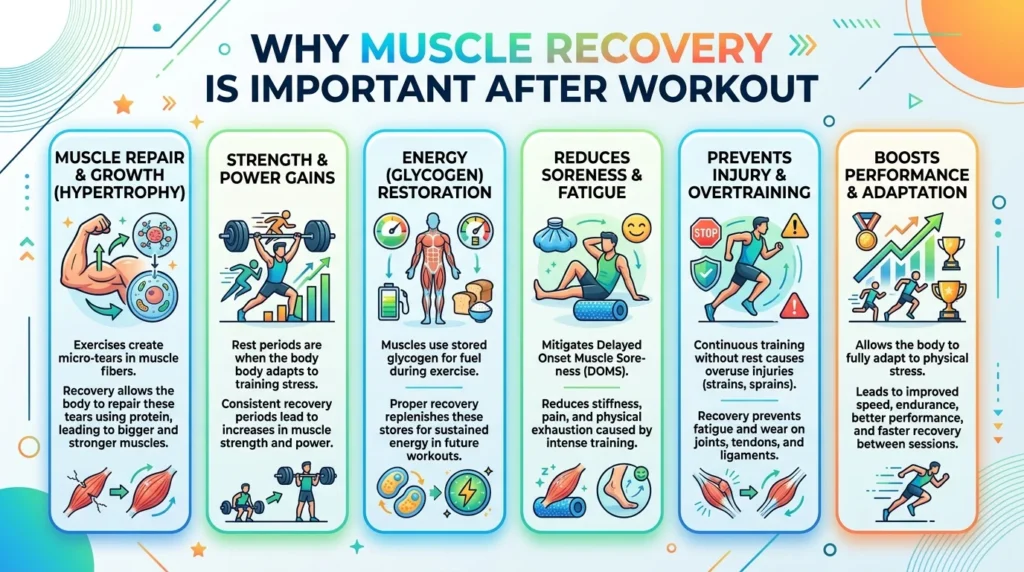
- Stronger muscles and better performance over time.
- Lower injury risk and faster progress toward fitness goals.
- Improved energy, mood, and sleep.
- Sustainable long-term training without burnout.
Risks of ignoring recovery:
- Plateaued or declining performance.
- Higher chance of strains, overuse injuries, or overtraining syndrome.
- Chronic fatigue, weakened immune function, and hormonal imbalances.
- Potential setbacks that force longer breaks from activity.
When considering recovery methods (like active vs. passive), pros include flexibility and enjoyment; cons might involve time commitment or needing guidance to do them correctly. Overall, the advantages far outweigh the effort for most people.
Applications and Real-Life Impact
Proper muscle recovery influences daily life far beyond the gym. You wake up with more energy for work, family activities, or hobbies. Consistent recovery supports better posture, joint health, and mobility as you age.
At work, reduced fatigue means higher focus and productivity. For caregivers or parents, it prevents exhaustion that affects caregiving quality. Socially and emotionally, feeling strong and capable boosts confidence and reduces frustration from stalled progress or constant soreness.
Fitness trainers see clients thrive when recovery is emphasized, leading to happier, more consistent results. Beginners avoid early dropout by experiencing steady gains instead of pain.
Common Questions & Practical Solutions
Q1: Can poor muscle recovery be “cured”?
Yes, in most cases by adjusting training, nutrition, sleep, and stress management. Full recovery from overtraining may take weeks to months—be patient and consult a professional if needed.
Q2: Is inadequate recovery dangerous?
It can become risky if ignored long-term, increasing injury or overtraining chances. Normal soreness is not dangerous, but persistent symptoms warrant attention to prevent bigger issues.
Q3: Can muscle recovery issues be prevented?
Absolutely. Build rest into your routine, fuel properly, sleep well, and progress workouts gradually. Track how you feel and adjust as needed.
Q4: How long does muscle recovery take?
It varies—24–72 hours for many, longer for intense sessions or beginners. Full adaptation can take days.
Future Trends and Medical Advances
Research continues to explore optimized recovery. Areas of interest include personalized nutrition based on genetics or biomarkers, advanced wearables that track recovery metrics like heart rate variability or sleep quality in real time, and new supplements targeting inflammation or cellular energy (such as certain mitochondrial supports).
Technologies like compression devices, cryotherapy, or even AI-driven training apps that suggest ideal rest periods are gaining traction. Preventive medicine emphasizes balanced programs over extreme training. While promising, these should complement—not replace—fundamentals like sleep and nutrition. Ongoing studies refine evidence-based approaches for different age groups and fitness levels.
Conclusion
Muscle recovery after a workout is essential because it allows the body to repair damage, restore energy, reduce inflammation, and adapt by building stronger muscles. Skipping it leads to fatigue, poor performance, and injury risk, while prioritizing it delivers sustainable strength, better health, and enjoyment of fitness.
Make recovery a non-negotiable part of your routine through smart training splits, balanced nutrition, quality sleep, and listening to your body. Health students, trainers, and everyday enthusiasts alike benefit from this knowledge. Consult healthcare professionals for personalized advice, especially with persistent symptoms.
By embracing recovery, you invest in long-term well-being and unlock your full potential. Start small today—add a rest day or focus on post-workout nutrition—and notice the difference in how you feel and perform. Your body will thank you with consistent progress and greater resilience.