
Imagine a young beginner who joins the gym with a strong motivation: to build a muscular and fit body. In the first few weeks, he trains hard every day, but he sees very little change in his body. He feels frustrated and confused about why results are not coming fast.
This is a very common situation among beginners. Many people start their fitness journey with excitement but give up early because they don’t understand the correct method to build muscle fast.
How to build muscle fast for beginners is not just about lifting heavy weights. It is a combination of proper training, balanced nutrition, rest, and consistency.
In this article, you will learn everything step-by-step, including causes of slow muscle growth, symptoms of poor progress, effective training methods, diet plans, and science-based tips to build muscle faster and safely.
2. What is Muscle Building?
Muscle building, also known as muscle hypertrophy, is the process of increasing the size and strength of muscle fibers through exercise, nutrition, and recovery.
When you perform resistance training like weight lifting, small tears occur in muscle fibers. The body repairs these fibers, making them stronger and larger.
Simple Explanation:
Muscle building means:
- Breaking muscle fibers through exercise
- Repairing them through rest and nutrition
- Making them bigger and stronger over time
Real-Life Example:
When you lift weights regularly, your arms and chest gradually become stronger and more defined because your body adapts to physical stress.
3. Causes and Risk Factors of Slow Muscle Growth
Many beginners fail to build muscle fast due to common mistakes:
Main Causes:
- Poor workout plan or incorrect exercises
- Not eating enough protein and calories
- Lack of consistency in training
- Insufficient sleep and recovery
- Overtraining without rest
Lifestyle Factors:
- Irregular eating habits
- Sedentary (inactive) lifestyle outside gym
- High stress levels
- Poor hydration
Genetic Factors:
- Some people naturally build muscle faster
- Body type (ectomorph, mesomorph, endomorph) also affects progress
4. Symptoms and Warning Signs of Poor Muscle Growth
Early Symptoms:
- No visible change in body after weeks of training
- Constant muscle soreness without improvement
- Low energy during workouts
- No strength increase
Advanced Symptoms:
- Fatigue and overtraining
- Muscle loss instead of gain
- Frequent injuries
- Lack of motivation
When to Adjust Your Plan:
If you notice no progress after 4–6 weeks, it means your workout or diet needs improvement.
5. How Muscle Growth Works in the Body
Muscle growth happens through a process called muscle protein synthesis.
Step-by-Step Process:
- Exercise creates small muscle damage
- Body detects the damage
- Protein from food repairs muscles
- Muscles become stronger and bigger
Simple Analogy:
Think of muscles like a rope. When it is slightly damaged and repaired properly, it becomes thicker and stronger.
6. Types of Muscle Growth Training
1. Strength Training
Focuses on heavy weights and low repetitions
Example: Squats, deadlifts
2. Hypertrophy Training
Designed specifically for muscle size increase
Example: 8–12 reps per set
3. Endurance Training
Improves stamina and muscle performance
Example: High reps with light weights
7. Diagnosis of Muscle Progress (Self-Tracking)
There are no medical tests required, but progress can be measured by:
- Body measurements (arms, chest, waist)
- Weight tracking
- Strength increase in workouts
- Progress photos
Simple Interpretation:
- If strength is increasing → muscle growth is happening
- If no change → diet or training needs improvement
8. Treatment Options (How to Improve Muscle Growth)
Training Adjustments:
- Follow a structured workout plan
- Use progressive overload (increase weight gradually)
- Train each muscle group 2 times per week
Nutrition:
- Increase protein intake (eggs, chicken, fish, beans)
- Eat enough calories for muscle growth
- Include healthy fats and carbohydrates
Recovery:
- Sleep 7–9 hours daily
- Take rest days between workouts
Supplements (General Information):
- Protein powder (helps meet protein needs)
- Creatine (supports strength and energy)
9. Prevention of Slow Muscle Growth
To avoid slow progress:
- Never skip meals
- Avoid overtraining
- Drink enough water
- Follow a consistent workout schedule
- Track progress weekly
10. Advantages and Disadvantages of Muscle Building
Advantages:
- Increased strength and stamina
- Better body shape and confidence
- Improved metabolism
- Better bone health
Disadvantages:
- Risk of injury if done incorrectly
- Requires time and consistency
- Muscle soreness in early stages
11. Real-Life Impact of Muscle Building
Daily Life:
- Easier physical tasks (lifting, carrying)
- Better posture and energy
Work and Social Life:
- Improved confidence
- Positive body image
- Better mental health
Emotional Effects:
- Reduced stress
- Improved discipline
- Higher self-esteem
12. Common Questions (FAQ)
Q1: How long does it take to build muscle fast?
Beginners may see visible results in 6–12 weeks with proper training and diet.
Q2: Can I build muscle without gym?
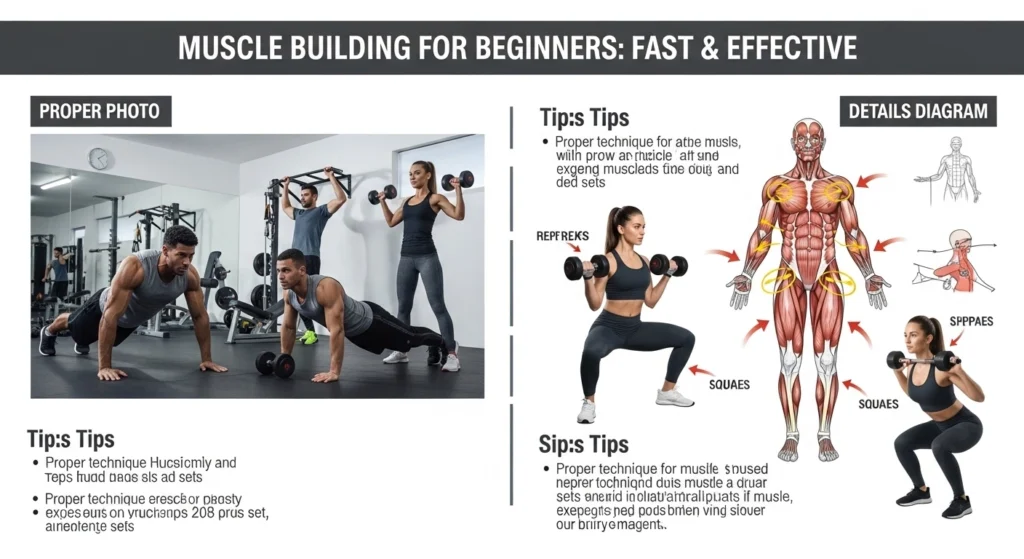
Yes, bodyweight exercises like push-ups and squats can also build muscle.
Q3: Is muscle building safe?
Yes, if done correctly with proper technique and rest.
Q4: Do I need supplements?
Not necessary, but helpful if diet is insufficient.
13. Future Trends in Muscle Building
Fitness science is improving rapidly:
- AI-based workout plans
- Smart fitness tracking apps
- Personalized nutrition plans
- Advanced recovery techniques like cryotherapy
These innovations help beginners achieve faster and safer results.
14. Conclusion
Building muscle fast for beginners is possible, but it requires a smart and consistent approach. It is not just about lifting heavy weights, but also about proper nutrition, rest, and discipline.
Beginners should focus on correct technique, balanced diet, and gradual progress instead of rushing results. Muscle growth is a natural process that takes time, but with the right strategy, visible improvements can be seen within a few weeks.
Stay consistent, avoid shortcuts, and focus on long-term fitness habits for a strong and healthy body.