
Going to the gym is one of the best ways to improve your health, build strength, lose weight, and boost confidence. Millions of Americans exercise regularly to stay fit, manage stress, and maintain a healthy lifestyle. However, while gym workouts offer tremendous benefits, they also come with certain risks. Improper exercise techniques, poor preparation, overtraining, and incorrect equipment use can lead to injuries that slow progress and reduce motivation.
Many beginners enter the gym excited to achieve their fitness goals but often underestimate the importance of injury prevention. Even experienced athletes and bodybuilders can suffer setbacks if they ignore proper training practices. Understanding the most common gym injuries and learning how to prevent them can help you stay consistent, train safely, and enjoy better results over time.
The fitness industry in the United States has evolved significantly over the past several decades. Modern gyms now offer advanced equipment, specialized training programs, group fitness classes, and professional coaching services. While these innovations make exercise more accessible than ever, they also highlight the importance of education and safety.
This comprehensive guide explains the most common gym injuries, why they occur, how to prevent them, and the best practices for maintaining a safe and productive fitness routine.
Understanding Fitness and Why Safety Matters
Fitness refers to the ability to perform physical activities efficiently while maintaining overall health and well-being.
A complete fitness program includes:
- Strength
- Endurance
- Flexibility
- Mobility
- Balance
- Cardiovascular health
Exercise improves quality of life, but safety must always be a priority.
Why Injury Prevention Is Important
Preventing injuries helps you:
- Stay consistent
- Avoid setbacks
- Improve performance
- Build confidence
- Reach fitness goals faster
The safest workout is one that allows you to continue progressing week after week without unnecessary interruptions.
Benefits of Regular Exercise
Before discussing injuries, it is important to understand why exercise remains essential for overall health.
Physical Benefits
Regular workouts help:
- Burn calories
- Build muscle
- Strengthen bones
- Improve heart health
- Increase stamina
- Enhance flexibility
Mental Benefits
Exercise also supports mental wellness by:
- Reducing stress
- Improving mood
- Increasing confidence
- Enhancing concentration
- Promoting better sleep
The key is exercising safely so these benefits can be enjoyed long-term.
Different Types of Fitness Training
Different workout styles place unique demands on the body.
Strength Training
Strength training uses resistance to build muscle and increase strength.
Examples:
- Squats
- Deadlifts
- Bench presses
- Rows
Cardio Training
Cardio improves cardiovascular endurance.
Examples:
- Running
- Cycling
- Walking
- Rowing
HIIT Training
High-Intensity Interval Training alternates intense exercise with short recovery periods.
Weightlifting
Weightlifting focuses on progressive strength development using barbells and other resistance equipment.
Functional Training
Functional exercises improve real-world movement patterns and coordination.
Flexibility Training
Stretching exercises improve mobility and reduce stiffness.
Bodyweight Workouts
These exercises use body weight as resistance.
Examples:
- Push-ups
- Pull-ups
- Lunges
- Planks
Each training style offers unique benefits but requires proper technique to avoid injuries.
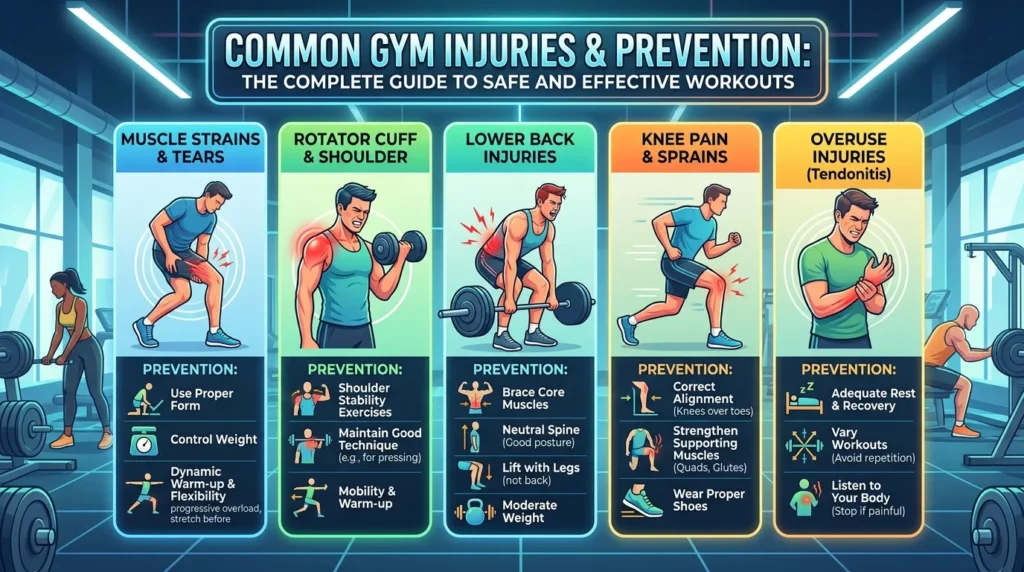
Most Common Gym Injuries and Prevention
Lower Back Strains
Lower back injuries are among the most common gym-related problems.
Causes
- Poor lifting technique
- Excessive weight
- Weak core muscles
- Improper deadlift form
Prevention
- Maintain a neutral spine
- Strengthen core muscles
- Use proper lifting mechanics
- Avoid lifting beyond your ability
Shoulder Injuries
The shoulder joint is highly mobile but vulnerable to injury.
Causes
- Improper bench press technique
- Overhead lifting errors
- Poor posture
- Overuse
Prevention
- Warm up shoulders properly
- Improve mobility
- Strengthen supporting muscles
- Use controlled movements
Knee Injuries
Knee pain frequently occurs during lower-body exercises.
Causes
- Incorrect squat technique
- Poor landing mechanics
- Weak leg muscles
- Overtraining
Prevention
- Learn proper squat form
- Strengthen quadriceps and hamstrings
- Avoid sudden increases in training volume
Wrist Injuries
Wrist discomfort often develops during pressing exercises.
Causes
- Poor hand positioning
- Excessive weight
- Weak wrist stability
Prevention
- Keep wrists neutral
- Strengthen forearms
- Use proper grip techniques
Muscle Strains
Muscle strains affect athletes at all fitness levels.
Causes
- Skipping warm-ups
- Poor flexibility
- Excessive workload
Prevention
- Warm up thoroughly
- Increase intensity gradually
- Prioritize recovery
Ankle Sprains
Ankle injuries commonly occur during functional and cardio training.
Causes
- Poor footwear
- Unstable surfaces
- Sudden directional changes
Prevention
- Wear supportive shoes
- Improve balance and stability
- Pay attention to workout surfaces
Major Causes of Gym Injuries
Poor Exercise Form
Improper technique is one of the leading causes of injury.
Correct form:
- Improves efficiency
- Protects joints
- Enhances muscle activation
Lifting Too Heavy Too Soon
Many people attempt advanced weights before mastering movement patterns.
Progressive overload should be gradual.
Skipping Warm-Ups
Cold muscles are more prone to strains and injuries.
Overtraining
Training without adequate recovery increases injury risk and decreases performance.
Ignoring Pain Signals
Pain should never be ignored.
Sharp or persistent discomfort often indicates a problem that requires attention.
Essential Gym Safety Tips
Warm Up Before Every Workout
A proper warm-up prepares muscles and joints for activity.
Benefits include:
- Improved blood flow
- Better flexibility
- Reduced injury risk
Focus on Technique First
Master movement quality before increasing resistance.
Use Spotters When Needed
Spotters provide safety during heavy lifts such as:
- Bench press
- Squats
- Overhead presses
Stay Hydrated
Hydration supports:
- Muscle function
- Joint health
- Recovery
- Performance
Wear Proper Footwear
Appropriate shoes improve stability and reduce injury risk.
Common Gym Equipment and Safe Usage
Dumbbells
Dumbbells are versatile tools for strength training.
Safety Tips:
- Use controlled movements
- Select appropriate weights
- Maintain proper posture
Barbells
Barbells allow heavy compound exercises.
Safety Tips:
- Secure plates properly
- Learn correct lifting techniques
- Use safety racks when needed
Treadmills
Treadmills are excellent for cardio workouts.
Safety Tips:
- Start slowly
- Use safety features
- Stay focused
Resistance Machines
Machines help beginners learn movement patterns.
Safety Tips:
- Adjust equipment correctly
- Follow instructions carefully
Cable Machines
Cable systems provide smooth resistance.
Safety Tips:
- Check attachments
- Maintain control throughout each repetition
Exercise Bikes
Exercise bikes offer low-impact cardio.
Safety Tips:
- Adjust seat height
- Maintain proper posture
Rowing Machines
Rowing machines provide full-body conditioning.
Safety Tips:
- Use proper rowing mechanics
- Avoid excessive back rounding
Smith Machines
Smith machines offer guided barbell movement.
Safety Tips:
- Learn locking mechanisms
- Avoid relying entirely on machine stability
Nutrition for Injury Prevention
Nutrition plays a major role in maintaining healthy muscles, bones, and joints.
Protein Intake
Protein supports:
- Muscle repair
- Recovery
- Strength development
Good sources include:
- Chicken
- Fish
- Eggs
- Greek yogurt
- Lean beef
Healthy Carbohydrates
Carbohydrates provide workout energy.
Examples:
- Oats
- Rice
- Sweet potatoes
- Fruits
Healthy Fats
Healthy fats support joint health and hormone production.
Examples:
- Avocados
- Nuts
- Olive oil
Pre-Workout Nutrition
Fueling properly before exercise improves performance and reduces fatigue.
Good options include:
- Oatmeal
- Bananas
- Greek yogurt
- Whole-grain toast with eggs
Post-Workout Recovery Nutrition
Recovery meals should contain:
- Protein
- Carbohydrates
- Fluids
Examples:
- Chicken and rice
- Protein shake and fruit
- Turkey sandwich
- Yogurt with berries
Recovery Strategies for Injury Prevention
Importance of Sleep
Quality sleep supports:
- Muscle repair
- Recovery
- Hormone balance
- Energy restoration
Adults should aim for:
- 7–9 hours per night
Rest Days
Recovery days help:
- Reduce fatigue
- Improve performance
- Prevent overuse injuries
Stretching and Mobility
Regular mobility work improves movement quality and reduces injury risk.
Foam Rolling
Foam rolling can help reduce muscle tightness and improve recovery.
Beginner Tips for Safe Long-Term Progress
Set Realistic Goals
Avoid rushing results.
Follow a Structured Plan
A balanced workout routine reduces injury risk.
Track Progress
Monitor:
- Strength gains
- Workout volume
- Recovery
Stay Consistent
Consistency beats extreme training approaches.
Learn Continuously
Improving your knowledge improves your safety and results.
Conclusion
Understanding common gym injuries and prevention strategies is essential for anyone pursuing a healthier and stronger lifestyle. While exercise offers countless benefits, injuries can slow progress and affect motivation when proper precautions are ignored. Most gym injuries occur because of poor technique, excessive training loads, inadequate recovery, or improper equipment use. Fortunately, many of these problems can be prevented through proper warm-ups, correct exercise form, gradual progression, smart nutrition, hydration, and sufficient rest. Whether you are a beginner or an experienced fitness enthusiast, prioritizing safety will help you stay consistent and continue making progress toward your goals. By combining effective training practices with injury prevention strategies, you can enjoy better workouts, faster recovery, greater confidence, and long-term fitness success for years to come.