
The treadmill is one of the most popular and widely used fitness machines in gyms, homes, and fitness centers across the United States. Whether your goal is weight loss, better cardiovascular health, improved endurance, or simply staying active, the treadmill offers a convenient and effective way to exercise regardless of your fitness level.
In today’s fast-paced world, many people spend hours sitting at desks, commuting, or using electronic devices. This sedentary lifestyle can contribute to weight gain, poor fitness, low energy levels, and various health concerns. Regular exercise has become more important than ever, and treadmills provide a simple solution for people who want a reliable workout option regardless of weather conditions or schedule limitations.
The growth of gym culture in America has played a significant role in the popularity of treadmills. Over the decades, fitness centers have evolved from basic workout spaces into modern facilities filled with advanced equipment designed to help people achieve their health goals. Among all gym machines, treadmills remain one of the most trusted and beginner-friendly options.
This comprehensive guide explores treadmill benefits and uses in detail. You’ll learn how treadmills improve physical and mental health, support weight loss, increase endurance, and fit into various workout styles. Whether you’re a beginner or an experienced fitness enthusiast, this article will help you understand how to use a treadmill effectively to achieve long-term fitness success.
Understanding Fitness and Why It Matters
Fitness refers to the body’s ability to perform daily activities efficiently while maintaining good physical and mental health. Being fit doesn’t necessarily mean having a muscular physique or athletic appearance. It means having the strength, endurance, flexibility, and energy needed to live an active and healthy life.
Regular exercise contributes to:
- Better heart health
- Increased stamina
- Improved muscle strength
- Enhanced flexibility
- Better mental wellness
- Healthy weight management
Fitness is built through consistency, discipline, and healthy lifestyle habits. The treadmill serves as an excellent tool for developing these habits because it offers accessible and customizable workouts for people of all fitness levels.
What Is a Treadmill?
A treadmill is a cardiovascular exercise machine that allows users to walk, jog, or run on a moving belt while remaining in one location.
Modern treadmills typically include:
- Adjustable speed settings
- Incline controls
- Heart rate monitoring
- Workout tracking
- Calorie counters
- Preset training programs
These features make treadmills versatile and effective for achieving various fitness goals.
The History and Evolution of Treadmills
The treadmill has evolved significantly over time. Early versions were originally developed for industrial and agricultural purposes rather than fitness training.
During the 1960s and 1970s, treadmills became popular in the fitness industry as researchers began recognizing the importance of cardiovascular exercise. As gym culture expanded across the United States, treadmills became a standard piece of equipment in fitness centers.
Today, advanced treadmills feature digital displays, virtual running programs, incline simulations, and personalized workout tracking. These innovations have made treadmill training more effective and engaging than ever before.
Major Treadmill Benefits
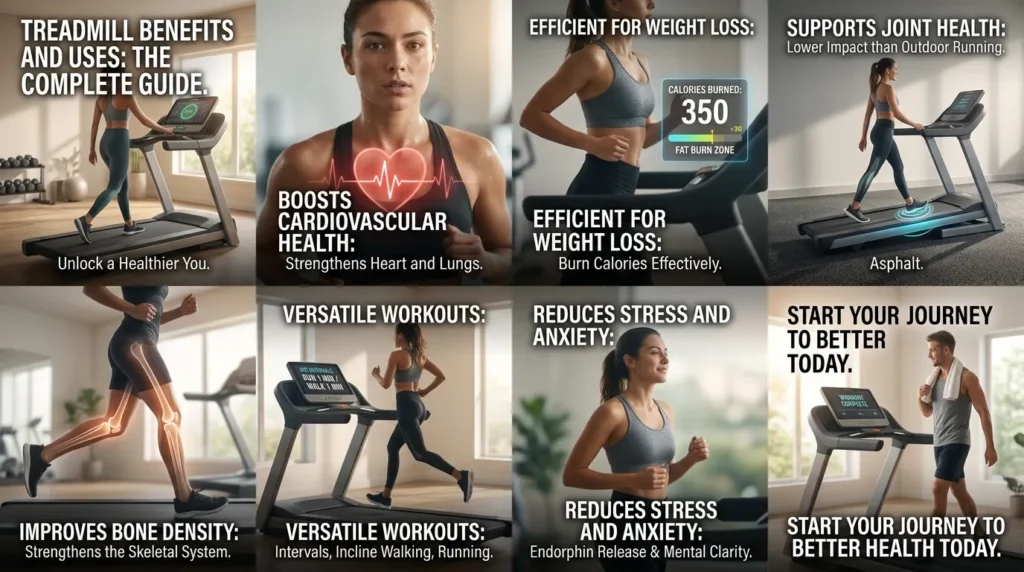
Effective Weight Loss Support
One of the primary reasons people use treadmills is weight loss.
Walking, jogging, and running burn calories, helping create the calorie deficit necessary for fat loss. Depending on workout intensity, duration, and body weight, treadmill sessions can burn hundreds of calories.
Consistent treadmill workouts combined with healthy nutrition can significantly improve body composition over time.
Improved Cardiovascular Health
Cardiovascular fitness refers to the efficiency of the heart and lungs.
Regular treadmill exercise helps:
- Strengthen the heart
- Improve circulation
- Increase oxygen delivery
- Lower blood pressure
- Enhance overall cardiovascular endurance
A stronger cardiovascular system supports long-term health and reduces the risk of many chronic diseases.
Increased Endurance and Stamina
As you consistently train on a treadmill, your body becomes more efficient at utilizing oxygen and producing energy.
Benefits include:
- Reduced fatigue
- Better athletic performance
- Increased energy levels
- Improved physical capacity
These improvements make everyday activities easier and more enjoyable.
Joint-Friendly Exercise Option
Walking on a treadmill often provides more cushioning than outdoor concrete surfaces.
This can help reduce impact on:
- Knees
- Ankles
- Hips
- Lower back
Many individuals recovering from injuries or seeking lower-impact exercise find treadmill walking an excellent option.
Convenience and Accessibility
One of the biggest advantages of treadmill training is convenience.
Unlike outdoor exercise, treadmill workouts are not affected by:
- Rain
- Snow
- Extreme heat
- Darkness
- Traffic conditions
This consistency makes it easier to maintain a regular exercise routine.
Mental Health Benefits of Treadmill Workouts
Stress Reduction
Exercise stimulates the release of endorphins, which are natural mood-enhancing chemicals.
Regular treadmill sessions can help:
- Reduce stress
- Lower anxiety
- Improve mood
- Promote relaxation
Improved Mental Focus
Physical activity increases blood flow to the brain, supporting concentration and cognitive performance.
Many people find treadmill workouts beneficial for improving productivity and mental clarity.
Better Sleep Quality
Consistent exercise often contributes to:
- Faster sleep onset
- Deeper sleep cycles
- Improved recovery
Quality sleep further enhances overall health and fitness progress.
Increased Confidence
Achieving fitness goals through regular treadmill training can significantly boost self-confidence and self-esteem.
Different Types of Treadmill Workouts
Walking Workouts
Walking is ideal for beginners and individuals seeking low-impact exercise.
Benefits include:
- Easy learning curve
- Joint-friendly movement
- Sustainable calorie burning
- Improved cardiovascular health
Jogging Workouts
Jogging provides moderate-intensity exercise suitable for improving endurance and calorie expenditure.
Running Workouts
Running increases workout intensity and calorie burn.
Benefits include:
- Greater cardiovascular improvements
- Enhanced endurance
- Faster calorie expenditure
Incline Walking
Increasing the treadmill incline simulates uphill walking.
Benefits include:
- Greater calorie burn
- Increased leg activation
- Improved cardiovascular challenge
Interval Training
Interval training alternates high-intensity and low-intensity periods.
Example:
- 1 minute running
- 2 minutes walking
This method can improve fitness while maximizing calorie expenditure.
HIIT Training on a Treadmill
High-Intensity Interval Training (HIIT) has become increasingly popular in American fitness culture.
Benefits of HIIT
- Time efficient
- High calorie burn
- Improved cardiovascular fitness
- Increased metabolism
Example HIIT Session:
- Warm-up: 5 minutes
- Sprint: 30 seconds
- Walk: 90 seconds
- Repeat 8–10 times
- Cool down: 5 minutes
HIIT workouts are highly effective for fat-loss goals.
Combining Treadmills with Other Workout Styles
Strength Training
Strength training builds muscle and improves metabolism.
Popular exercises include:
- Squats
- Deadlifts
- Bench presses
- Rows
Combining treadmill cardio with strength training creates a balanced fitness program.
Functional Training
Functional training improves movement patterns used in daily life.
Examples include:
- Lunges
- Farmer carries
- Kettlebell swings
Flexibility Training
Stretching and mobility exercises help improve movement quality and reduce stiffness.
Bodyweight Workouts
Bodyweight exercises complement treadmill training effectively.
Examples include:
- Push-ups
- Squats
- Planks
- Burpees
Common Gym Equipment and Their Uses
Dumbbells
Dumbbells are versatile free weights used for strength training.
Benefits include:
- Improved muscle development
- Better coordination
- Increased strength
Barbells
Barbells allow heavier resistance training.
Popular exercises:
- Squats
- Deadlifts
- Bench presses
Resistance Machines
Resistance machines provide controlled movement patterns and are ideal for beginners.
Cable Machines
Cable systems provide constant resistance throughout exercises.
Common uses include:
- Rows
- Tricep pushdowns
- Chest flyes
Exercise Bikes
Exercise bikes offer low-impact cardiovascular training.
Rowing Machines
Rowers provide full-body workouts that combine strength and cardio.
Smith Machines
Smith machines feature a fixed bar path that helps users learn proper lifting techniques safely.
How to Start Treadmill Training Safely
Begin Slowly
Beginners should focus on comfortable walking sessions before progressing to jogging or running.
Use Proper Footwear
Quality athletic shoes provide support and help reduce injury risk.
Maintain Good Posture
Keep:
- Head up
- Shoulders relaxed
- Core engaged
Avoid leaning excessively on handrails.
Warm Up First
A proper warm-up prepares muscles and joints for exercise.
Cool Down After Training
Gradually reducing intensity helps support recovery and prevent dizziness.
Creating a Beginner Treadmill Routine
Week 1–2
- 20–30 minutes walking
- Three to four sessions weekly
Week 3–4
- Alternate walking and jogging intervals
- Four sessions weekly
Week 5–6
- Increase workout duration
- Add incline training
Gradual progression helps improve fitness safely and effectively.
Nutrition and Treadmill Performance
Importance of Healthy Eating
Nutrition provides the energy needed for exercise and recovery.
A balanced diet should include:
- Lean protein
- Complex carbohydrates
- Healthy fats
- Fruits and vegetables
Protein Intake
Protein supports muscle repair and recovery.
Good sources include:
- Chicken
- Fish
- Eggs
- Greek yogurt
- Lean beef
Healthy Carbohydrates
Carbohydrates fuel treadmill workouts.
Examples include:
- Oatmeal
- Brown rice
- Sweet potatoes
- Whole grains
Healthy Fats
Healthy fats support overall wellness and hormone production.
Examples include:
- Avocados
- Nuts
- Olive oil
Pre-Workout Nutrition
Before treadmill training, choose easily digestible foods such as:
- Banana with peanut butter
- Oatmeal
- Greek yogurt
- Whole-grain toast
These foods provide sustained energy for workouts.
Post-Workout Nutrition
After exercise, focus on recovery nutrition.
Good options include:
- Protein shake and fruit
- Chicken with rice
- Turkey sandwich
- Greek yogurt with berries
Combining protein and carbohydrates supports muscle recovery and energy replenishment.
Hydration and Recovery
Stay Hydrated
Water supports:
- Performance
- Temperature regulation
- Recovery
- Energy production
Drink water before, during, and after exercise.
Prioritize Sleep
Most adults should aim for 7–9 hours of quality sleep nightly.
Sleep supports:
- Muscle repair
- Hormone balance
- Mental recovery
Schedule Rest Days
Recovery days help prevent overtraining and reduce injury risk.
Common Treadmill Mistakes to Avoid
Holding the Handrails Constantly
This reduces workout effectiveness and may negatively affect posture.
Skipping Warm-Ups
Cold muscles are more prone to injury.
Using the Same Workout Daily
Variety improves motivation and promotes continued progress.
Increasing Intensity Too Quickly
Gradual progression helps prevent injuries and burnout.
Conclusion
Treadmill benefits and uses extend far beyond simple walking or running. This versatile fitness machine supports weight loss, cardiovascular health, endurance development, mental wellness, and overall fitness improvement. Whether you’re a beginner starting a healthier lifestyle or an experienced athlete seeking structured cardio training, the treadmill offers a safe, effective, and convenient workout solution. By combining treadmill exercise with strength training, proper nutrition, hydration, recovery, and consistent effort, you can achieve lasting fitness results and enjoy a healthier, more active life for years to come.