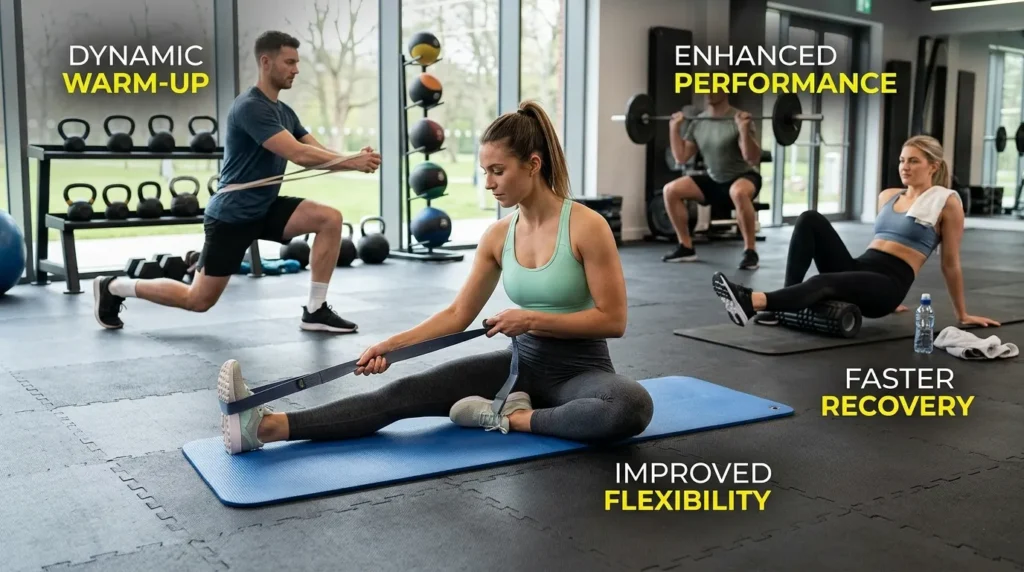

Imagine arriving at the gym after a long day at work. You feel stiff from sitting at a desk, but instead of warming up, you jump straight into heavy exercises. A few minutes later, your muscles feel tight, your movements are restricted, and your workout performance suffers. This situation is common among beginners and even experienced gym-goers. The solution is simple: stretching.
The importance of stretching in gym training is often underestimated. Many people focus on lifting heavier weights, running longer distances, or burning more calories while ignoring flexibility and mobility. However, stretching plays a vital role in helping the body move efficiently, reducing muscle tightness, improving flexibility, and supporting recovery.
Over the years, fitness culture in the United States has evolved significantly. Modern fitness programs now emphasize mobility, injury prevention, recovery, and overall wellness alongside strength and endurance training. Stretching has become an essential part of these balanced fitness routines.
In this comprehensive guide, you will learn why stretching matters, how it improves physical and mental health, different types of stretching, beginner-friendly techniques, workout styles, recovery strategies, nutrition tips, and practical ways to incorporate stretching into your daily gym routine for long-term fitness success.
What Is Fitness and Why Is It Important?
Fitness is the ability to perform physical activities efficiently while maintaining good health, strength, endurance, and mobility.
Being physically fit means having:
- Strong muscles
- Healthy joints
- Good flexibility
- Cardiovascular endurance
- Mental well-being
Regular exercise supports both physical and mental health and helps people enjoy a more active lifestyle.
Why Exercise Matters Today
Modern lifestyles often involve:
- Long hours of sitting
- Reduced physical activity
- Increased stress levels
- Poor posture
Exercise helps counter these challenges by improving overall health and quality of life.
What Is Stretching?
Stretching involves moving muscles and joints through their full range of motion to improve flexibility and mobility.
It is commonly performed:
- Before workouts
- After workouts
- During recovery days
- As part of mobility training
Stretching helps prepare the body for movement and supports long-term physical health.
Why Is Stretching Important in Gym Training?
The importance of stretching in gym workouts goes beyond simply touching your toes or improving flexibility.
Improves Range of Motion
Flexible muscles and joints move more efficiently.
This allows:
- Better exercise performance
- Improved movement quality
- More effective workouts
Reduces Muscle Tightness
Many people develop tight muscles due to:
- Sitting for long periods
- Repetitive movements
- Intense training
Stretching helps reduce stiffness and discomfort.
Supports Better Exercise Form
Good mobility allows proper movement mechanics.
This helps improve:
- Squats
- Lunges
- Deadlifts
- Overhead presses
Helps Prevent Injuries
Although stretching cannot eliminate all injuries, it can help reduce certain movement limitations that contribute to injury risk.
History of Stretching and Modern Fitness
In earlier decades, many gym programs focused primarily on strength and bodybuilding.
As sports science evolved, fitness professionals recognized the importance of:
- Mobility
- Recovery
- Functional movement
- Flexibility training
Today, stretching is considered an important component of comprehensive fitness programs throughout the United States.
Types of Stretching
Different stretching methods serve different purposes.
Static Stretching
Static stretching involves holding a stretch position for a period of time.
Examples:
- Hamstring stretch
- Quadriceps stretch
- Shoulder stretch
Best used:
- After workouts
- During recovery sessions
Dynamic Stretching
Dynamic stretching uses controlled movement patterns.
Examples:
- Arm circles
- Leg swings
- Walking lunges
Best used:
- Before workouts
Active Stretching
Active stretching uses muscle engagement to create the stretch.
Benefits include:
- Improved mobility
- Better body control
Passive Stretching
Passive stretching involves assistance from:
- Equipment
- Partners
- Body weight
Mobility Exercises
Mobility work combines movement and flexibility training.
Examples include:
- Hip circles
- Thoracic rotations
- Ankle mobility drills
Different Workout Styles and the Role of Stretching
Each workout style benefits from proper flexibility and mobility.
Strength Training
Strength training focuses on building muscle and increasing strength.
Common exercises:
- Squats
- Deadlifts
- Bench presses
Stretching helps improve lifting mechanics and movement quality.
Cardio Workouts
Cardio includes:
- Running
- Walking
- Cycling
Stretching can improve comfort and mobility during these activities.
HIIT Training
High-Intensity Interval Training involves explosive movements.
Good mobility helps support safe and efficient performance.
Weightlifting
Olympic lifting requires excellent flexibility and joint mobility.
Functional Training
Functional workouts involve real-life movement patterns.
Stretching improves:
- Balance
- Stability
- Coordination
Bodyweight Workouts
Exercises such as:
- Push-ups
- Pull-ups
- Squats
benefit from flexible muscles and healthy joints.
Fat-Loss Workouts
Most fat-loss programs combine:
- Strength training
- Cardio
- Mobility work
Stretching supports overall performance.
Physical Benefits of Stretching
Improved Flexibility
Flexibility is one of the most obvious benefits.
Flexible muscles allow greater movement freedom.
Better Posture
Stretching helps reduce muscle imbalances that contribute to poor posture.
Improved Athletic Performance
Efficient movement often leads to better exercise quality.
Better Joint Health
Healthy joints support long-term mobility and physical activity.
Reduced Muscle Stiffness
Stretching helps muscles feel looser and more comfortable.
Improved Circulation
Movement and stretching can promote healthy blood flow.
Mental Benefits of Stretching
Stretching supports mental wellness as well.
Stress Relief
Stretching encourages relaxation and helps reduce tension.
Improved Focus
Many stretching routines require mindful breathing and concentration.
Better Sleep
Relaxation-focused stretching may improve sleep quality.
Enhanced Mood
Physical movement often contributes to emotional well-being.
Beginner Stretching Routine
A simple routine can provide excellent results.
Neck Stretch
Helps relieve tension from desk work and screen time.
Shoulder Stretch
Improves upper-body mobility.
Chest Stretch
Supports better posture.
Hamstring Stretch
Targets the back of the legs.
Hip Flexor Stretch
Useful for people who sit for long periods.
Calf Stretch
Supports walking, running, and lower-body workouts.
Hold each stretch gently without forcing the movement.
Beginner Workout Tips
Warm Up Before Training
Start with:
- Light cardio
- Dynamic stretching
Learn Proper Exercise Form
Correct technique improves results and reduces injury risk.
Increase Intensity Gradually
Avoid doing too much too quickly.
Stay Consistent
Regular practice produces better long-term results.
Prioritize Recovery
Rest and recovery are essential for progress.
Common Gym Equipment and Their Uses
Understanding equipment helps beginners feel more confident.
Dumbbells
Used for:
- Strength training
- Muscle building
Barbells
Popular for:
- Squats
- Deadlifts
- Bench presses
Treadmills
Useful for:
- Walking
- Running
- Cardio conditioning
Resistance Machines
Provide guided exercise movements.
Cable Machines
Offer versatile resistance training options.
Exercise Bikes
Provide low-impact cardiovascular exercise.
Rowing Machines
Train multiple muscle groups simultaneously.
Smith Machines
Assist with controlled strength exercises.
Nutrition and Stretching Performance
Nutrition supports overall fitness and recovery.
Healthy Eating Habits
Focus on:
- Lean proteins
- Fruits
- Vegetables
- Whole grains
Hydration
Water supports:
- Muscle function
- Joint health
- Recovery
Protein Intake
Protein helps repair and maintain muscle tissue.
Pre-Workout Nutrition
Good choices include:
- Oatmeal
- Fruit
- Greek yogurt
Post-Workout Nutrition
After exercise, consume:
- Protein
- Healthy carbohydrates
to support recovery.
Recovery and Stretching
Recovery is where many fitness improvements occur.
Why Recovery Matters
Muscles need time to adapt and grow stronger.
Stretching After Workouts
Post-workout stretching may help:
- Reduce muscle tightness
- Improve flexibility
- Promote relaxation
Importance of Sleep
Most adults benefit from seven to nine hours of quality sleep.
Sleep supports:
- Recovery
- Energy levels
- Performance
Active Recovery
Examples include:
- Walking
- Yoga
- Mobility exercises
Common Stretching Mistakes
Skipping Warm-Ups
Cold muscles may not respond well to intense stretching.
Stretching Too Aggressively
Stretching should never cause sharp pain.
Holding Breath
Steady breathing improves relaxation and effectiveness.
Being Inconsistent
Flexibility improves gradually through regular practice.
Ignoring Mobility Work
Mobility training complements traditional stretching.
How to Build a Stretching Habit
Schedule It
Treat stretching like any other workout.
Start Small
Even five to ten minutes can be beneficial.
Pair It with Existing Habits
Stretch after workouts or before bedtime.
Track Progress
Monitor improvements in flexibility and movement quality.
Future Trends in Stretching and Fitness
The fitness industry continues to evolve.
Mobility-Focused Training
More fitness programs now prioritize movement quality.
Recovery Technology
Recovery tools are becoming increasingly popular.
Personalized Fitness Programs
Customized mobility and stretching plans are growing.
Integrated Wellness Approaches
Future programs will increasingly combine:
- Strength training
- Stretching
- Recovery
- Nutrition
- Mental wellness
Conclusion
Understanding the importance of stretching in gym training can significantly improve your overall fitness journey. Stretching supports flexibility, mobility, posture, recovery, and exercise performance while helping reduce muscle tightness and movement restrictions. Whether your goal is weight loss, muscle gain, athletic performance, or general health, incorporating stretching into your routine can make workouts more effective and enjoyable. Combined with proper exercise, balanced nutrition, hydration, quality sleep, and consistent recovery practices, stretching becomes a powerful tool for long-term fitness success. Start with simple stretches, stay consistent, and make mobility training a regular part of your healthy lifestyle.