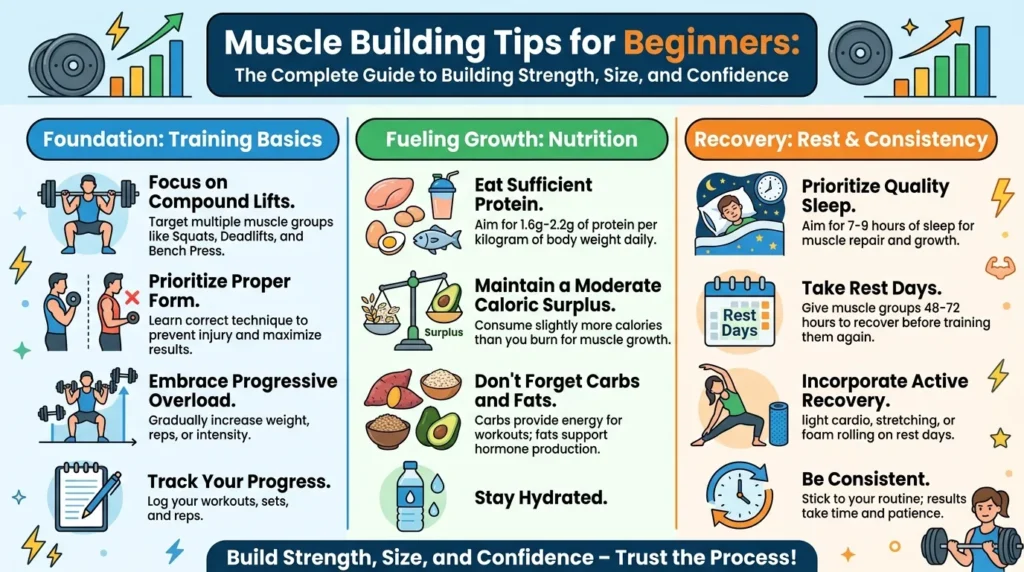

Building muscle is one of the most rewarding fitness goals you can pursue. Whether you want to look stronger, improve athletic performance, lose body fat, or simply become healthier, muscle-building training can transform both your body and your mindset. For beginners, however, the fitness world can seem confusing. With countless workout programs, diet plans, supplements, and social media advice available, it’s easy to feel overwhelmed.
The good news is that building muscle doesn’t have to be complicated. In fact, most beginners can achieve impressive results by focusing on a few proven fundamentals: proper training, balanced nutrition, adequate recovery, and consistency. Understanding these basics will help you avoid common mistakes and make steady progress from day one.
Fitness has become a major part of modern American lifestyles. Over the past several decades, gym culture in the United States has evolved from simple weight rooms into advanced fitness centers offering strength training, cardio equipment, functional fitness programs, and personalized coaching. Today, people of all ages use fitness training to improve their health, increase longevity, and enhance overall quality of life.
This comprehensive guide will walk you through everything you need to know about muscle building as a beginner. From workout strategies and gym equipment to nutrition and recovery, you’ll learn practical tips that can help you build a stronger, healthier body while developing habits that last a lifetime.
What Is Muscle Building?
Muscle building, also known as muscle hypertrophy, is the process of increasing the size and strength of muscle fibers through resistance training and proper nutrition. When you challenge your muscles during exercise, small microscopic tears occur in the muscle tissue. During recovery, your body repairs these fibers, making them stronger and larger than before.
The muscle-building process depends on three major factors:
- Progressive resistance training
- Proper nutrition
- Adequate recovery
When these three elements work together consistently, your body gradually develops more muscle mass and strength.
Why Fitness Matters in Modern Life
Modern lifestyles often involve long hours of sitting, screen time, stress, and reduced physical activity. These habits can contribute to weight gain, poor posture, low energy levels, and various health issues.
Regular fitness training helps combat these problems by:
- Improving physical health
- Increasing daily energy
- Supporting mental wellness
- Reducing disease risk
- Enhancing overall quality of life
Muscle-building workouts are especially beneficial because they improve body composition while increasing functional strength for everyday activities.
The Benefits of Building Muscle
Increased Strength
One of the most noticeable benefits of muscle building is improved strength. Everyday tasks such as lifting groceries, carrying luggage, moving furniture, or climbing stairs become easier.
Better Body Composition
Muscle tissue helps create a leaner and more athletic appearance. As muscle mass increases, body fat often becomes less noticeable, resulting in a more defined physique.
Higher Metabolism
Muscle burns more calories than fat tissue, even while resting. Increasing muscle mass can help support a healthier metabolism and improve long-term weight management.
Improved Heart Health
Regular exercise strengthens the cardiovascular system, improves circulation, and supports healthy blood pressure levels.
Better Posture
Strong muscles help support proper alignment of the spine and joints, reducing the risk of posture-related discomfort.
Enhanced Mental Health
Exercise stimulates the release of endorphins, often called “feel-good” hormones. Regular workouts can reduce stress, improve mood, and boost confidence.
Better Sleep Quality
People who exercise consistently often experience deeper, more restful sleep, which further supports recovery and muscle growth.
Understanding Different Types of Fitness Training
Strength Training
Strength training involves using resistance to challenge muscles and increase force production. This includes lifting weights, resistance bands, and bodyweight exercises.
Popular strength exercises include:
- Squats
- Deadlifts
- Bench presses
- Pull-ups
- Shoulder presses
Weightlifting
Weightlifting focuses on lifting external resistance such as dumbbells, barbells, kettlebells, and machines. It is one of the most effective methods for building muscle and strength.
Cardio Workouts
Cardiovascular exercise improves heart and lung function while burning calories.
Examples include:
- Running
- Walking
- Cycling
- Swimming
- Rowing
While cardio supports overall health, it should complement—not replace—strength training when muscle growth is the primary goal.
HIIT Training
High-Intensity Interval Training (HIIT) alternates short bursts of intense activity with recovery periods.
Benefits include:
- Time efficiency
- Improved conditioning
- Increased calorie burn
- Enhanced endurance
Functional Training
Functional training improves movement patterns used in daily life.
Examples include:
- Lunges
- Farmer’s carries
- Medicine ball exercises
- Kettlebell movements
Flexibility Training
Flexibility exercises help maintain healthy joints and improve range of motion.
Popular methods include:
- Stretching
- Yoga
- Mobility drills
Bodyweight Training
Bodyweight exercises require little or no equipment and are ideal for beginners.
Examples include:
- Push-ups
- Squats
- Planks
- Lunges
- Pull-ups
Fat-Loss Workouts
Fat-loss programs typically combine strength training, cardio, and proper nutrition to reduce body fat while preserving muscle mass.
Essential Muscle Building Tips for Beginners
Start With Compound Exercises
Compound exercises work multiple muscle groups simultaneously and provide excellent results for beginners.
Examples include:
- Squats
- Deadlifts
- Bench presses
- Pull-ups
- Rows
These movements build strength efficiently while stimulating significant muscle growth.
Focus on Proper Form
Using correct technique is more important than lifting heavy weights. Good form:
- Reduces injury risk
- Improves muscle activation
- Enhances long-term progress
Consider working with a trainer or watching instructional demonstrations when learning new exercises.
Train Consistently
Consistency is one of the biggest factors in muscle growth. A moderate program followed regularly is more effective than an intense routine performed occasionally.
Aim for:
- 3–5 workouts per week
- Consistent training schedule
- Gradual progression
Apply Progressive Overload
Progressive overload means gradually increasing training demands over time.
You can do this by:
- Adding weight
- Performing more repetitions
- Increasing workout volume
- Improving exercise difficulty
This principle forces muscles to continually adapt and grow.
Avoid Comparing Yourself to Others
Everyone progresses at a different rate. Focus on your personal improvement rather than comparing your results to experienced gym members or fitness influencers.
Beginner Muscle Building Workout Routine
Day 1: Upper Body
- Bench Press: 3 sets
- Bent-Over Rows: 3 sets
- Shoulder Press: 3 sets
- Lat Pulldowns: 3 sets
- Bicep Curls: 2 sets
- Tricep Pushdowns: 2 sets
Day 2: Lower Body
- Squats: 3 sets
- Romanian Deadlifts: 3 sets
- Leg Press: 3 sets
- Walking Lunges: 3 sets
- Calf Raises: 3 sets
Day 3: Active Recovery
- Walking
- Stretching
- Light cardio
Day 4: Full Body
- Deadlifts: 3 sets
- Push-Ups: 3 sets
- Pull-Ups or Assisted Pull-Ups: 3 sets
- Dumbbell Lunges: 3 sets
- Planks: 3 rounds
This simple structure allows beginners to train major muscle groups while providing adequate recovery.
Common Gym Equipment and Their Uses
Dumbbells
Dumbbells are versatile free weights used for strength training and muscle development.
Common exercises:
- Bicep curls
- Shoulder presses
- Lunges
- Chest presses
Barbells
Barbells allow heavier lifting and are ideal for compound exercises.
Popular movements:
- Squats
- Deadlifts
- Bench presses
- Rows
Treadmills
Treadmills provide controlled indoor walking, jogging, and running workouts.
Benefits include:
- Improved cardiovascular health
- Increased calorie expenditure
- Better endurance
Resistance Machines
Machines guide movement patterns, making them beginner-friendly and safer for learning proper exercise mechanics.
Cable Machines
Cable systems provide constant tension throughout movements and can train nearly every muscle group.
Popular exercises:
- Cable rows
- Tricep pushdowns
- Chest flyes
- Face pulls
Exercise Bikes
Exercise bikes offer low-impact cardio suitable for all fitness levels.
Rowing Machines
Rowers provide both cardiovascular and muscular conditioning by engaging multiple muscle groups simultaneously.
Smith Machines
Smith machines feature a fixed barbell path that can help beginners learn movement patterns while maintaining stability.
Nutrition for Muscle Growth
Why Nutrition Matters
Training provides the stimulus for muscle growth, but nutrition supplies the building materials required for recovery and development.
Without proper nutrition, muscle-building progress slows significantly.
Prioritize Protein Intake
Protein provides amino acids that help repair and build muscle tissue.
Good protein sources include:
- Chicken breast
- Turkey
- Fish
- Eggs
- Greek yogurt
- Cottage cheese
- Lean beef
- Protein shakes
Most active individuals benefit from consuming protein at each meal.
Eat Balanced Meals
A balanced meal typically includes:
- Protein
- Complex carbohydrates
- Healthy fats
- Vegetables
This combination supports energy, recovery, and overall health.
Healthy Carbohydrates
Carbohydrates fuel workouts and replenish energy stores.
Excellent choices include:
- Oatmeal
- Rice
- Potatoes
- Whole grains
- Fruits
- Vegetables
Healthy Fats
Healthy fats support hormone production and overall wellness.
Sources include:
- Avocados
- Nuts
- Seeds
- Olive oil
- Fatty fish
Pre-Workout Nutrition
Eating before training can improve performance and energy levels.
Good pre-workout meal examples include:
- Oatmeal with fruit
- Chicken and rice
- Greek yogurt with berries
- Whole-grain toast with eggs
Consume meals approximately one to three hours before exercise.
Post-Workout Nutrition
After training, your body benefits from nutrients that support recovery.
Effective post-workout options include:
- Protein shake and banana
- Chicken with rice
- Turkey sandwich
- Greek yogurt and fruit
Combining protein and carbohydrates is often ideal after exercise.
The Importance of Hydration
Water plays a critical role in:
- Muscle function
- Recovery
- Temperature regulation
- Athletic performance
Dehydration can reduce workout quality and slow recovery.
Practical hydration tips:
- Drink water throughout the day
- Carry a reusable water bottle
- Increase intake during intense workouts
- Monitor urine color as a hydration indicator
Recovery and Muscle Growth
Sleep Is Essential
Muscle growth occurs primarily during recovery, not during workouts.
Most adults should aim for:
- 7–9 hours of sleep nightly
Quality sleep supports:
- Muscle repair
- Hormone regulation
- Energy levels
- Mental focus
Take Rest Days
Rest days allow muscles, joints, and the nervous system to recover from training stress.
Skipping recovery can lead to:
- Fatigue
- Reduced performance
- Increased injury risk
Stretch and Stay Mobile
Regular stretching and mobility work help maintain flexibility and improve movement quality.
Benefits include:
- Reduced stiffness
- Better range of motion
- Improved exercise technique
Common Beginner Mistakes to Avoid
Training Too Much
More exercise is not always better. Recovery is necessary for growth.
Ignoring Nutrition
Many beginners focus entirely on workouts while neglecting proper eating habits.
Changing Programs Constantly
Switching routines every week makes progress difficult to track.
Lifting Too Heavy Too Soon
Building strength takes time. Focus on technique before increasing weight.
Expecting Instant Results
Muscle growth is a gradual process. Patience and consistency produce the best long-term outcomes.
Staying Motivated for Long-Term Success
Motivation naturally rises and falls. Successful fitness journeys rely on habits and discipline rather than motivation alone.
Strategies for staying consistent include:
- Setting realistic goals
- Tracking workouts
- Taking progress photos
- Celebrating small victories
- Following a structured routine
- Training with a partner
Remember that every workout contributes to long-term progress.
Conclusion
Building muscle as a beginner does not require complicated routines or extreme diets. The most effective approach is surprisingly simple: train consistently, focus on proper form, eat nutritious foods, prioritize protein, stay hydrated, and allow your body adequate time to recover. By mastering these fundamentals, you can steadily increase strength, build lean muscle, improve confidence, and enhance overall health.
Whether your goal is gaining muscle, losing fat, improving athletic performance, or simply becoming healthier, the journey starts with small, consistent actions. Stay patient, trust the process, and focus on progress rather than perfection. With dedication and the right habits, you can build a stronger body and create a sustainable fitness lifestyle that delivers results for years to come.