
If you are new to the gym, you have probably heard the same advice repeatedly: “Eat more protein.” While that recommendation may sound simple, many beginners are unsure about what protein actually does, how much they need, and which foods are best for their fitness goals.
In today’s fast-paced American lifestyle, fitness has become more important than ever. Millions of people join gyms every year to lose weight, build muscle, improve health, and boost confidence. However, many beginners focus only on workouts and overlook one of the most important factors for success—nutrition. No matter how hard you train, your body needs the right fuel to recover, grow, and perform at its best.
Protein is the building block of muscles. It helps repair muscle tissue after workouts, supports recovery, controls hunger, and contributes to overall health. Whether your goal is muscle gain, fat loss, athletic performance, or simply becoming healthier, eating enough protein is essential.
This guide will explain everything gym beginners need to know about protein foods, fitness basics, workout styles, gym equipment, recovery, and practical nutrition strategies. By the end, you’ll know exactly how to fuel your body for better results and long-term success.
Understanding Fitness and Why It Matters
Fitness is more than having visible muscles or losing weight. It refers to your body’s ability to perform daily activities efficiently while maintaining good physical and mental health.
Why Regular Exercise Is Important
Exercise helps:
- Build strength
- Improve heart health
- Increase energy levels
- Support weight management
- Reduce stress
- Improve sleep quality
- Enhance mental focus
Over the past several decades, gym culture in the United States has evolved significantly. From traditional bodybuilding gyms to modern fitness centers offering HIIT classes, functional training, and personalized coaching, Americans now have more fitness opportunities than ever before.
Why Protein Is So Important for Gym Beginners
Protein is one of the three major nutrients your body needs, along with carbohydrates and fats.
What Does Protein Do?
Protein helps:
- Build and repair muscle tissue
- Support recovery after workouts
- Maintain healthy skin, hair, and nails
- Strengthen the immune system
- Keep you feeling full longer
Why Beginners Need More Protein
When you start exercising, especially strength training, your muscles experience small amounts of stress. Protein helps repair this damage and allows muscles to become stronger.
Without enough protein, recovery becomes slower and fitness progress can suffer.
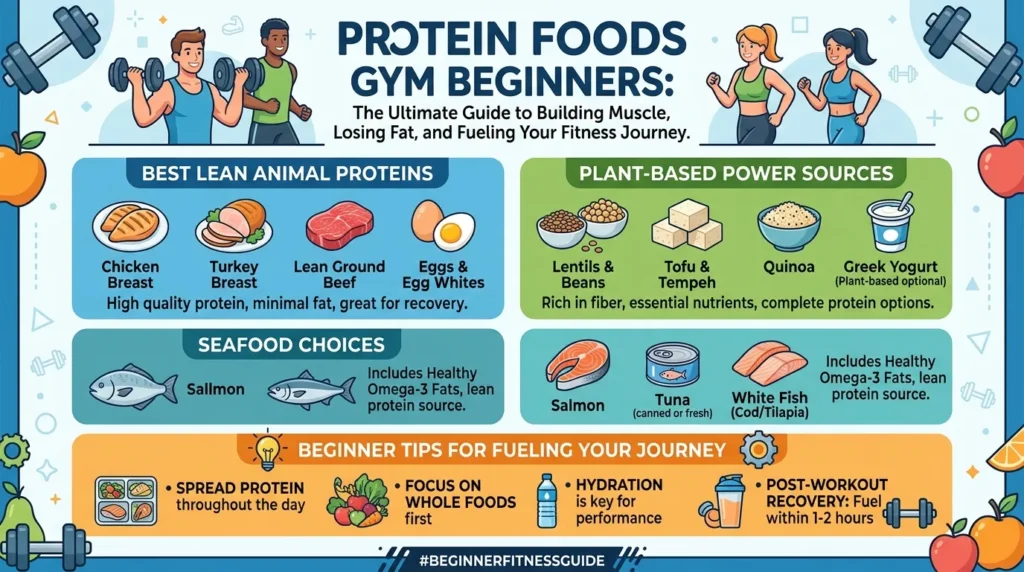
Best Protein Foods for Gym Beginners
Chicken Breast
Chicken breast is one of the most popular protein sources among gym-goers.
Benefits:
- High protein content
- Low fat
- Easy to cook
- Affordable
A 3-ounce serving provides approximately 25–30 grams of protein.
Eggs
Eggs are considered one of the highest-quality protein sources available.
Benefits:
- Complete protein
- Rich in vitamins
- Budget-friendly
- Convenient
One large egg contains about 6 grams of protein.
Greek Yogurt
Greek yogurt offers both protein and probiotics.
Benefits:
- Supports digestion
- High protein content
- Great snack option
- Easy to combine with fruit
Lean Beef
Lean beef provides protein, iron, and vitamin B12.
Benefits:
- Supports muscle growth
- Rich nutrient profile
- Excellent recovery food
Fish
Fish such as salmon and tuna are excellent protein choices.
Benefits:
- High-quality protein
- Healthy omega-3 fats
- Supports heart health
Turkey Breast
Turkey is another lean protein source that supports muscle recovery and growth.
Cottage Cheese
Many athletes enjoy cottage cheese because it contains casein protein, which digests slowly and supports overnight recovery.
Protein Shakes
Protein powders can be convenient when whole-food meals are unavailable.
Popular options include:
- Whey protein
- Casein protein
- Plant-based protein
Remember that supplements should support, not replace, whole foods.
Plant-Based Protein Foods
Vegetarians and vegans can also meet their protein needs.
Beans
Beans provide:
- Protein
- Fiber
- Vitamins
- Minerals
Lentils
Lentils are affordable, nutritious, and protein-rich.
Tofu
Tofu is a versatile protein source made from soybeans.
Edamame
Edamame offers complete plant-based protein and important nutrients.
Quinoa
Unlike many grains, quinoa contains all essential amino acids.
How Much Protein Do Beginners Need?
Protein requirements vary depending on goals and body weight.
General Recommendations
Most gym beginners should consume:
- 0.7 to 1 gram of protein per pound of body weight
For example:
- 150-pound person: 105–150 grams daily
- 180-pound person: 126–180 grams daily
Spread Protein Throughout the Day
Instead of eating all your protein at one meal, divide it across:
- Breakfast
- Lunch
- Dinner
- Snacks
This supports better muscle recovery and growth.
Different Workout Styles and Their Protein Needs
Strength Training
Strength training focuses on building muscle and increasing strength.
Examples:
- Squats
- Deadlifts
- Bench press
- Overhead press
Higher protein intake helps support muscle growth.
Cardio Training
Cardio includes:
- Running
- Cycling
- Swimming
- Walking
Protein helps maintain muscle while improving endurance.
HIIT Training
High-Intensity Interval Training combines short bursts of intense activity with brief recovery periods.
Protein supports recovery from demanding workouts.
Functional Training
Functional exercises improve real-life movement patterns and overall athleticism.
Bodyweight Training
Exercises include:
- Push-ups
- Pull-ups
- Squats
- Lunges
Protein remains important for recovery and performance.
Common Gym Equipment and Their Uses
Dumbbells
Dumbbells help develop:
- Strength
- Balance
- Coordination
Barbells
Barbells are used for major compound lifts that build muscle efficiently.
Treadmills
Treadmills improve cardiovascular fitness and support fat loss.
Resistance Machines
These machines guide movement and are beginner-friendly.
Cable Machines
Cable systems allow controlled resistance through various angles.
Exercise Bikes
Great for low-impact cardio workouts.
Rowing Machines
Rowing provides both cardio and full-body conditioning.
Smith Machines
Smith machines help beginners perform lifts with additional stability.
Pre-Workout Nutrition
What you eat before training affects your performance.
Good Pre-Workout Foods
Examples include:
- Banana with peanut butter
- Oatmeal
- Greek yogurt
- Whole-grain toast
Benefits
Pre-workout meals provide:
- Energy
- Better focus
- Improved workout performance
Post-Workout Nutrition
Recovery begins immediately after training.
Best Post-Workout Protein Foods
- Chicken and rice
- Protein shake
- Eggs and toast
- Greek yogurt with fruit
- Turkey sandwich
Why It Matters
Post-workout nutrition helps:
- Repair muscles
- Restore energy
- Improve recovery
Healthy Eating Habits for Gym Success
Focus on Whole Foods
Choose:
- Lean proteins
- Fruits
- Vegetables
- Whole grains
- Healthy fats
Limit Processed Foods
Processed foods often contain:
- Excess sugar
- Unhealthy fats
- Empty calories
Practice Portion Control
Even healthy foods should be consumed in appropriate amounts.
Hydration and Fitness Performance
Water is essential for every body function.
Benefits of Proper Hydration
Hydration helps:
- Regulate body temperature
- Improve performance
- Support recovery
- Reduce fatigue
Daily Water Intake
Many active adults benefit from drinking:
- 3–4 liters of water daily
Individual needs may vary.
Sleep and Muscle Recovery
Many beginners underestimate the importance of sleep.
Why Sleep Matters
During sleep, your body:
- Repairs muscles
- Produces growth hormones
- Recovers from workouts
Sleep Recommendations
Aim for:
- 7–9 hours of quality sleep per night
Common Protein Mistakes Beginners Make
Relying Only on Protein Shakes
Whole foods should remain your primary protein source.
Not Eating Enough Protein
Many beginners consume less protein than needed.
Skipping Meals
Missing meals can slow recovery and reduce energy.
Ignoring Overall Nutrition
Protein matters, but balanced nutrition matters too.
Physical and Mental Benefits of a High-Protein Fitness Lifestyle
Physical Benefits
- Increased muscle growth
- Better fat loss
- Improved strength
- Faster recovery
- Enhanced performance
Mental Benefits
- Greater confidence
- Reduced stress
- Better focus
- Improved mood
- Increased motivation
Beginner Tips for Long-Term Success
Start Slowly
Avoid trying extreme diets or workout plans.
Stay Consistent
Consistency beats perfection every time.
Track Your Progress
Monitor:
- Body weight
- Strength gains
- Workout performance
Be Patient
Fitness transformations take time.
Focus on long-term habits rather than quick fixes.
Conclusion
Protein foods are one of the most important parts of any beginner fitness plan. Whether your goal is building muscle, losing body fat, improving athletic performance, or simply becoming healthier, adequate protein intake supports nearly every aspect of your progress. Foods like chicken, eggs, Greek yogurt, fish, lean beef, beans, lentils, and cottage cheese provide the nutrients your body needs to recover and grow stronger.
However, protein alone is not the entire solution. The best results come from combining quality nutrition with consistent training, proper hydration, sufficient sleep, and smart recovery habits. Beginners who focus on these fundamentals often achieve better and more sustainable results than those chasing quick fixes.
Remember that fitness is a journey, not a race. Build healthy habits, choose nutritious foods, stay active, and trust the process. With patience and consistency, your efforts will lead to lasting improvements in strength, health, confidence, and overall well-being.