
Many people focus on warming up before exercise, but they often forget one equally important step: cooling down after a workout. Whether you are lifting weights, running on a treadmill, attending a fitness class, or completing a tough HIIT session, cool-down exercises play a major role in helping your body recover properly.
In today’s fast-paced world, fitness has become a vital part of a healthy lifestyle in the United States. Millions of Americans visit gyms every day to lose weight, build muscle, improve heart health, and reduce stress. While intense workouts help achieve these goals, recovery is where the body actually repairs and becomes stronger. This is why cool-down exercises are so important.
A proper cool-down gradually brings your heart rate back to normal, reduces muscle tightness, improves flexibility, and helps your body transition from exercise mode to recovery mode. It can also lower the risk of dizziness and discomfort after intense training.
In this complete guide, you’ll learn everything about cool-down exercises after workouts, including their benefits, best techniques, recovery strategies, gym equipment, nutrition tips, and how to create an effective post-workout routine for long-term fitness success.
What Are Cool-Down Exercises After Workout?
Cool-down exercises are low-intensity movements performed immediately after physical activity.
They help your body gradually return to its normal resting state instead of stopping exercise suddenly.
Examples include:
- Walking slowly after running
- Gentle cycling after intense cardio
- Stretching major muscle groups
- Deep breathing exercises
- Mobility movements
A cool-down typically lasts between 5 and 15 minutes depending on workout intensity.
Why Fitness and Recovery Matter
Modern fitness is about more than just looking good. It focuses on overall health, performance, and well-being.
The Evolution of Fitness Culture in America
Over the past few decades, gym culture in the USA has evolved significantly.
Fitness trends have moved beyond bodybuilding and now include:
- Functional training
- HIIT workouts
- Strength training
- Cross-training
- Mobility exercises
- Recovery-focused fitness
Today, recovery is recognized as an essential part of every successful fitness program.
Why Recovery Is Important
Every workout creates stress on muscles and joints.
Recovery helps:
- Repair muscle tissue
- Restore energy levels
- Reduce soreness
- Improve future performance
Cool-down exercises are one of the simplest recovery tools available.
How Cool-Down Exercises Work
Gradually Lower Heart Rate
During exercise, your heart pumps blood faster to support working muscles.
A cool-down slowly decreases heart rate instead of causing a sudden drop.
Improve Blood Circulation
Light movement keeps blood flowing throughout the body.
This helps remove waste products created during exercise.
Relax Tight Muscles
After intense training, muscles often become tight and stiff.
Stretching helps release tension and improve mobility.
Support Mental Recovery
Cool-down routines create a calming transition between exercise and daily activities.
This helps reduce stress and improve focus.
Different Types of Workouts and Their Cool-Down Needs
Every workout style benefits from specific cool-down techniques.
Strength Training
Strength training focuses on building muscle and increasing strength.
Examples include:
- Bench press
- Squats
- Deadlifts
- Shoulder press
Recommended cool-down:
- Slow walking
- Static stretching
- Deep breathing
Cardio Workouts
Cardio exercises increase heart rate and endurance.
Examples include:
- Running
- Cycling
- Rowing
- Stair climbing
Recommended cool-down:
- Light jogging
- Slow walking
- Gentle stretching
HIIT Training
High-Intensity Interval Training involves short bursts of intense effort.
Because HIIT places significant stress on the body, cooling down is especially important.
Recommended cool-down:
- Walking
- Controlled breathing
- Full-body stretching
Weightlifting
Heavy lifting creates muscle fatigue and tightness.
Recommended cool-down:
- Mobility exercises
- Foam rolling
- Stretching major muscle groups
Functional Training
Functional exercises improve real-life movement patterns.
Recommended cool-down:
- Dynamic mobility drills
- Balance exercises
- Gentle stretching
Bodyweight Workouts
Push-ups, squats, lunges, and planks also require proper recovery.
Recommended cool-down:
- Walking
- Stretching
- Deep breathing
Best Cool-Down Exercises After Workout
Slow Walking
Walking is one of the easiest and most effective cool-down activities.
Benefits include:
- Gradual heart rate reduction
- Improved circulation
- Lower stress on joints
Walk for 3–5 minutes after exercise.
Gentle Cycling
If you completed a cycling workout, continue pedaling slowly for several minutes.
This helps muscles recover without sudden stopping.
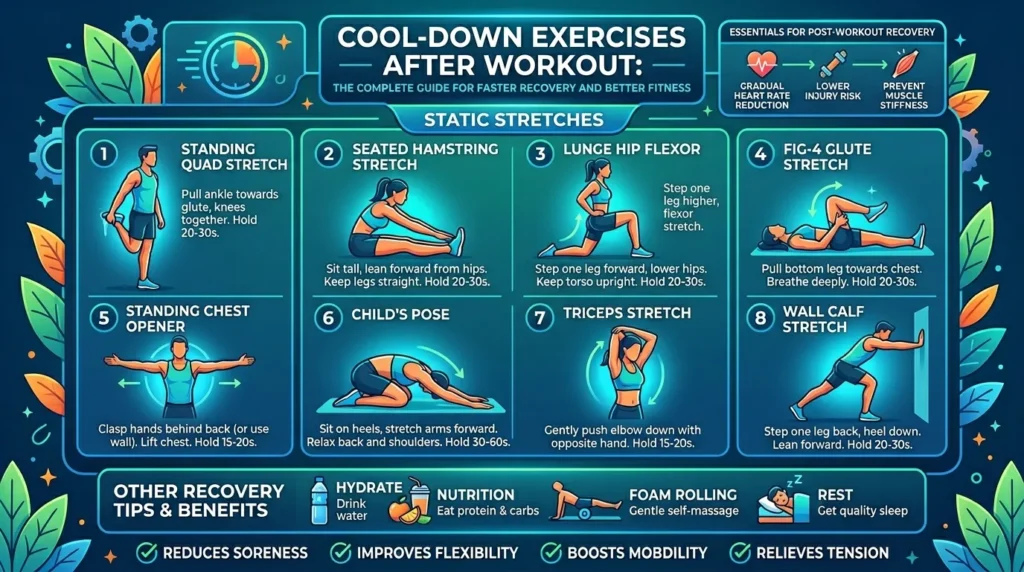
Hamstring Stretch
The hamstrings often become tight after workouts.
Benefits:
- Improved flexibility
- Reduced muscle tightness
- Better mobility
Quadriceps Stretch
This stretch targets the front of the thighs.
Hold each side for 20–30 seconds.
Calf Stretch
Running and cardio exercises heavily involve calf muscles.
Stretching helps reduce stiffness.
Shoulder Stretch
Upper-body workouts often leave shoulders tight.
Gentle stretches improve mobility and comfort.
Chest Stretch
Excellent after:
- Bench press
- Push-ups
- Chest machines
Child’s Pose
A popular recovery stretch that relaxes the entire body.
Benefits include:
- Lower back relief
- Stress reduction
- Improved flexibility
Cat-Cow Stretch
This mobility exercise improves spinal movement and posture.
Deep Breathing Exercises
Controlled breathing helps:
- Lower heart rate
- Reduce stress
- Improve relaxation
Physical Benefits of Cool-Down Exercises
Faster Recovery
Recovery begins immediately after exercise.
Cool-down exercises support this process.
Reduced Muscle Tightness
Stretching helps maintain flexibility and movement quality.
Improved Flexibility
Regular stretching gradually increases range of motion.
Better Blood Flow
Improved circulation supports nutrient delivery to muscles.
Lower Risk of Dizziness
Sudden stopping may cause lightheadedness.
A gradual cool-down helps prevent this issue.
Improved Athletic Performance
Athletes who recover properly often perform better during future workouts.
Mental Benefits of Cool-Down Exercises
Fitness is not only physical.
Recovery also benefits the mind.
Stress Relief
Stretching and breathing exercises help calm the nervous system.
Better Focus
Many people feel mentally refreshed after a proper cool-down.
Improved Mood
Exercise releases feel-good chemicals.
A cool-down helps extend those positive feelings.
Better Sleep Quality
Relaxation after workouts may support deeper and more restful sleep.
Common Gym Equipment and Their Uses
Understanding gym equipment helps beginners train safely and effectively.
Dumbbells
Dumbbells are versatile tools used for:
- Muscle building
- Strength development
- Functional training
Barbells
Barbells are commonly used for heavy compound exercises.
Examples:
- Squats
- Deadlifts
- Bench press
Treadmills
Treadmills support:
- Walking
- Jogging
- Running
They are also useful for cool-down walking.
Resistance Machines
Machines guide movement patterns and improve safety for beginners.
Cable Machines
Cable systems allow smooth resistance through multiple angles.
Exercise Bikes
Excellent for cardio training and active recovery.
Rowing Machines
Rowers provide full-body cardiovascular exercise.
Smith Machines
Smith machines offer guided barbell movement and increased stability.
Nutrition and Recovery After Exercise
Exercise and recovery work together.
Good nutrition helps maximize workout results.
Healthy Eating Habits
Focus on:
- Lean proteins
- Fruits
- Vegetables
- Whole grains
- Healthy fats
Hydration
Water supports:
- Muscle function
- Recovery
- Energy levels
Drink fluids before, during, and after workouts.
Protein Intake
Protein helps repair and build muscle tissue.
Good sources include:
- Chicken
- Fish
- Eggs
- Greek yogurt
- Protein shakes
Pre-Workout Meals
Eat a balanced meal containing:
- Protein
- Complex carbohydrates
Consume it 1–3 hours before training.
Post-Workout Meals
Recovery meals should include:
- Protein
- Carbohydrates
- Fluids
This combination helps replenish energy and support muscle repair.
Sleep and Muscle Recovery
Sleep is one of the most powerful recovery tools available.
Why Sleep Matters
During sleep, the body:
- Repairs muscles
- Produces hormones
- Restores energy
Recommended Sleep Amount
Most adults need:
- 7–9 hours per night
Sleep Tips
- Maintain a consistent schedule
- Limit screen time before bed
- Create a relaxing bedtime routine
How Beginners Can Start Safely
Begin Slowly
Avoid pushing too hard during your first weeks.
Learn Proper Form
Good technique reduces injury risk.
Follow a Structured Program
Consistency produces better results than random workouts.
Include Recovery Days
Rest allows muscles to recover and grow.
Never Skip Cool-Downs
Recovery should be part of every workout session.
Common Cool-Down Mistakes
Stopping Suddenly
This can cause dizziness and discomfort.
Skipping Stretching
Neglecting flexibility work may increase stiffness.
Rushing Through Recovery
Recovery deserves the same attention as training.
Ignoring Hydration
Dehydration slows recovery and affects performance.
Not Listening to Your Body
Pay attention to soreness, fatigue, and recovery needs.
Sample 10-Minute Cool-Down Routine
Try this simple beginner-friendly routine:
- Slow walk – 3 minutes
- Deep breathing – 1 minute
- Hamstring stretch – 30 seconds each side
- Quad stretch – 30 seconds each side
- Calf stretch – 30 seconds each side
- Chest stretch – 30 seconds
- Shoulder stretch – 30 seconds each side
- Child’s pose – 1 minute
- Cat-cow stretch – 1 minute
This routine helps promote recovery after most workouts.
Long-Term Fitness Success
Fitness is not about one workout.
It is about consistent healthy habits.
Successful gym-goers focus on:
- Proper training
- Balanced nutrition
- Recovery
- Sleep
- Hydration
- Patience
Cool-down exercises may seem small, but they contribute greatly to long-term progress.
Conclusion
Cool-down exercises after workouts are one of the most overlooked yet valuable parts of any fitness routine. Whether your goal is weight loss, muscle growth, improved athletic performance, or overall wellness, proper recovery helps your body perform at its best. A good cool-down gradually lowers your heart rate, improves circulation, reduces muscle tightness, and supports flexibility. It also provides mental relaxation and helps transition your body from intense activity to recovery mode.
For beginners and experienced athletes alike, recovery should never be treated as optional. Combining effective cool-down exercises with smart nutrition, proper hydration, quality sleep, and consistent training creates the foundation for long-term fitness success. By dedicating just a few extra minutes after each workout, you can improve recovery, reduce discomfort, and stay motivated throughout your fitness journey. Make cool-down exercises a regular habit, and your body will thank you with better performance, improved health, and lasting results.