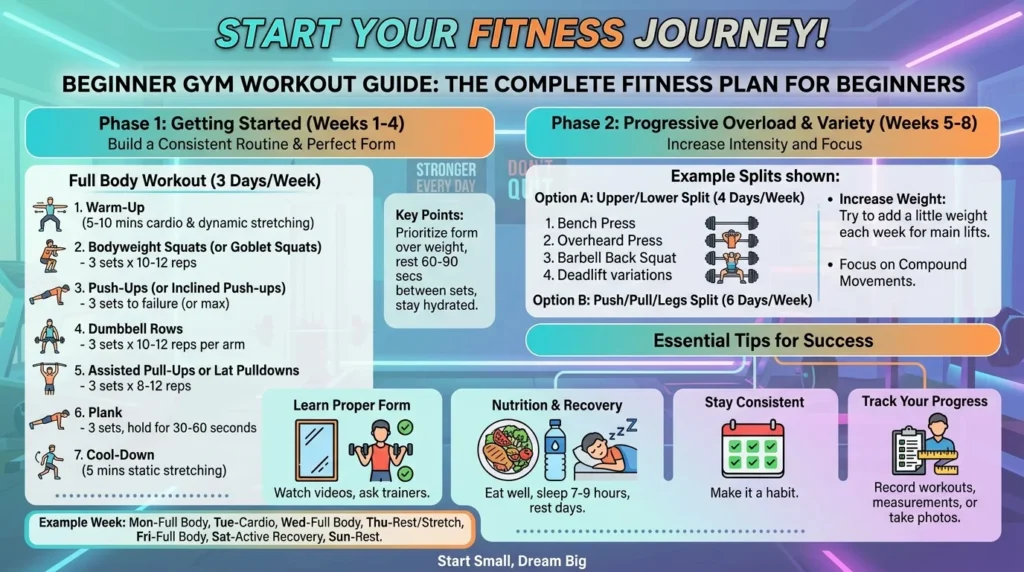

Starting your fitness journey can feel exciting, confusing, and even a little intimidating at the same time. Many beginners walk into a gym without knowing which exercises to do, how to use equipment, or how to create an effective workout routine. That is why having a proper Beginner Gym Workout Guide is extremely important for building confidence, improving fitness, and achieving long-term health goals.
Gym workouts are not only for bodybuilders or professional athletes. Today, millions of people in the United States go to the gym to improve their physical health, mental wellness, energy levels, and overall lifestyle. Whether your goal is weight loss, muscle building, better stamina, or simply staying healthy, the gym provides the tools and environment needed for success.
Modern fitness culture has grown rapidly in the USA over the last few decades. People are becoming more aware of the importance of exercise, healthy eating, and active living. Gyms now offer advanced equipment, personal training, group fitness classes, and digital workout tracking to help beginners start safely and effectively.
This complete guide will explain everything beginners need to know about gym workouts, including workout routines, fitness basics, equipment, nutrition, motivation, safety, and recovery.
Understanding Gym and Fitness Basics
What Is Fitness?
Fitness means having a healthy body that can perform daily activities with energy and efficiency. It includes several important areas such as:
- Strength
- Endurance
- Flexibility
- Balance
- Cardiovascular health
A fit body not only looks healthier but also functions better in daily life.
Why Regular Exercise Matters
Exercise is important because it improves both physical and mental health. Regular gym workouts help reduce the risk of many health problems, including obesity, heart disease, diabetes, and high blood pressure.
Exercise also improves mood by releasing endorphins, often called “feel-good hormones.”
Importance of Consistency
One of the biggest fitness secrets is consistency. Beginners often expect fast results, but real progress takes time. Going to the gym regularly and following a structured routine produces better long-term results than short periods of extreme training.
Benefits of Gym Workouts
Physical Health Benefits
Gym workouts offer many physical benefits, including:
- Weight loss
- Muscle growth
- Better heart health
- Increased stamina
- Improved flexibility
- Stronger bones and joints
Regular exercise also boosts metabolism and helps maintain healthy body weight.
Mental Health Benefits
Fitness training also improves mental wellness. Exercise can help:
- Reduce stress
- Improve sleep quality
- Increase confidence
- Improve focus and concentration
- Lower anxiety levels
Many people use gym workouts to improve emotional balance and mental clarity.
Social Benefits
Gyms also create opportunities to meet people with similar fitness goals. Group workouts and fitness communities can increase motivation and accountability.
History and Evolution of Gym Culture
Fitness training has existed for thousands of years, but modern gym culture became especially popular in the United States during the 20th century. Early gyms focused mainly on strength and bodybuilding.
Today, gyms offer much more than weightlifting. Modern fitness centers include:
- Cardio zones
- Functional training areas
- Yoga studios
- HIIT classes
- Recovery spaces
Technology has also changed fitness culture with wearable fitness trackers, online coaching, and mobile workout apps.
Types of Gym Workouts
Strength Training
Strength training focuses on building muscles and improving body strength using weights or resistance machines.
Popular strength exercises include:
- Bench press
- Squats
- Deadlifts
- Shoulder press
Strength training also improves bone density and metabolism.
Cardio Workouts
Cardio exercises improve heart and lung health. Common cardio activities include:
- Running
- Cycling
- Walking
- Rowing
Cardio is highly effective for burning calories and improving endurance.
HIIT Workouts
High-Intensity Interval Training (HIIT) combines short periods of intense exercise with rest periods.
Benefits of HIIT include:
- Fast calorie burning
- Improved stamina
- Efficient workouts
- Better cardiovascular fitness
Functional Training
Functional training improves movements used in daily life. These workouts increase balance, coordination, and flexibility.
Bodyweight Exercises
Bodyweight workouts use your own body for resistance. Examples include:
- Push-ups
- Pull-ups
- Planks
- Lunges
These exercises are excellent for beginners because they require minimal equipment.
Full-Body Workout Plan
Beginner Full-Body Workout Plan (Weekly Schedule)
| Day | Workout Focus | Exercises | Sets & Reps | Rest Time |
|---|---|---|---|---|
| Monday | Full Body Strength | Push-ups, Squats, Plank, Lunges | 3 sets × 10–15 reps | 30–60 sec |
| Tuesday | Cardio + Core | Running, Jump Rope, Sit-ups, Leg Raises | 20–30 min + 3 sets | 30 sec |
| Wednesday | Rest / Recovery | Light walking, stretching | 20–30 min | — |
| Thursday | Full Body Strength | Squats, Incline Push-ups, Plank, Glute Bridge | 3 sets × 12 reps | 30–60 sec |
| Friday | Cardio + Fat Burn | Jogging, Burpees, Mountain Climbers | 25–35 min | 30 sec |
| Saturday | Strength + Core | Push-ups, Squats, Plank variations, Crunches | 3 sets × 10–15 reps | 30–60 sec |
| Sunday | Rest Day | Rest, yoga, light stretching | — | — |
Key Benefits
| Benefit Type | Description |
|---|---|
| Muscle Strength | Improves overall body power and endurance |
| Fat Loss | Helps burn calories and reduce body fat |
| Flexibility | Improves movement and reduces stiffness |
| Stamina | Increases energy levels for daily activities |
| Health | Supports heart health and overall fitness |
A full-body workout plan is ideal for beginners because it trains all major muscles, improves fitness evenly, and builds a strong foundation for long-term health and strength.
Beginners should focus on full-body workouts 3–4 times per week.
Example beginner routine:
Full Body StrengthFull Body Strength Workout (Table Format)
| Exercise | Target Muscles | How to Perform | Sets | Reps | Rest Time |
|---|---|---|---|---|---|
| Push-ups | Chest, shoulders, triceps | Keep body straight, lower chest to floor, push up | 3–4 | 8–15 | 30–60 sec |
| Squats | Legs, thighs, glutes | Stand straight, bend knees, go down, then stand up | 3–4 | 10–15 | 30–60 sec |
| Lunges | Legs, glutes, balance | Step forward, lower body, return and switch legs | 3 | 10 each leg | 30–60 sec |
| Plank | Core, abs, back | Hold body straight on elbows and toes | 3 | 30–60 sec hold | 30 sec |
| Glute Bridge | Glutes, lower back | Lie down, lift hips up, hold and lower slowly | 3 | 12–15 | 30 sec |
| Pull-ups (if available) | Back, biceps | Pull body up on bar, lower slowly | 3 | 5–10 | 60 sec |
| Shoulder Press | Shoulders, arms | Lift weights from shoulders to overhead | 3 | 8–12 | 60 sec |
| Mountain Climbers | Full body, cardio | Fast knee movement in plank position | 3 | 20–30 sec | 30 sec |
Benefits of Full Body Strength Training
- Builds overall muscle strength
- Improves body balance and coordination
- Increases stamina and endurance
- Helps in fat loss and weight control
- Supports better posture and fitness
Full body strength workouts are effective for beginners and advanced fitness levels because they train all major muscles in one routine and improve overall body performance.
Day 2: Cardio and Core
- Treadmill walking
- Cycling
- Crunches
- Leg raises
- Mountain climbers
Rest or Light Activity
- Stretching
- Walking
- Yoga
Rest or light activity is an important part of any fitness or workout plan because it allows the body to recover, repair muscles, and regain energy. Many people think that fitness only depends on exercise, but in reality, rest plays an equally important role in improving strength, performance, and overall health. Without proper rest, the body can become tired, weak, and more prone to injury.
During intense exercise, muscles experience small tears and stress. Rest days help these muscles heal and grow stronger. This process is known as muscle recovery. If a person does not take enough rest, they may face problems such as muscle pain, fatigue, low performance, and even long-term injuries. That is why fitness experts always recommend including rest or light activity days in weekly workout plans.
Light activity is also known as active recovery. It includes low-intensity movements that keep the body active without putting too much pressure on muscles. Examples include walking, light jogging, stretching, yoga, cycling at a slow pace, or simple mobility exercises. These activities improve blood circulation, reduce stiffness, and help remove muscle soreness faster.
Rest days also support mental recovery. Regular workouts can sometimes cause stress or burnout if there is no break. Rest helps the mind relax, improves mood, and increases motivation to continue fitness routines. Good sleep during rest days is also very important because the body repairs itself most effectively during deep sleep.
Another benefit of rest and light activity is injury prevention. When muscles and joints are overworked without recovery, the risk of strains and injuries increases. Proper rest reduces this risk and helps maintain long-term fitness consistency.
For beginners, 1–2 rest days per week are usually recommended, while advanced athletes may use active recovery sessions instead of complete rest. The key is to balance workout intensity with proper recovery.
Overall, rest and light activity are essential for building a strong, healthy, and balanced body. They ensure better performance, faster recovery, and long-term fitness success.
Importance of Rest Days
Rest days help muscles recover and grow stronger. Overtraining can lead to fatigue and injuries.
Rest days are a very important part of any fitness or exercise program because they allow the body and mind to recover, repair, and recharge. Many people focus only on workouts, but without proper rest, progress becomes slow and the risk of injury increases. Rest days help the body adapt to training and become stronger over time.
During exercise, muscles experience small damage due to stress and workload. Rest days give the muscles time to repair these tiny tears, which leads to muscle growth and strength improvement. This is why rest is essential for both beginners and advanced athletes. Without recovery, muscles remain tired and performance starts to decrease.
Rest days also help prevent injuries. Continuous training without breaks can put pressure on joints, ligaments, and muscles, leading to pain or serious injuries like strains and sprains. Taking regular rest reduces this stress and keeps the body safe for long-term fitness.
Another important benefit of rest days is energy recovery. Exercise uses a lot of energy, and the body needs time to restore glycogen levels and overall stamina. After proper rest, a person feels more active, motivated, and ready for the next workout session.
Rest days are also very important for mental health. Continuous training can sometimes lead to stress, burnout, or loss of motivation. A rest day helps the mind relax, reduces fatigue, and improves focus. It also increases interest in continuing the fitness journey.
Good sleep during rest days further improves recovery. The body repairs tissues, balances hormones, and restores energy during deep sleep, making rest days even more effective.
Light activities such as walking, stretching, or yoga can also be included on rest days to keep the body active without stress.
Overall, rest days are not a sign of laziness but an essential part of a smart fitness plan. They improve performance, prevent injuries, support mental health, and ensure long-term fitness success.
Common Gym Equipment and Their Uses
Dumbbells
Dumbbells are versatile weights used for strength training exercises. They help improve muscle balance and coordination.
Barbells
Barbells are long bars with weight plates attached. They are commonly used for heavy lifting exercises.
Treadmills
Treadmills are cardio machines used for walking, jogging, and running indoors.
Resistance Machines
These machines guide movement patterns and are beginner-friendly because they reduce injury risks.
Exercise Bikes
Exercise bikes improve cardiovascular fitness while reducing stress on joints.
Rowing Machines
Rowing machines provide full-body cardio workouts that improve endurance and strength.
Smith Machines
Smith machines provide controlled lifting movements, making them safer for beginners learning exercise form.
Nutrition for Gym Beginners
Importance of Healthy Eating
Exercise alone is not enough for fitness success. Proper nutrition supports energy, recovery, and muscle growth.
Protein Intake
Protein helps repair and build muscles after workouts.
Healthy protein sources include:
- Chicken
- Eggs
- Fish
- Greek yogurt
- Beans
Hydration
Drinking enough water is essential for performance and recovery. Dehydration can reduce workout quality and energy levels.
Pre-Workout Meals
Eating a balanced meal before exercise provides energy for workouts.
Good pre-workout foods include:
- Oatmeal
- Bananas
- Peanut butter toast
- Rice and chicken
Post-Workout Meals
Post-workout meals help muscles recover faster.
Examples include:
- Protein shakes
- Grilled chicken with rice
- Eggs and toast
- Smoothies
Importance of Recovery and Sleep
Muscle Recovery
Muscles grow during recovery, not during workouts. Recovery is essential for avoiding injuries and improving performance.
Sleep and Fitness
Sleep helps regulate hormones, improve energy, and support muscle recovery. Most adults need 7–9 hours of quality sleep per night.
Stretching and Mobility
Stretching improves flexibility and reduces muscle tightness after workouts.
Common Beginner Gym Mistakes
Lifting Too Heavy Too Soon
Many beginners try lifting heavy weights immediately, which can increase injury risks.
Poor Exercise Form
Incorrect form can reduce workout effectiveness and cause pain or injuries.
Skipping Warm-Ups
Warm-ups prepare muscles and joints for exercise. Skipping them can increase injury risks.
Inconsistent Workouts
Going to the gym occasionally will not produce strong results. Consistency is key.
Ignoring Nutrition
Poor eating habits can slow fitness progress even with regular workouts.
Gym Safety and Injury Prevention
Warm-Up Properly
Warm-up exercises increase blood flow and prepare the body for physical activity.
Good warm-up activities include:
- Light jogging
- Dynamic stretching
- Jump rope
Use Correct Technique
Learning proper technique is one of the most important parts of beginner training.
Listen to Your Body
Pain should never be ignored. Rest when needed and avoid overtraining.
Stay Hydrated
Drink water before, during, and after workouts to maintain performance and recovery.
Fitness Motivation and Discipline
Set Realistic Goals
Small and achievable goals help beginners stay motivated.
Examples include:
- Losing 5 pounds
- Exercising 3 times weekly
- Improving stamina
Track Your Progress
Fitness journals and workout apps help monitor improvements over time.
Build Healthy Habits
Long-term success comes from creating daily habits rather than relying only on motivation.
Stay Patient
Fitness progress takes time. Results usually appear gradually through consistent effort.
Popular Fitness Trends in the USA
Home Workouts
Many people now combine gym workouts with home fitness routines.
Functional Fitness
Functional training has become popular because it improves real-life movement abilities.
Wearable Fitness Technology
Smartwatches and fitness trackers help monitor:
- Heart rate
- Calories burned
- Steps
- Sleep quality
Online Coaching
Virtual trainers and online workout programs are growing rapidly in the fitness industry.
Cross-Training
Cross-training combines different workout styles to improve overall fitness and reduce boredom.
Interesting Facts About Gym and Fitness
Exercise Improves Brain Function
Regular workouts improve memory, focus, and mental performance.
Muscle Burns More Calories
Muscle tissue burns more calories than fat, even while resting.
Walking Is Highly Effective
Simple walking is one of the best exercises for overall health and weight management.
Fitness Improves Longevity
Studies show that physically active people often live longer and healthier lives.
Tips for Long-Term Gym Success
Focus on Progress, Not Perfection
Small improvements over time create major results.
Find Enjoyable Workouts
People are more likely to stay consistent when they enjoy their exercise routines.
Stay Educated
Learning about fitness helps beginners make smarter training decisions.
Celebrate Small Wins
Recognizing progress increases confidence and motivation.
Conclusion
Starting a fitness journey can change your life in many positive ways. This Beginner Gym Workout Guide provides the foundation needed to build confidence, improve health, and create lasting fitness habits. Whether your goal is weight loss, muscle growth, improved endurance, or better mental wellness, the gym offers endless opportunities for personal improvement.
Success in fitness does not happen overnight. It requires patience, consistency, discipline, proper nutrition, and smart training. Beginners should focus on learning correct exercise techniques, maintaining realistic goals, and building healthy routines that can be sustained long term.
The most important step is simply getting started. Every workout brings you closer to a stronger, healthier, and more confident version of yourself. Stay motivated, trust the process, and continue working toward your fitness goals one day at a time.