
Imagine stepping into a heated room in New York or Los Angeles after a stressful workday. The temperature is high, your body starts sweating within minutes, and you move through a sequence of structured yoga poses that challenge both your body and mind. This is exactly what many beginners experience when they first try Bikram Yoga Poses.
Bikram Yoga has become popular among fitness beginners, athletes, gym users, and wellness enthusiasts because it combines heat, discipline, and a fixed set of poses to improve flexibility, strength, and mental focus. Many people search for Bikram Yoga because they want a structured workout that also supports weight loss, stress relief, and full-body conditioning.
In this guide, you will learn what Bikram Yoga Poses are, how they work, their benefits, beginner routines, best poses, limitations, and how they compare with gym workouts. You will also discover practical tips, common mistakes, and a complete beginner-friendly roadmap to start your yoga journey safely and effectively.
What is Bikram Yoga Poses?
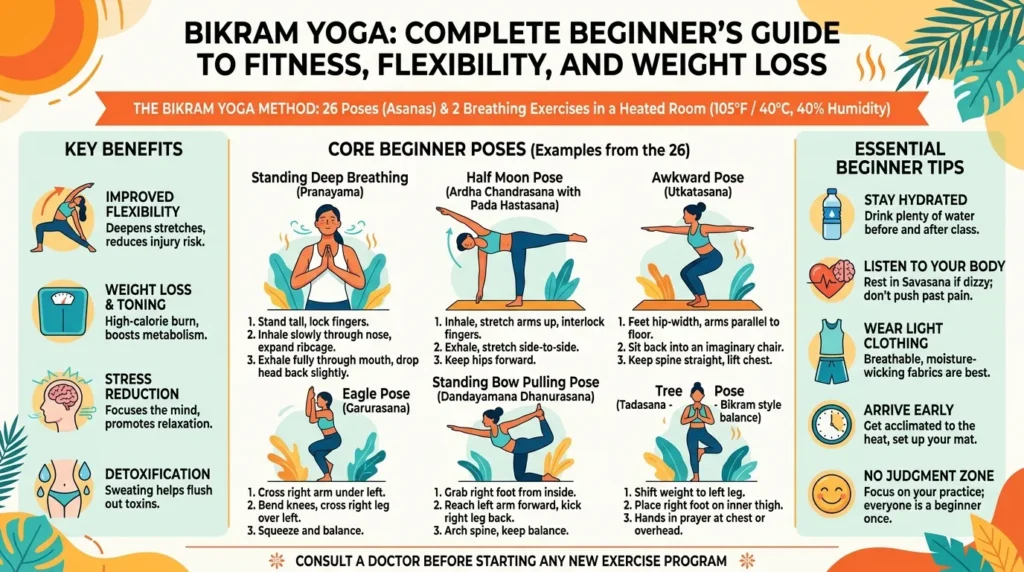
Bikram Yoga Poses refer to a set sequence of 26 yoga postures and 2 breathing exercises performed in a heated room (around 105°F / 40°C with humidity).
This style was developed by Bikram Choudhury and is designed to:
- Improve flexibility
- Detoxify the body through sweat
- Strengthen muscles
- Improve balance and focus
Key Features of Bikram Yoga
- Fixed sequence of 26 poses
- Performed in a heated environment
- 90-minute structured class
- Focus on repetition and discipline
- Beginner-friendly progression
Benefits of Bikram Yoga Poses
Physical Health Benefits
Bikram Yoga is widely used in fitness and wellness programs because of its strong physical impact.
Improved Flexibility
Heat helps muscles stretch deeper, reducing stiffness and improving mobility.
Better Strength and Endurance
Holding poses builds muscle endurance, especially in legs, core, and back.
Detoxification
Heavy sweating helps remove toxins from the body.
Weight Loss Support
Bikram Yoga increases heart rate and calorie burn, supporting fat loss when combined with a healthy diet.
Mental Health Benefits
Stress Reduction
Controlled breathing and heat exposure help calm the nervous system.
Improved Focus
The structured routine trains concentration and discipline.
Better Sleep Quality
Regular practice helps reduce anxiety and improves sleep patterns.
Fitness and Wellness Impact
- Enhances body awareness
- Improves posture
- Supports recovery from gym workouts
- Increases stamina and energy levels
Working Principle of Bikram Yoga
Bikram Yoga works on the principle of heat + repetition + oxygen control.
Heat Effect
High temperature warms up muscles quickly, allowing deeper stretching.
Oxygen and Breathing Control
Breathing exercises increase oxygen supply and improve lung capacity.
Repetition System
Performing the same sequence builds muscle memory and consistency.
Types of Yoga (Comparison Overview)
Even though Bikram Yoga is a fixed system, it is helpful to compare it with other styles.
Beginner Yoga
- Simple and slow
- Focus on basics
- Low intensity
Hatha Yoga
- Traditional yoga form
- Balanced pace
- Good for beginners
Vinyasa Yoga
- Flow-based movement
- Moderate to high intensity
Power Yoga
- Strength-focused
- High calorie burn
Meditation Yoga
- Mental relaxation
- Stress relief focus
Daily Yoga Routine for Beginners (Bikram Style Adaptation)
Beginners should not rush into full 90-minute sessions immediately.
Warm-Up Exercises
- Neck rolls
- Shoulder stretches
- Light squats
- Deep breathing
Beginner Practice Plan
| Stage | Duration | Focus |
|---|---|---|
| Warm-up | 10 minutes | Body preparation |
| Basic poses | 20–30 minutes | Learning technique |
| Breathing | 10 minutes | Oxygen control |
| Cool-down | 5–10 minutes | Recovery |
Best Bikram Yoga Poses for Fitness
Below are some of the most important Bikram Yoga poses explained simply.
Standing Deep Breathing
Improves lung capacity and oxygen flow.
Benefits:
- Better breathing control
- Increased energy
- Reduced stress
Half Moon Pose
Strengthens core and improves balance.
Awkward Pose
Builds leg strength and endurance.
Eagle Pose
Improves concentration and joint flexibility.
Standing Head to Knee Pose
Enhances balance and hamstring flexibility.
Cobra Pose
One of the best poses for spinal health.
Benefits:
- Stronger back muscles
- Better posture
- Reduced back pain
Tree Pose
Improves stability and focus.
Toe Stand Pose
Enhances ankle strength and balance control.
Comparison Table of Key Poses
| Pose | Main Benefit | Difficulty |
|---|---|---|
| Half Moon | Balance | Medium |
| Cobra | Spine strength | Easy |
| Eagle | Focus | Medium |
| Tree | Stability | Easy |
| Toe Stand | Balance control | Hard |
Advantages of Bikram Yoga Poses
| Advantage | Description |
|---|---|
| Full-body workout | Engages all major muscles |
| High flexibility | Deep stretching due to heat |
| Mental clarity | Improves focus and calmness |
| Weight loss support | Burns calories effectively |
| Discipline building | Structured routine improves habits |
Disadvantages or Limitations
Even though Bikram Yoga is powerful, it has some limitations.
Heat Discomfort
Beginners may feel dizzy or dehydrated.
Not Suitable for Everyone
People with heart issues or heat sensitivity should consult a doctor.
Repetition Fatigue
Same sequence can feel repetitive over time.
Applications of Bikram Yoga
Bikram Yoga is used in many fitness and wellness areas.
- Weight loss programs
- Athlete flexibility training
- Stress management therapy
- Injury recovery support
- Corporate wellness programs
Difference Between Yoga and Gym Workout
| Feature | Bikram Yoga | Gym Workout |
|---|---|---|
| Flexibility | High | Medium |
| Muscle Gain | Moderate | High |
| Weight Loss | High | High |
| Stress Relief | Very High | Medium |
| Equipment Needed | None | Machines/weights |
| Injury Risk | Low to medium | Medium |
Selection Guide for Beginners
If you are starting Bikram Yoga, follow these tips:
Choose the Right Class
- Beginner-friendly sessions first
- Certified instructors only
Stay Hydrated
- Drink water before and after class
Start Slowly
- Do not push beyond comfort level
Focus on Form
- Proper alignment is more important than speed
Common Problems & Solutions
Dizziness in Heat
Solution: Take breaks and hydrate properly.
Muscle Fatigue
Solution: Rest and gradually increase intensity.
Difficulty Holding Poses
Solution: Use beginner modifications.
Lack of Consistency
Solution: Set a weekly schedule.
Future Trends in Fitness and Yoga
The future of Bikram Yoga and fitness includes:
Smart Yoga Studios
- Temperature-controlled digital rooms
- Real-time posture tracking
Online Yoga Classes
- Live virtual Bikram sessions
Wearable Technology
- Heart rate and hydration tracking
Hybrid Fitness Models
- Yoga + gym + cardio combined programs
Interesting Facts About Bikram Yoga
- A full session burns hundreds of calories
- Heat increases muscle elasticity
- It is practiced in over 60+ countries
- Many athletes use it for recovery training
Conclusion
Bikram Yoga Poses offer a powerful combination of heat, discipline, and structured movement that helps improve flexibility, strength, and mental clarity. For beginners, it provides a guided and predictable system that builds confidence step by step.
While it may feel intense at first due to the heat, consistent practice leads to noticeable improvements in posture, stamina, and overall fitness. It also supports weight loss, stress relief, and full-body conditioning, making it a strong alternative or complement to gym workouts.
The key to success in Bikram Yoga is patience, hydration, and consistency. Start slowly, focus on correct posture, and allow your body to adapt. Over time, you will experience better physical health and improved mental balance.
If you are looking for a structured and challenging yoga system that transforms both body and mind, Bikram Yoga Poses can be an excellent choice for your fitness journey.