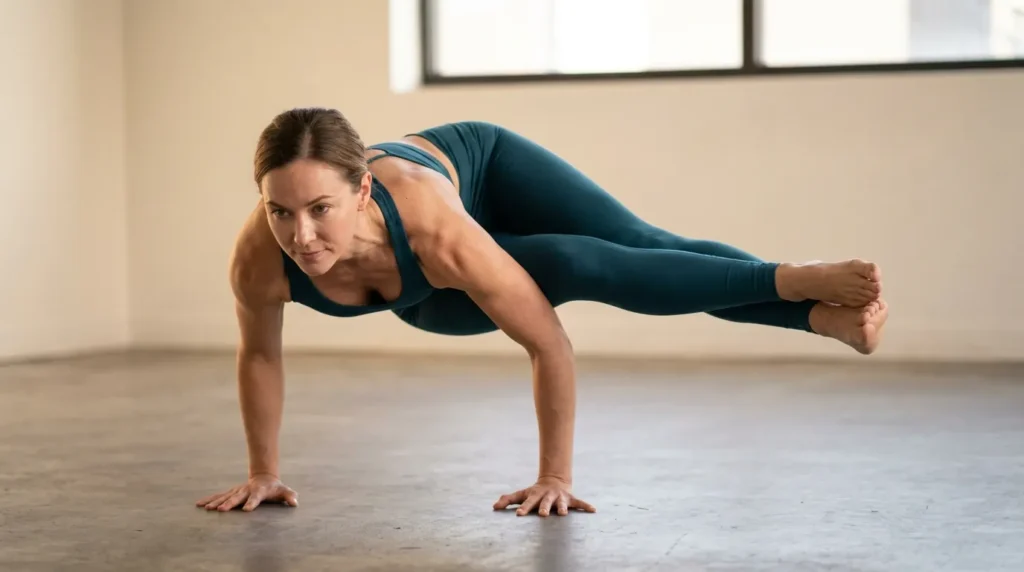

Imagine joining a yoga class for the first time and seeing someone balancing upside down on their hands or bending their body into a deep backbend. For many beginners, these advanced movements may look impossible. However, hard yoga poses are not just about flexibility or showing off difficult skills. They are powerful exercises that improve balance, strength, focus, breathing control, and overall fitness. Many athletes, gym users, and health-conscious people practice advanced yoga poses to build both physical and mental endurance.
In today’s busy lifestyle, fitness with yoga has become increasingly popular because it combines exercise, mindfulness, flexibility, and relaxation in one routine. Hard yoga poses challenge the body in unique ways and help improve muscle control, posture, and confidence. While these poses may look difficult, they can be learned safely with patience, practice, and proper guidance.
This article explains what hard yoga poses are, how they work, their benefits, different yoga styles, daily yoga routines, best yoga exercises, yoga advantages and disadvantages, and practical tips for beginners. You will also learn how yoga compares with gym workouts and how advanced yoga supports fitness and wellness in modern life.
Hard Yoga Poses
Hard yoga poses are advanced yoga positions that require higher levels of strength, flexibility, balance, concentration, and body control. These poses are usually practiced after learning basic yoga movements and breathing techniques.
In simple words, hard yoga poses are challenging body positions that test both the body and the mind. They often involve balancing, deep stretching, arm support, or complex body movements.
Examples include:
- Headstand Pose
- Crow Pose
- Wheel Pose
- Scorpion Pose
- Handstand Pose
- King Pigeon Pose
Many advanced yoga poses require proper posture, controlled breathing, and strong core muscles. Beginners should practice step-by-step and avoid forcing the body into difficult positions too quickly.
Benefits of Hard Yoga Poses
Hard yoga poses provide many physical and mental health benefits when practiced safely and regularly.
Physical Health Benefits
Advanced yoga improves:
- Muscle strength
- Core stability
- Flexibility
- Joint mobility
- Balance and posture
Hard yoga exercises activate multiple muscle groups at the same time, making them excellent for full-body fitness.
Mental Health Benefits
Yoga is not only physical. It also supports mental wellness.
Benefits include:
- Reduced stress
- Better concentration
- Emotional balance
- Improved confidence
- Relaxation and mindfulness
Deep breathing during yoga helps calm the nervous system.
Weight Loss Support
Powerful yoga movements increase calorie burning and improve metabolism.
Yoga for beginners combined with healthy eating may support:
- Fat loss
- Better energy levels
- Lean muscle development
Better Breathing and Body Control
Yoga teaches controlled breathing techniques that improve oxygen flow and lung efficiency.
This helps athletes and gym users improve endurance and performance.
Working Principle of Hard Yoga Poses
Hard yoga poses work by combining muscle activation, controlled breathing, flexibility training, and mental focus.
When holding a difficult yoga pose:
- Muscles stay engaged for stability
- Core muscles support balance
- Deep breathing improves oxygen supply
- The nervous system improves body awareness
The body gradually adapts to increased flexibility and strength over time.
Easy Analogy
Think of hard yoga poses like learning to ride a bicycle. At first, balance feels difficult. With regular practice, the body learns coordination and control naturally.
How the Body Responds
Yoga activates:
- Muscles
- Joints
- Nervous system
- Respiratory system
- Mental focus
This creates a complete fitness and wellness experience.
Types of Yoga
Different yoga styles help people reach different fitness goals.
Beginner Yoga
Beginner yoga focuses on simple movements and breathing.
It helps improve:
- Flexibility
- Posture
- Basic balance
- Relaxation
This is the best starting point for new learners.
Hatha Yoga
Hatha Yoga uses slow-paced poses and controlled breathing.
It is ideal for:
- Beginners
- Stress reduction
- Flexibility improvement
Vinyasa Yoga
Vinyasa Yoga involves flowing movements connected with breathing.
Benefits include:
- Better cardio fitness
- Increased flexibility
- Improved endurance
Power Yoga
Power Yoga is more intense and physically demanding.
It supports:
- Strength building
- Weight loss
- Muscle toning
Athletes and gym users often enjoy this style.
Meditation Yoga
Meditation-based yoga focuses on breathing, mindfulness, and relaxation.
It improves:
- Mental calmness
- Emotional stability
- Focus and concentration
Daily Yoga Routine for Beginners
A daily yoga routine helps the body adapt gradually and safely.
Warm-Up Exercises
Always start with warm-up movements:
- Neck rotation
- Shoulder rolls
- Arm stretching
- Hip circles
- Light jogging
Warm-ups reduce injury risk.
Basic Yoga Poses
Beginners should practice simple poses first.
Mountain Pose
genui{“math_block_widget_always_prefetch_v3”:{“content”:”y=x”}}
Mountain Pose improves posture and body awareness.
Benefits:
- Better balance
- Improved breathing
- Strong standing posture
Cobra Pose
Cobra Pose stretches the spine and chest.
Benefits:
- Back flexibility
- Better posture
- Reduced stiffness
Tree Pose
Tree Pose improves balance and concentration.
Benefits:
- Core stability
- Leg strength
- Mental focus
Breathing Exercises
Breathing exercises are essential in yoga.
Examples:
- Deep belly breathing
- Alternate nostril breathing
- Slow breathing meditation
These techniques calm the body and mind.
Cool-Down and Relaxation
End yoga sessions with relaxation poses like Child’s Pose or Corpse Pose.
This helps muscles recover and relax.
Best Yoga Poses for Fitness
Hard yoga poses help improve advanced fitness skills.
Crow Pose
Crow Pose develops:
- Arm strength
- Core stability
- Balance control
Headstand Pose
Headstand improves:
- Focus
- Upper-body strength
- Blood circulation
This pose should only be practiced with proper guidance.
Wheel Pose
Wheel Pose is a deep backbend that improves:
- Spine flexibility
- Chest opening
- Shoulder mobility
Handstand Pose
Handstands require:
- Strong shoulders
- Core strength
- Excellent balance
King Pigeon Pose
This advanced pose deeply stretches:
- Hips
- Spine
- Leg muscles
Advantages of Hard Yoga Poses
Hard yoga poses offer several important advantages.
Improved Flexibility
Advanced stretching improves joint movement and muscle flexibility.
Full-Body Strength
Yoga strengthens:
- Arms
- Legs
- Core
- Back muscles
Better Posture
Yoga improves spinal alignment and body awareness.
Stress Reduction
Controlled breathing and mindfulness reduce stress and anxiety.
Improved Athletic Performance
Many athletes use yoga to improve:
- Recovery
- Mobility
- Coordination
- Injury prevention
Better Balance and Coordination
Advanced poses train stability and muscle control.
Disadvantages or Limitations
Despite many benefits, hard yoga poses also have some limitations.
Risk of Injury
Incorrect posture may cause:
- Muscle strain
- Joint pain
- Back injuries
Requires Patience
Advanced poses take time and consistent practice.
Not Suitable for Everyone
People with medical conditions may need professional guidance.
Flexibility Challenges
Some poses may feel very difficult for beginners.
Overtraining Risk
Excessive practice without recovery may lead to fatigue.
Applications of Hard Yoga Poses
Hard yoga poses are useful in many fitness and wellness areas.
Fitness Training
Yoga improves strength and flexibility for overall fitness.
Sports Performance
Athletes use yoga to improve mobility and recovery.
Mental Wellness
Yoga supports emotional balance and stress management.
Rehabilitation Programs
Some yoga movements are used in physical therapy.
Workplace Wellness
Many companies now include yoga sessions for employee health.
Difference Between Yoga and Gym Workout
| Feature | Yoga | Gym Workout |
|---|---|---|
| Main Focus | Flexibility and balance | Muscle building and strength |
| Equipment | Minimal | Machines and weights |
| Mental Relaxation | High | Moderate |
| Breathing Techniques | Essential | Limited focus |
| Injury Risk | Lower with proper form | Moderate to high |
| Calorie Burning | Moderate | High |
| Flexibility Improvement | Excellent | Limited |
| Stress Reduction | Strong | Moderate |
| Beginner Friendly | Yes | Yes |
| Body Awareness | Very high | Moderate |
Selection Guide for Beginners
Choosing the right yoga style is important for safe progress.
For Complete Beginners
Start with:
- Beginner Yoga
- Hatha Yoga
- Gentle stretching
For Weight Loss
Choose:
- Power Yoga
- Vinyasa Yoga
For Stress Relief
Best options:
- Meditation Yoga
- Breathing exercises
Important Beginner Tips
- Practice slowly
- Use a yoga mat
- Focus on breathing
- Avoid comparing yourself to others
- Learn correct posture first
Common Problems & Solutions
Why do yoga poses feel painful?
Mild stretching discomfort is normal, but sharp pain is not.
Solution:
- Stop immediately
- Improve posture
- Stretch gradually
Why is balance difficult in yoga?
Beginners often lack core stability and concentration.
Solution:
- Practice slowly
- Strengthen core muscles
- Focus on one point visually
Why does flexibility improve slowly?
Flexibility takes time and consistency.
Solution:
- Practice regularly
- Warm up properly
- Avoid forcing movements
Can beginners try hard yoga poses?
Yes, but only after learning basic poses and proper techniques.
Future Trends in Fitness and Yoga
Yoga continues to grow worldwide as part of modern fitness and wellness.
Online Yoga Classes
Virtual yoga training makes learning easier from home.
Smart Fitness Technology
Apps and wearable devices now track:
- Flexibility
- Breathing
- Heart rate
- Posture
Yoga for Athletes
Professional athletes increasingly use yoga for recovery and injury prevention.
Hybrid Fitness Programs
Modern fitness combines:
- Yoga
- Strength training
- Meditation
- Mobility exercises
Workplace and School Yoga
Yoga programs are becoming common in offices and educational institutions.
Conclusion
Hard yoga poses are much more than difficult body movements. They combine strength, flexibility, balance, breathing control, and mental focus into one complete fitness system. While advanced poses may look challenging, they can provide major physical and mental health benefits when practiced safely and consistently.
Yoga supports fitness and wellness by improving posture, reducing stress, increasing flexibility, and building overall body control. Beginners should start with basic poses, focus on breathing, and progress gradually toward harder movements. Regular practice, patience, and proper guidance are the keys to safe improvement.
Whether someone wants better flexibility, stress relief, weight management, or athletic performance, yoga offers a powerful and natural path toward a healthier lifestyle. With modern fitness trends increasingly combining yoga and exercise, hard yoga poses continue to play an important role in total body wellness.