
Home fitness has become one of the most practical and popular ways to stay healthy in today’s busy lifestyle. Many people cannot go to the gym due to lack of time, money, or access. For example, a student living in a hostel or an office worker with a tight schedule may struggle to find time for exercise. In such situations, home workout without equipment becomes a powerful solution.
This approach allows people to stay active using only bodyweight exercises such as push-ups, squats, and planks. It improves strength, flexibility, and overall health without needing expensive machines or gym memberships. In this article, you will learn everything about home workout without equipment, including its benefits, causes of fitness issues, symptoms of inactivity, workout methods, prevention tips, and long-term health impact.
What is Home Workout Without Equipment?
A home workout without equipment refers to physical exercises performed at home using only your body weight. No dumbbells, machines, or gym tools are required.
In simple words, it means:
- Exercising in your home space
- Using your own body as resistance
- Improving fitness without external tools
How it affects the body
These exercises activate muscles, improve blood circulation, and increase energy levels. Over time, they help in:
- Building muscle strength
- Reducing body fat
- Improving heart health
- Increasing flexibility and endurance
Real-life example
A person doing daily squats, push-ups, and jumping jacks at home can achieve similar fitness benefits as someone exercising in a gym, if done consistently.
Causes and Risk Factors of Poor Fitness Lifestyle
Many people need home workouts because modern lifestyle habits reduce physical activity.
Lifestyle-related causes
- Long sitting hours at work or study
- Lack of regular exercise
- Excess screen time (mobile, TV, computer)
- Irregular sleep patterns
Diet-related causes
- Fast food consumption
- High sugar intake
- Low protein and fiber diet
Environmental and behavioral factors
- Busy schedules
- Lack of motivation
- Limited access to gyms or parks
Genetic and health factors
- Family history of obesity
- Low metabolism in some individuals
- Previous injuries limiting movement
These factors increase the risk of weight gain, low energy, and weak muscles.
Symptoms and Warning Signs of Inactivity
A lack of exercise can show clear signs in the body.
Early symptoms
- Tiredness during simple tasks
- Weight gain
- Poor posture
- Low stamina
Advanced symptoms
- Joint pain and stiffness
- Shortness of breath
- Frequent fatigue
- Reduced flexibility
When to seek medical advice
- Persistent pain during movement
- Extreme tiredness without reason
- Sudden weight changes
Early attention helps prevent long-term health problems.
How Home Exercise Works in the Body
When you perform a home workout without equipment, your body goes through natural biological changes.
Step-by-step process:
- Muscles contract during movement
- Oxygen intake increases
- Heart pumps faster to supply blood
- Energy is released from stored glucose and fat
- Muscles repair and grow stronger during rest
Simple analogy
Think of your body like a battery. Exercise helps recharge and improve its performance, while inactivity drains energy over time.
Types of Home Workout Without Equipment
Type 1: Cardio Exercises
Cardio increases heart rate and burns calories.
Examples:
- Jumping jacks
- Running in place
- High knees
Type 2: Strength Training
Focuses on building muscle strength.
Examples:
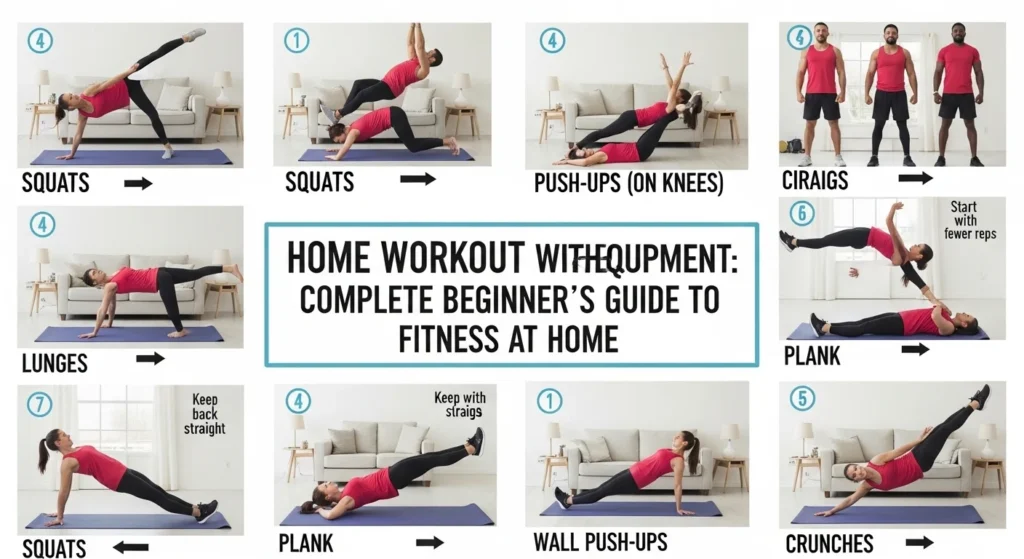
- Push-ups
- Squats
- Lunges
- Planks
Type 3: Flexibility and Balance Exercises
Improves body movement and reduces stiffness.
Examples:
- Yoga stretches
- Body stretching routines
- Balance exercises
Diagnosis and Fitness Assessment
Doctors or trainers may evaluate your fitness level before starting a routine.
Common assessments:
- Body Mass Index (BMI)
- Heart rate check
- Flexibility tests
- Strength endurance tests
What results indicate:
- High BMI may show excess body fat
- Low stamina indicates poor fitness level
- Limited flexibility shows muscle stiffness
This helps design a safe and effective workout plan.
Treatment and Home Workout Plan Options
Home workouts are not medical treatments, but they act as a lifestyle therapy for better health.
Exercise routines
- Beginner: 10–15 minutes daily walking and stretching
- Intermediate: Push-ups, squats, planks
- Advanced: Circuit training (multiple exercises together)
Lifestyle changes
- Proper sleep (7–8 hours)
- Drinking enough water
- Reducing junk food intake
Mental wellness support
- Meditation
- Breathing exercises
- Stress management techniques
Prevention Tips for Better Health
Healthy habits
- Exercise daily at home
- Stay active throughout the day
- Avoid sitting for long periods
Diet recommendations
- Eat fruits and vegetables
- Include protein-rich foods (eggs, lentils, chicken)
- Reduce sugary drinks
Exercise suggestions
- Start slowly and increase gradually
- Mix cardio and strength exercises
- Maintain consistency
Mental health tips
- Stay motivated with small goals
- Avoid negative thinking
- Track progress regularly
Advantages and Disadvantages of Home Workout Without Equipment
Advantages
- No gym cost required
- Can be done anytime at home
- Improves overall fitness
- Flexible and beginner-friendly
Disadvantages
- Limited resistance for advanced muscle building
- Requires self-discipline
- May feel repetitive without variety
Balanced planning helps overcome these limitations.
Applications and Real-Life Impact
Home workouts affect daily life positively:
Daily life impact
- Better energy levels
- Easier movement and flexibility
Work and study impact
- Improved concentration
- Reduced stress and fatigue
Social and emotional impact
- Increased confidence
- Better mood and mental health
- Improved self-image
Common Questions (FAQ)
Q1: Can home workout without equipment build muscles?
Yes, bodyweight exercises can build muscle if done consistently with proper technique.
Q2: Is it safe for beginners?
Yes, it is safe when started slowly with proper form.
Q3: How long should I exercise daily?
20–45 minutes daily is enough for beginners.
Q4: Can it help with weight loss?
Yes, combined with a healthy diet, it supports fat loss effectively.
Future Trends and Fitness Advances
Home fitness is evolving rapidly with modern technology:
- Virtual fitness training apps
- AI-based workout guidance
- Smart fitness tracking tools
- Online coaching programs
- Personalized home workout plans
These advancements make fitness more accessible and effective for everyone.
Conclusion
A home workout without equipment is one of the simplest and most effective ways to stay healthy without needing a gym. It improves strength, flexibility, and heart health while fitting easily into daily routines. Whether you are a student, office worker, or beginner, this method allows you to stay active anytime, anywhere.
Consistency is the most important factor. Small daily efforts can lead to long-term health improvements. By combining exercise, healthy diet, and good lifestyle habits, anyone can achieve a strong and active body. Start today and take the first step toward a healthier future.