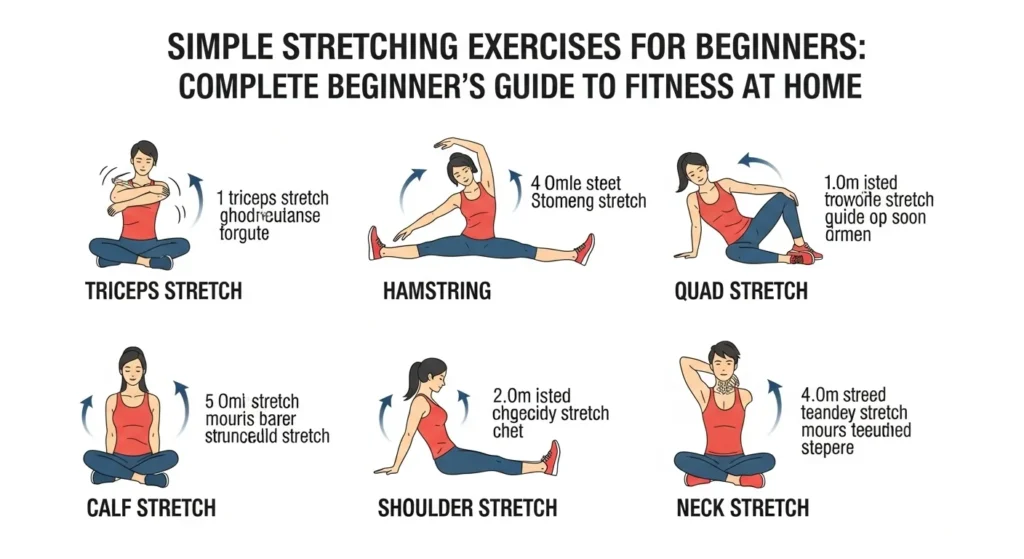

Stretching is something most people ignore in daily life, yet it plays a very important role in maintaining a healthy and active body. Imagine a student sitting for long hours studying or an office worker working at a computer all day. After some time, they often feel stiffness in the neck, back pain, or tight shoulders. This discomfort is usually caused by lack of movement and poor posture.
This is where simple stretching exercises become extremely helpful. They improve flexibility, reduce muscle tension, and support overall body movement. Stretching is not only for athletes; it is for everyone—young or old, active or inactive.
In this article, you will learn everything about simple stretching exercises, including their benefits, causes of muscle stiffness, symptoms of tight muscles, types of stretching, safety tips, and how they improve your daily life.
What is Simple Stretching Exercises?
Simple stretching exercises are gentle body movements that help lengthen muscles, improve flexibility, and increase joint mobility. These exercises involve holding or moving the body in a controlled way to reduce stiffness and improve blood flow.
In simple words:
- Stretching means gently pulling or extending your muscles
- It helps your body move more freely
- It reduces tightness and discomfort
How stretching affects the body
When you stretch:
- Muscles become more flexible
- Blood flow increases
- Oxygen reaches tissues more effectively
- Joints move more smoothly
Real-life example
If a person wakes up in the morning and stretches their arms, legs, and back, they feel more active and less stiff throughout the day.
Causes and Risk Factors of Muscle Tightness
Muscle stiffness is the main reason people need stretching exercises.
Lifestyle-related causes
- Sitting for long hours
- Lack of physical activity
- Poor posture while sitting or standing
- Sleeping in incorrect positions
Physical activity-related causes
- Heavy workouts without warm-up
- Muscle overuse or strain
- Sudden movements without preparation
Environmental and daily habit factors
- Stress and mental tension
- Cold weather causing muscle tightness
- Dehydration (not drinking enough water)
Risk factors
- Older age (natural loss of flexibility)
- Sedentary lifestyle
- Lack of regular exercise
Symptoms and Warning Signs of Tight Muscles
Your body shows signs when it needs stretching.
Early symptoms
- Mild stiffness in neck or shoulders
- Slight discomfort after sitting long hours
- Reduced flexibility
- Feeling “tight” in muscles
Advanced symptoms
- Pain during movement
- Difficulty bending or stretching
- Muscle cramps
- Reduced range of motion
When to see a doctor
- Severe or long-lasting pain
- Swelling in muscles or joints
- Pain that affects daily activities
How Stretching Works in the Body
When you perform simple stretching exercises, your muscles and nervous system respond in several ways.
Step-by-step process:
- Muscles are gently extended
- Muscle fibers relax and loosen
- Blood flow increases to the area
- Oxygen and nutrients reach muscles
- Nervous system reduces tension signals
Simple analogy
Think of a rubber band. If it stays in one position for too long, it becomes tight. Stretching helps it return to a flexible and smooth state.
Types of Simple Stretching Exercises
Type 1: Static Stretching
This involves holding a position for a few seconds.
Examples:
- Touching toes and holding
- Holding arm stretches
- Neck side stretches
Type 2: Dynamic Stretching
This involves movement-based stretching.
Examples:
- Arm circles
- Leg swings
- Shoulder rolls
Type 3: Passive Stretching
Assisted stretching using gravity or support.
Examples:
- Using a wall for support
- Stretching with assistance
Type 4: Active Stretching
Using one muscle group to stretch another.
Examples:
- Holding a leg up without support
- Controlled yoga poses
Diagnosis and Physical Assessment
Doctors or physiotherapists may assess muscle tightness.
Common assessments:
- Flexibility tests
- Range of motion checks
- Posture evaluation
- Pain response analysis
What results mean:
- Limited movement indicates tight muscles
- Pain during movement suggests muscle strain
- Poor posture may indicate imbalance
Treatment and Stretching Exercise Plan
Stretching is often part of a natural therapy plan for muscle health.
Exercise-based treatment
- Daily stretching routine (10–20 minutes)
- Yoga exercises
- Light physical activity
Physical therapy
- Guided stretching sessions
- Massage therapy for muscle relaxation
- Posture correction exercises
Lifestyle changes
- Regular movement breaks
- Proper sitting posture
- Adequate hydration
Medical care (if needed)
- Pain management advice
- Physiotherapy support for injuries
Prevention Tips for Muscle Tightness
Healthy habits
- Stretch daily, especially in the morning
- Take breaks during long sitting hours
- Maintain correct posture
Exercise suggestions
- Combine stretching with light cardio
- Do warm-up before exercise
- Cool down after workouts
Diet recommendations
- Drink enough water
- Eat magnesium-rich foods (nuts, seeds, leafy vegetables)
- Maintain balanced nutrition
Mental wellness tips
- Reduce stress through breathing exercises
- Practice relaxation techniques
- Maintain a positive routine
Advantages and Disadvantages of Stretching Exercises
Advantages
- Improves flexibility
- Reduces muscle pain and stiffness
- Enhances posture
- Supports better blood circulation
Disadvantages (if done incorrectly)
- Overstretching may cause injury
- Wrong technique may increase pain
- Ignoring pain signals can worsen condition
Proper technique is very important for safe results.
Applications and Real-Life Impact
Stretching affects many parts of daily life.
Daily life impact
- Easier body movement
- Less morning stiffness
- Improved physical comfort
Work and study impact
- Better focus due to reduced discomfort
- Less fatigue during long sitting hours
Emotional and social impact
- Reduced stress levels
- Improved mood
- Increased confidence in physical activity
Common Questions (FAQ)
Q1: Can simple stretching exercises improve flexibility?
Yes, regular stretching gradually improves flexibility and body movement.
Q2: Is stretching safe for everyone?
Yes, it is generally safe if done gently and correctly.
Q3: How often should I stretch?
Daily stretching is recommended, especially after waking up or long sitting periods.
Q4: Can stretching reduce pain?
Yes, it can help reduce mild muscle stiffness and tension.
Future Trends and Medical Advances in Stretching Therapy
Modern healthcare is improving how stretching is used in treatment.
- AI-based posture correction apps
- Virtual physiotherapy sessions
- Smart wearable devices for movement tracking
- Personalized flexibility training programs
- Advanced rehabilitation techniques for injury recovery
These innovations help people stay active and healthy more effectively.
Conclusion
Simple stretching exercises are one of the easiest and most effective ways to improve body flexibility, reduce muscle stiffness, and support overall health. They are suitable for all age groups and can be done anywhere without special equipment.
By practicing regular stretching, you can improve posture, reduce pain, and increase daily energy levels. However, proper technique and consistency are very important for safe results. Stretching should be part of a balanced lifestyle that includes good nutrition, hydration, and regular physical activity.
Staying active today helps prevent many health problems in the future. Start small, stay consistent, and make stretching a daily habit for long-term wellness.