
Starting a fitness journey is exciting, but many beginners in the USA quickly realize something important—exercise alone is not enough. Without the right nutrition, results become slow, inconsistent, or frustrating. That’s why learning a proper gym diet plan for beginners is just as important as learning how to train.
Imagine someone joining a gym for the first time. They work out regularly, sweat hard, and stay motivated—but their body doesn’t change much. The missing piece is usually diet. Food is the fuel that powers workouts, repairs muscles, and helps the body transform. In modern American fitness culture, nutrition is considered 70% of fitness success, while exercise is the remaining 30%.
Over the years, gym culture in the USA has evolved significantly. From basic “eat less, move more” advice to structured macro-based diet plans, fitness nutrition has become more scientific, practical, and beginner-friendly. Today, people don’t just train—they follow personalized nutrition strategies designed for weight loss, muscle gain, and long-term health.
In this complete guide, you will learn everything about a gym diet plan for beginners, including what to eat, when to eat, how to balance nutrients, common mistakes, meal ideas, and how to combine diet with workouts for real results.
What Is a Gym Diet Plan for Beginners?
A gym diet plan for beginners is a simple eating structure designed to support your workout goals such as fat loss, muscle gain, or overall fitness improvement.
Basic Definition
A gym diet plan includes:
- Healthy meals
- Balanced nutrients
- Proper hydration
- Meal timing strategies
Main Goal of a Gym Diet
- Fuel workouts
- Improve recovery
- Build or maintain muscle
- Burn fat efficiently
Why Nutrition Matters in Fitness
Without proper nutrition, even the best workouts fail to show results.
Food as Fuel
Your body uses food to:
- Produce energy
- Repair muscles
- Support metabolism
Why Beginners Struggle Without Diet Planning
- Low energy during workouts
- Slow fat loss
- Poor muscle recovery
- Lack of motivation
Basic Nutrition Principles for Beginners
A strong gym diet plan for beginners follows simple nutrition rules.
Macronutrients (Main Nutrients)
Protein
- Builds and repairs muscles
- Found in chicken, eggs, fish, beans
Carbohydrates
- Main energy source
- Found in rice, oats, fruits
Fats
- Supports hormones and brain health
- Found in nuts, olive oil, avocado
Micronutrients
- Vitamins
- Minerals
They support immunity and overall health.
Types of Gym Diet Goals
1. Weight Loss Diet
- Low calorie intake
- High protein
- Controlled carbs
2. Muscle Gain Diet
- High protein
- Higher calorie intake
- Balanced carbs and fats
3. Maintenance Diet
- Balanced calories
- Stable weight
- Consistent energy
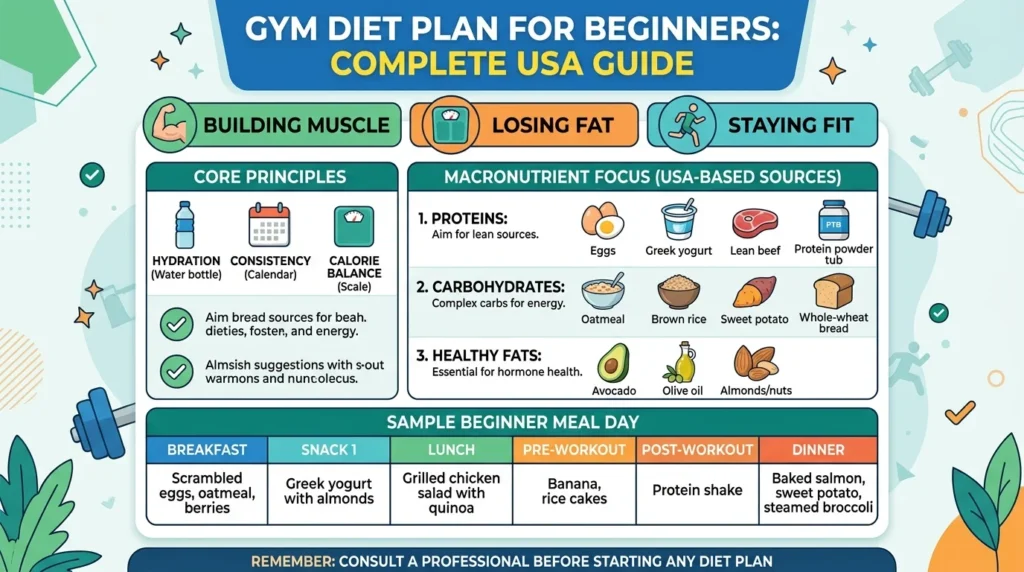
Best Foods for Gym Beginners
Protein-Rich Foods
- Chicken breast
- Eggs
- Greek yogurt
- Tuna
- Beans
Healthy Carbs
- Oats
- Brown rice
- Sweet potatoes
- Whole wheat bread
Healthy Fats
- Avocados
- Almonds
- Peanut butter
- Olive oil
Fruits and Vegetables
- Bananas
- Apples
- Spinach
- Broccoli
Sample Gym Diet Plan for Beginners (USA Style)
Morning Meal
- Oatmeal + banana
- Or eggs + toast
Mid-Morning Snack
- Greek yogurt
- Or protein shake
Lunch
- Chicken + rice + vegetables
- Or salmon + sweet potatoes
Pre-Workout Snack
- Banana
- Peanut butter toast
Post-Workout Meal
- Protein shake
- Or chicken sandwich
Dinner
- Lean protein + vegetables
- Light carbs
Importance of Hydration
Water is essential for performance.
Benefits of Water
- Improves energy
- Supports digestion
- Enhances muscle function
Daily Water Intake
- 2–4 liters per day (average)
Gym Diet and Workout Connection
Your diet and workouts must work together.
Strength Training
Requires:
- High protein intake
- Moderate carbs
Cardio Training
Requires:
- Balanced calories
- Good hydration
HIIT Training
Requires:
- Fast energy foods
- Electrolyte balance
Common Gym Diet Mistakes Beginners Make
1. Skipping Meals
Reduces energy and slows progress.
2. Eating Too Little
Leads to fatigue and muscle loss.
3. Overeating Healthy Foods
Even healthy food must be controlled.
4. Ignoring Protein
Protein is essential for muscle growth.
5. Not Drinking Enough Water
Hydration is often overlooked.
Nutrition Timing (When to Eat)
Pre-Workout
- 30–60 minutes before exercise
- Light carbs + protein
Post-Workout
- Within 1 hour after training
- Protein + carbs for recovery
Gym Equipment and Nutrition Link
Different workouts require different fuel.
Dumbbells & Barbells
- Need protein-rich diet
Cardio Machines
- Need carb-based energy
Resistance Machines
- Balanced nutrition required
Recovery and Sleep in Fitness
Why Sleep Matters
- Muscle recovery
- Hormone balance
- Energy restoration
Sleep Requirement
- 7–9 hours daily
Beginner Fitness Tips for Diet Success
Start Simple
Don’t follow complex diets initially.
Stay Consistent
Results come with time.
Track Your Food
Use apps or journals.
Avoid Extreme Diets
Balance is key.
Fitness Motivation and Discipline
Set Realistic Goals
- Lose 5–10 pounds
- Build lean muscle
- Improve stamina
Build Healthy Habits
- Eat clean most of the time
- Stay active daily
Stay Consistent
Even small progress matters.
Popular Fitness Trends in the USA
1. Macro-Based Dieting
Tracking protein, carbs, fats.
2. Meal Prep Culture
Cooking meals in advance.
3. Wearable Fitness Devices
- Smartwatches
- Calorie trackers
4. Online Fitness Coaching
Remote nutrition and workout guidance.
5. Plant-Based Fitness Diets
Increasing popularity in the USA.
Interesting Fitness Facts
- Muscle tissue burns more calories than fat
- Protein helps repair muscles after workouts
- Hydration improves workout performance by up to 20%
- Meal timing affects energy levels
Gym Safety and Healthy Eating Balance
Avoid Extreme Dieting
Too much restriction harms performance.
Focus on Balance
- 80% healthy food
- 20% flexible eating
Listen to Your Body
Adjust diet based on energy needs.
Conclusion
A well-planned gym diet plan for beginners is the foundation of any successful fitness journey. Without proper nutrition, even the hardest workouts will not deliver the expected results. Food provides energy, supports muscle growth, and helps your body recover after exercise.
The key to success is balance—eating the right nutrients, staying hydrated, maintaining consistency, and avoiding extreme diets. Whether your goal is weight loss, muscle gain, or general fitness, your diet must support your training routine.
Remember, fitness is not about perfection—it is about progress. Small, consistent improvements in your eating habits lead to long-term transformation. Combine smart nutrition with regular workouts, proper sleep, and discipline, and you will see real changes in your body and lifestyle.
Stay patient, stay consistent, and trust the process. Your fitness journey begins with the right diet—and continues with the right mindset.