
Joining a gym is one of the best decisions you can make for your health and fitness. Whether your goal is weight loss, muscle building, improved athletic performance, or better overall wellness, regular exercise can transform both your body and mind. However, achieving these benefits requires more than simply showing up and lifting weights. Understanding and following proper gym safety tips is essential for staying injury-free and making consistent progress.
Modern lifestyles often involve long hours of sitting, reduced physical activity, and increased stress levels. As a result, millions of Americans turn to gyms to improve their health, boost energy, and maintain a balanced lifestyle. Over the years, gym culture in the United States has evolved from traditional bodybuilding facilities to modern fitness centers offering strength training, cardio workouts, group classes, and functional fitness programs.
While gyms provide excellent opportunities for personal improvement, they also contain equipment and training environments that can pose risks when used incorrectly. Improper exercise form, poor recovery habits, and lack of preparation can lead to injuries that delay progress and reduce motivation.
This comprehensive guide covers everything you need to know about gym safety, including workout techniques, equipment usage, nutrition, recovery, injury prevention, and beginner-friendly practices that support long-term fitness success.
Understanding Fitness and Why Safety Matters
Fitness is the ability to perform physical activities efficiently while maintaining good health, strength, endurance, and mobility. A balanced fitness routine improves both physical and mental well-being.
Fitness includes:
- Strength
- Endurance
- Flexibility
- Mobility
- Balance
- Cardiovascular health
While exercise provides many benefits, safety should always be a top priority.
Why Safe Training Is Important
Safe workouts help you:
- Prevent injuries
- Improve performance
- Maintain consistency
- Build confidence
- Achieve long-term fitness goals
An injury can interrupt weeks or months of progress, making safety one of the most important aspects of any training program.
Benefits of Regular Exercise
Physical Benefits
Regular exercise contributes to:
- Weight loss
- Muscle growth
- Stronger bones
- Improved heart health
- Better stamina
- Enhanced flexibility
Mental Benefits
Exercise also supports mental wellness by:
- Reducing stress
- Improving mood
- Increasing confidence
- Enhancing focus
- Promoting better sleep
The key to enjoying these benefits is maintaining safe and consistent workout habits.
Different Types of Fitness Training
Understanding different workout styles helps you train safely and effectively.
Strength Training
Strength training uses resistance to build muscle and increase strength.
Examples:
- Squats
- Bench presses
- Deadlifts
- Rows
Cardio Workouts
Cardiovascular exercises improve heart and lung health.
Examples:
- Running
- Walking
- Cycling
- Swimming
HIIT Training
High-Intensity Interval Training alternates intense activity with recovery periods.
Weightlifting
Weightlifting focuses on progressively increasing resistance to improve strength and muscle mass.
Functional Training
Functional exercises mimic real-life movements and improve daily performance.
Flexibility Training
Stretching and mobility exercises improve movement quality and reduce stiffness.
Bodyweight Workouts
Bodyweight exercises use your own body as resistance.
Examples:
- Push-ups
- Pull-ups
- Planks
- Lunges
Essential Gym Safety Tips for Beginners and Experienced Lifters
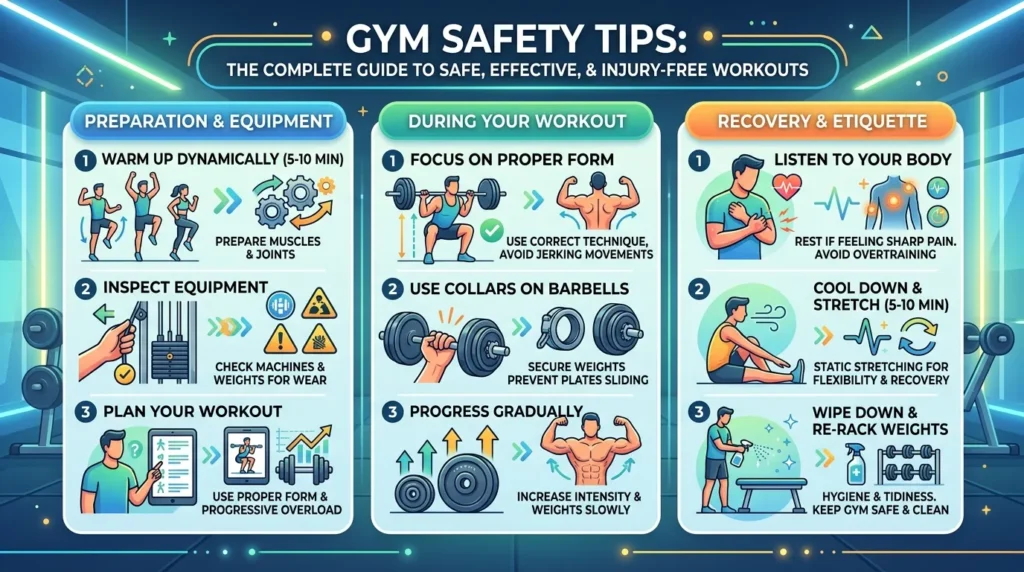
Always Warm Up Before Exercise
A proper warm-up prepares your body for physical activity.
Benefits include:
- Increased blood flow
- Improved flexibility
- Reduced injury risk
- Better workout performance
A good warm-up should last 5–10 minutes and include light cardio and dynamic stretches.
Learn Proper Exercise Form
One of the most important gym safety tips is mastering proper technique.
Good form:
- Protects joints
- Reduces injury risk
- Improves muscle activation
- Enhances workout effectiveness
If unsure about an exercise, ask a trainer for guidance.
Start With Manageable Weights
Many beginners make the mistake of lifting too heavy too soon.
Instead:
- Begin with lighter weights
- Focus on technique
- Increase resistance gradually
Progressive overload works best when performed safely.
Use Spotters for Heavy Lifts
Exercises such as:
- Bench press
- Squats
- Overhead press
may require assistance when using challenging weights.
A spotter can help prevent accidents and improve confidence.
Never Skip Cool-Down Sessions
Cooling down helps your body transition back to a resting state.
Benefits include:
- Improved recovery
- Reduced muscle tightness
- Better flexibility
Importance of Gym Etiquette and Safety Awareness
Re-Rack Your Weights
Always return dumbbells, plates, and equipment after use.
Benefits:
- Prevents accidents
- Keeps the gym organized
- Shows respect for other members
Keep Workout Areas Clear
Avoid leaving equipment on the floor where others may trip.
Wipe Down Equipment
Cleaning equipment after use promotes hygiene and prevents the spread of germs.
Respect Personal Space
Giving others enough room reduces the chance of accidental injuries.
Common Gym Equipment and Safe Usage
Dumbbells
Dumbbells are versatile and effective for strength training.
Safety Tips:
- Choose appropriate weight
- Maintain proper grip
- Control movements
Barbells
Barbells allow heavy compound lifting.
Safety Tips:
- Use collars to secure plates
- Check equipment before use
- Lift with proper technique
Treadmills
Treadmills are popular for cardio workouts.
Safety Tips:
- Start slowly
- Use safety clips
- Avoid distractions
Resistance Machines
Machines provide guided movement patterns.
Safety Tips:
- Adjust seats correctly
- Follow machine instructions
- Avoid excessive weight
Cable Machines
Cable machines provide constant resistance.
Safety Tips:
- Inspect cables regularly
- Maintain control throughout movements
Exercise Bikes
Exercise bikes offer low-impact cardiovascular training.
Safety Tips:
- Adjust seat height
- Maintain proper posture
Rowing Machines
Rowing machines provide full-body conditioning.
Safety Tips:
- Use smooth movements
- Avoid excessive back rounding
Smith Machines
Smith machines offer additional stability.
Safety Tips:
- Learn safety lock mechanisms
- Avoid relying solely on machine assistance
Creating a Safe Workout Routine
Set Realistic Goals
Choose goals that match your experience level.
Examples:
- Improve fitness
- Build muscle
- Lose weight
- Increase strength
Balance Training Volume
Avoid excessive workouts that can lead to overtraining.
Include Rest Days
Rest is essential for:
- Recovery
- Muscle growth
- Injury prevention
Progress Gradually
Increase weight, repetitions, or intensity slowly over time.
Signs of Overtraining
Pushing too hard can negatively impact performance.
Common symptoms include:
- Constant fatigue
- Decreased performance
- Muscle soreness
- Poor sleep
- Increased injury risk
Listening to your body is a critical part of safe training.
Nutrition for Safe and Effective Training
Why Nutrition Matters
Exercise and nutrition work together to support performance and recovery.
Proper nutrition helps:
- Fuel workouts
- Repair muscles
- Improve energy levels
Protein Intake
Protein supports muscle recovery and growth.
Good sources include:
- Chicken
- Fish
- Eggs
- Greek yogurt
- Lean beef
Healthy Carbohydrates
Carbohydrates provide workout energy.
Examples:
- Oats
- Rice
- Potatoes
- Fruits
Healthy Fats
Healthy fats support overall health.
Examples:
- Avocados
- Nuts
- Olive oil
Pre-Workout Nutrition Tips
Eating before training helps improve performance.
Good options include:
- Banana and peanut butter
- Oatmeal
- Greek yogurt
- Whole-grain toast with eggs
Consume meals approximately one to three hours before exercise.
Post-Workout Recovery Nutrition
Recovery meals should contain:
- Protein
- Carbohydrates
- Fluids
Examples:
- Protein shake and fruit
- Chicken and rice
- Turkey sandwich
- Yogurt with berries
Hydration and Gym Safety
Water plays a vital role in exercise performance.
Benefits include:
- Temperature regulation
- Joint lubrication
- Muscle function
- Improved endurance
Hydration Tips
- Drink water before workouts
- Sip water during exercise
- Rehydrate afterward
Dehydration can increase fatigue and injury risk.
Sleep and Recovery for Injury Prevention
Why Sleep Is Essential
Quality sleep supports:
- Muscle repair
- Hormone regulation
- Mental focus
- Energy restoration
Most adults should aim for:
- 7–9 hours of sleep per night
Recovery Techniques
Effective recovery methods include:
- Stretching
- Walking
- Foam rolling
- Mobility exercises
Common Gym Safety Mistakes to Avoid
Skipping Warm-Ups
Cold muscles are more susceptible to injury.
Using Poor Form
Bad technique increases stress on joints and muscles.
Ignoring Pain
Sharp or persistent pain should never be ignored.
Lifting Too Heavy
Heavy weights without proper preparation can cause injuries.
Overtraining
More exercise is not always better.
Recovery is equally important.
Building Long-Term Fitness Success
Safe training creates sustainable progress.
Successful gym-goers focus on:
- Consistency
- Proper technique
- Smart progression
- Balanced nutrition
- Quality recovery
Fitness is not about quick results. It is about building habits that support lifelong health and performance.
Conclusion
Following proper gym safety tips is one of the smartest investments you can make in your fitness journey. Whether your goal is weight loss, muscle gain, strength development, or improved overall health, safety should always come first. By learning correct exercise techniques, using equipment properly, warming up, staying hydrated, eating nutritious foods, and prioritizing recovery, you can dramatically reduce injury risks and maximize your results. Remember that successful fitness is built on consistency, patience, and smart training practices. Train safely, respect your body’s limits, and focus on steady progress. By doing so, you will enjoy better performance, improved confidence, and long-term health benefits both inside and outside the gym.