
If you’ve spent any time researching fitness programs, you’ve probably heard about the Push-Pull-Legs (PPL) workout split. Among the three training days, the Push Day Workout Routine is one of the most popular because it focuses on building a strong, muscular upper body. A well-designed push workout targets the muscles responsible for pushing movements, primarily the chest, shoulders, and triceps.
In today’s modern lifestyle, many people spend hours sitting at desks, working on computers, or using mobile devices. This lack of physical activity can lead to poor posture, reduced strength, low energy levels, and various health concerns. Regular exercise helps combat these issues while improving both physical and mental well-being.
The fitness industry in the United States has evolved significantly over the past few decades. What was once limited to bodybuilding gyms has become a mainstream movement that includes strength training, functional fitness, cardiovascular exercise, and wellness programs for people of all ages. Today, gym-goers, athletes, students, working professionals, and fitness enthusiasts use structured workout plans like Push-Pull-Legs to maximize results efficiently.
This comprehensive guide will explain everything you need to know about a Push Day Workout Routine, including exercise selection, fitness basics, workout styles, gym equipment, nutrition, recovery, and practical tips that help beginners and experienced lifters achieve long-term success.
Understanding Fitness and Why It Matters
Fitness is the ability to perform daily activities efficiently while maintaining physical and mental health. It involves several components that work together to improve overall well-being.
These include:
- Muscular strength
- Cardiovascular endurance
- Flexibility
- Mobility
- Balance
- Mental wellness
Regular exercise helps people maintain a healthy body while reducing the risk of many lifestyle-related health problems.
Why Consistent Exercise Is Important
Exercise provides both short-term and long-term benefits.
Physical Benefits
- Supports weight management
- Builds muscle mass
- Improves strength
- Enhances stamina
- Improves heart health
- Strengthens bones and joints
Mental Benefits
- Reduces stress
- Improves mood
- Increases confidence
- Enhances focus
- Improves sleep quality
Consistency is one of the most important factors in achieving lasting fitness results.
What Is a Push Day Workout Routine?
A Push Day Workout Routine focuses on training all the muscles involved in pushing movements.
The primary muscle groups trained include:
Chest Muscles
The chest muscles, also known as the pectorals, play a major role in pressing movements.
Shoulder Muscles
The shoulders, particularly the front and side deltoids, assist in various pushing exercises.
Triceps
The triceps are located at the back of the upper arm and help extend the elbow during pressing movements.
By grouping these muscles together, a push workout allows efficient recovery and structured training progression.
Benefits of a Push Day Workout Routine
Builds Upper Body Strength
Push workouts improve pressing strength, which carries over into daily activities and sports performance.
Supports Muscle Growth
Targeting the chest, shoulders, and triceps with compound and isolation exercises promotes muscle development.
Improves Athletic Performance
Many sports involve pushing actions, making push training beneficial for athletes.
Enhances Posture
Strong upper-body muscles help support better posture and shoulder stability.
Increases Confidence
As strength and muscle mass improve, many individuals experience increased self-confidence.
Different Types of Fitness Training
Strength Training
Strength training focuses on improving muscular strength through resistance exercises.
Push day workouts are a form of strength training.
Cardio Workouts
Cardiovascular exercise improves heart and lung function.
Examples include:
- Running
- Cycling
- Swimming
- Walking
- Rowing
HIIT Training
High-Intensity Interval Training combines short bursts of intense effort with recovery periods.
Benefits include:
- Efficient calorie burning
- Improved conditioning
- Enhanced endurance
Weightlifting
Weightlifting focuses on lifting external resistance to improve strength and power.
Functional Training
Functional exercises improve movement patterns used in everyday life.
Examples include:
- Push-ups
- Carries
- Lunges
- Squats
Flexibility Training
Stretching and mobility exercises improve joint movement and reduce stiffness.
Bodyweight Training
Bodyweight exercises use your own body weight as resistance.
Examples include:
- Push-ups
- Dips
- Planks
- Pull-ups
Best Push Day Exercises
Barbell Bench Press
The bench press is one of the most effective upper-body exercises.
Muscles Worked
- Chest
- Front shoulders
- Triceps
Benefits
- Builds strength
- Promotes muscle growth
- Improves pressing power
Incline Dumbbell Press
This exercise targets the upper portion of the chest.
Benefits
- Improves upper chest development
- Enhances shoulder stability
- Builds pressing strength
Overhead Shoulder Press
The overhead press is a foundational shoulder-building exercise.
Muscles Worked
- Deltoids
- Triceps
- Upper chest
Dumbbell Lateral Raises
Lateral raises help develop wider shoulders.
Benefits
- Improves shoulder appearance
- Enhances upper-body symmetry
Chest Flyes
Chest flyes isolate the chest muscles and improve muscle activation.
Tricep Pushdowns
A popular isolation exercise for triceps development.
Overhead Tricep Extensions
This movement targets the long head of the triceps and supports arm growth.
Push-Ups
Push-ups remain one of the best bodyweight exercises for chest, shoulder, and tricep development.
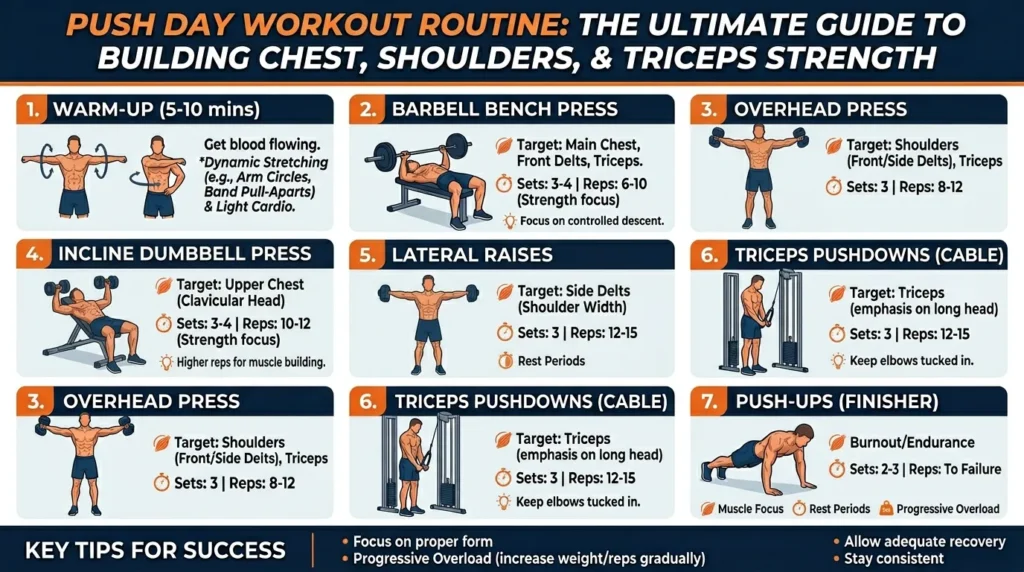
Complete Push Day Workout Routine
Exercise 1: Barbell Bench Press
- 4 sets
- 6–10 repetitions
Exercise 2: Incline Dumbbell Press
- 3 sets
- 8–12 repetitions
Exercise 3: Overhead Shoulder Press
- 3 sets
- 8–10 repetitions
Exercise 4: Dumbbell Lateral Raises
- 3 sets
- 12–15 repetitions
Exercise 5: Chest Flyes
- 3 sets
- 10–12 repetitions
Exercise 6: Tricep Pushdowns
- 3 sets
- 12 repetitions
Exercise 7: Overhead Tricep Extensions
- 3 sets
- 10–12 repetitions
This routine provides a balanced combination of compound and isolation exercises.
Importance of Proper Exercise Form
Proper technique is essential for safety and effectiveness.
Benefits of Good Form
- Reduces injury risk
- Improves muscle activation
- Enhances performance
- Supports long-term progress
Always prioritize technique over lifting heavier weights.
Common Gym Equipment and Their Uses
Dumbbells
Dumbbells are versatile free weights used for strength training.
Popular exercises include:
- Shoulder presses
- Chest presses
- Lateral raises
Barbells
Barbells support heavier resistance training.
Common exercises include:
- Bench presses
- Squats
- Deadlifts
Treadmills
Treadmills improve cardiovascular fitness and support calorie burning.
Resistance Machines
Resistance machines guide movement patterns and are beginner-friendly.
Cable Machines
Cable machines provide constant resistance and allow various exercise options.
Exercise Bikes
Exercise bikes provide low-impact cardiovascular training.
Rowing Machines
Rowing machines offer full-body conditioning and cardiovascular benefits.
Smith Machines
Smith machines provide additional stability for pressing and strength exercises.
Push Day and Weight Loss
Although push workouts are commonly associated with muscle building, they can also support fat-loss goals.
Strength training helps:
- Burn calories
- Preserve muscle
- Increase metabolism
- Improve body composition
Combining push workouts with cardio and proper nutrition can accelerate weight-loss progress.
Beginner Tips for Starting Push Day Training
Start With Moderate Weight
Choose weights that allow proper technique.
Focus on Compound Exercises
Compound movements provide the greatest return on effort.
Track Progress
Recording workouts helps monitor improvements.
Train Consistently
Regular training produces better results than occasional intense sessions.
Be Patient
Muscle growth and strength improvements take time.
Nutrition for Push Day Success
Why Nutrition Matters
Training provides the stimulus for growth, but nutrition provides the resources needed for recovery and adaptation.
Protein Intake
Protein is essential for muscle repair and growth.
Excellent sources include:
- Chicken
- Fish
- Eggs
- Greek yogurt
- Lean beef
- Turkey
Healthy Carbohydrates
Carbohydrates provide energy for workouts.
Examples include:
- Oatmeal
- Rice
- Sweet potatoes
- Fruits
- Whole grains
Healthy Fats
Healthy fats support hormone production and overall health.
Examples include:
- Avocados
- Olive oil
- Nuts
- Seeds
Pre-Workout Meals
Eating before training helps improve performance.
Good options include:
- Oatmeal with fruit
- Greek yogurt
- Whole-grain toast and eggs
- Banana with peanut butter
Consume meals approximately one to three hours before exercise.
Post-Workout Meals
Recovery nutrition supports muscle repair and replenishes energy.
Examples include:
- Protein shake and banana
- Chicken and rice
- Turkey sandwich
- Greek yogurt with berries
Combining protein and carbohydrates can improve recovery.
Hydration and Performance
Water is essential for:
- Muscle function
- Recovery
- Strength production
- Temperature regulation
Drink water consistently before, during, and after workouts.
Recovery and Rest Days
Sleep Importance
Aim for 7–9 hours of quality sleep every night.
Benefits include:
- Better recovery
- Improved muscle growth
- Enhanced focus
- Increased energy
Rest Days
Recovery days help muscles repair and become stronger.
Active Recovery
Light activities such as walking, stretching, and mobility exercises can improve recovery without excessive fatigue.
Common Push Day Mistakes to Avoid
Training Too Heavy Too Soon
Progress gradually and prioritize technique.
Neglecting Shoulder Health
Include mobility and warm-up exercises for healthy shoulders.
Skipping Recovery
Recovery is essential for long-term progress.
Inconsistent Workouts
Consistency remains the foundation of successful fitness programs.
Building Long-Term Fitness Success
The best results come from sustainable habits.
Successful lifters focus on:
- Consistency
- Discipline
- Proper nutrition
- Recovery
- Progressive overload
Small improvements repeated over time lead to significant transformation.
Conclusion
A well-designed Push Day Workout Routine is one of the most effective ways to build upper-body strength, increase muscle mass, improve athletic performance, and support overall fitness goals. By focusing on key pushing muscles such as the chest, shoulders, and triceps, you can create balanced muscle development and improve functional strength. When combined with proper nutrition, hydration, recovery, quality sleep, and consistent effort, push day training can help beginners and experienced fitness enthusiasts achieve lasting results and build a stronger, healthier body.