
Water is one of the most important yet often overlooked parts of a successful fitness routine. Whether your goal is weight loss, muscle building, improved athletic performance, or better overall health, proper hydration plays a critical role in helping your body perform at its best. Many gym beginners and even experienced fitness enthusiasts often ask, “How much water should I drink during a workout?” Understanding the answer can significantly improve workout performance, recovery, and long-term fitness success.
In today’s fast-paced world, people are becoming increasingly focused on health and fitness. Gym memberships continue to grow across the United States as more individuals prioritize exercise and healthy lifestyles. While workout routines, nutrition plans, and training programs receive a lot of attention, hydration is sometimes forgotten despite being equally important.
During exercise, your body loses water through sweat and breathing. If that fluid is not replaced, dehydration can occur, leading to fatigue, poor performance, dizziness, and reduced recovery. This guide explains exactly how much water to drink during workouts, why hydration matters, and how it fits into a complete fitness lifestyle that includes exercise, nutrition, recovery, and consistency.
Understanding Fitness and Why Hydration Matters
Fitness is the ability to perform physical activities efficiently while maintaining good health, strength, endurance, and flexibility.
A complete fitness lifestyle includes:
- Regular exercise
- Proper nutrition
- Adequate hydration
- Quality sleep
- Recovery practices
Hydration supports every aspect of fitness because water is involved in nearly every function within the body.
Why Water Is Essential During Exercise
Water helps:
- Regulate body temperature
- Transport nutrients
- Lubricate joints
- Support muscle contractions
- Improve circulation
- Enhance athletic performance
Even mild dehydration can negatively affect exercise performance and recovery.
How Much Water to Drink During Workout?
General Recommendation
A commonly recommended guideline is:
- Drink 7–10 ounces (200–300 ml) of water every 10–20 minutes during exercise.
For most gym workouts lasting 45–60 minutes, this usually equals:
- 16–32 ounces (500–1000 ml) of water during the session
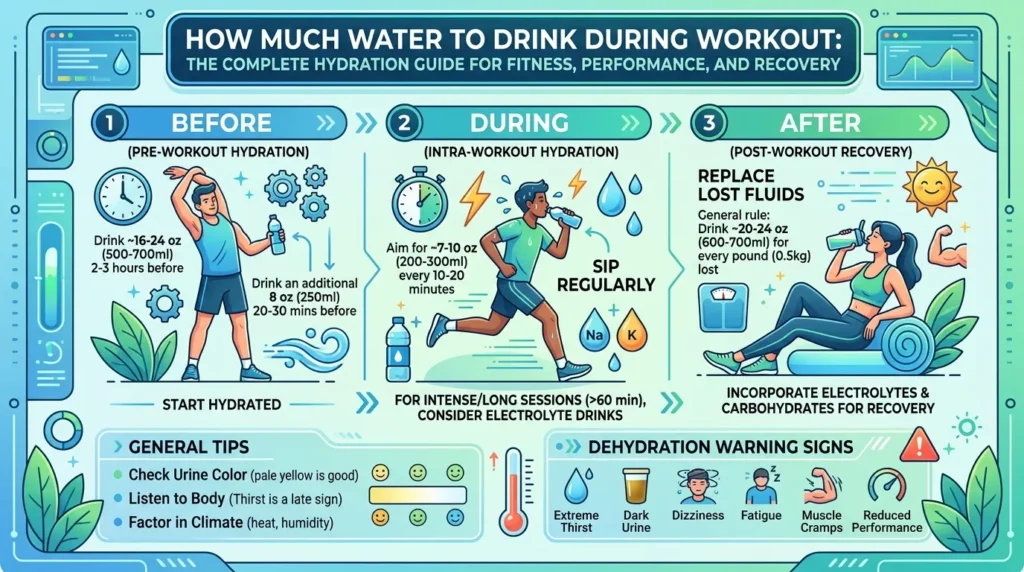
Quick Hydration Schedule
Before Workout
- Drink 16–20 ounces (500–600 ml) about 2 hours before exercise.
- Drink another 8–10 ounces (250–300 ml) about 15–20 minutes before training.
During Workout
- Drink 7–10 ounces every 10–20 minutes.
After Workout
- Drink 16–24 ounces (500–700 ml) for every pound lost through sweat.
Remember that hydration needs vary based on body size, workout intensity, climate, and sweat rate.
Why Regular Exercise Is Important
Fitness is about much more than physical appearance.
Physical Benefits
Regular exercise helps:
- Build muscle
- Burn fat
- Improve heart health
- Increase stamina
- Enhance flexibility
- Strengthen bones
Mental Benefits
Exercise also supports mental wellness by:
- Reducing stress
- Improving mood
- Increasing confidence
- Enhancing focus
- Promoting better sleep
Hydration helps maximize all these benefits by supporting optimal body function.
Different Types of Fitness Training and Hydration Needs
Different workouts place different hydration demands on the body.
Strength Training
Strength training involves resistance exercises designed to build muscle and strength.
Examples:
- Squats
- Bench presses
- Deadlifts
- Shoulder presses
Hydration helps maintain muscle performance and prevents fatigue.
Cardio Workouts
Cardio exercises increase heart rate and calorie burn.
Examples:
- Running
- Cycling
- Walking
- Swimming
Cardio sessions often result in greater sweat loss, increasing water needs.
HIIT Training
High-Intensity Interval Training alternates intense effort with recovery periods.
HIIT can cause significant sweating, making hydration especially important.
Weightlifting
Heavy lifting places stress on muscles and the nervous system.
Proper hydration supports strength output and recovery.
Functional Training
Functional workouts combine strength, mobility, and conditioning.
Water helps maintain endurance throughout these dynamic sessions.
Flexibility Exercises
Yoga and stretching routines may involve less sweating but still require hydration support.
Bodyweight Workouts
Exercises like push-ups, pull-ups, and lunges can be physically demanding and increase fluid needs.
Signs You Are Not Drinking Enough Water
Recognizing dehydration early can prevent performance decline.
Common Symptoms
- Dry mouth
- Headaches
- Dizziness
- Fatigue
- Muscle cramps
- Dark urine
- Reduced endurance
If these symptoms occur during exercise, hydration should be addressed immediately.
Benefits of Staying Hydrated During Workouts
Improved Exercise Performance
Hydrated muscles function more efficiently, helping you train harder and longer.
Better Muscle Function
Water supports proper muscle contractions and reduces cramping risk.
Enhanced Endurance
Adequate hydration helps maintain stamina during longer workouts.
Faster Recovery
Hydration supports nutrient delivery and waste removal.
Improved Focus
Dehydration can negatively impact concentration and mental performance.
Factors That Affect Water Needs
Body Size
Larger individuals generally require more water.
Workout Intensity
Harder workouts increase sweat production.
Exercise Duration
Longer workouts require more fluid replacement.
Climate Conditions
Hot and humid environments increase water loss.
Individual Sweat Rate
Some people naturally sweat more than others.
Common Gym Equipment and Hydration Considerations
Dumbbells
Used for strength training exercises.
Hydration supports muscle performance during lifting sessions.
Barbells
Barbell workouts often involve heavy compound movements that increase physical demands.
Treadmills
Running and walking on treadmills can lead to substantial sweat loss.
Resistance Machines
Machine workouts still require hydration, especially during full-body training.
Cable Machines
High-volume cable exercises can increase fluid requirements.
Exercise Bikes
Cycling workouts often involve extended cardiovascular effort.
Rowing Machines
Rowing combines strength and cardio, increasing hydration needs.
Smith Machines
Compound exercises performed on Smith machines can elevate sweat production.
Water vs Sports Drinks
When Water Is Enough
For workouts lasting less than 60 minutes, water is usually sufficient.
When Sports Drinks May Help
Sports drinks can be beneficial when:
- Workouts exceed 60–90 minutes
- Exercising in extreme heat
- Participating in endurance events
They provide:
- Electrolytes
- Sodium
- Potassium
- Carbohydrates
However, water remains the best hydration choice for most gym sessions.
Beginner Workout Tips for Safe Hydration
Carry a Water Bottle
Always keep water nearby during training.
Drink Consistently
Avoid waiting until you feel thirsty.
Monitor Urine Color
Light yellow urine generally indicates proper hydration.
Create a Routine
Schedule water intake before, during, and after workouts.
Listen to Your Body
Adjust hydration based on sweat rate and exercise demands.
Nutrition and Hydration: Working Together
Hydration works best when combined with proper nutrition.
Protein Intake
Protein supports muscle recovery and growth.
Good sources include:
- Chicken
- Fish
- Eggs
- Greek yogurt
- Lean beef
Healthy Carbohydrates
Carbohydrates provide energy for workouts.
Examples:
- Oats
- Rice
- Sweet potatoes
- Fruits
Healthy Fats
Healthy fats support overall health and hormone function.
Examples:
- Avocados
- Nuts
- Olive oil
Pre-Workout Nutrition and Hydration
Eating and drinking before exercise helps improve performance.
Good pre-workout options include:
- Oatmeal with fruit
- Banana and peanut butter
- Greek yogurt
- Whole-grain toast and eggs
Drink water alongside your meal for optimal hydration.
Post-Workout Recovery and Hydration
Recovery begins immediately after training.
Post-Workout Meal Ideas
- Protein shake and banana
- Chicken and rice
- Turkey sandwich
- Yogurt with berries
Rehydration Strategy
Replace fluids lost through sweat by drinking water gradually after exercise.
Sleep, Recovery, and Long-Term Fitness Success
Hydration alone is not enough for optimal results.
Importance of Sleep
Quality sleep supports:
- Muscle repair
- Recovery
- Hormone balance
- Energy restoration
Most adults should aim for:
- 7–9 hours of sleep each night
Rest Days
Rest allows the body to recover and adapt to training.
Combined with proper hydration, recovery improves overall performance and reduces injury risk.
Common Hydration Mistakes to Avoid
Drinking Too Little Water
Underhydration can reduce performance and recovery.
Waiting Until You’re Thirsty
Thirst often signals that dehydration has already started.
Ignoring Sweat Loss
Heavy sweaters need additional fluids.
Consuming Excessive Sugary Drinks
Water should remain the primary hydration source.
Neglecting Post-Workout Hydration
Recovery depends on replacing lost fluids.
Building Long-Term Hydration Habits
Successful fitness journeys rely on consistent habits.
Focus on:
- Drinking water regularly
- Carrying a water bottle
- Monitoring hydration levels
- Combining hydration with proper nutrition
- Maintaining recovery practices
Small daily habits create lasting fitness results.
Conclusion
Understanding how much water to drink during workout sessions is essential for maximizing performance, improving recovery, and supporting overall health. Most people benefit from drinking 7–10 ounces of water every 10–20 minutes during exercise, while also hydrating before and after workouts. However, individual needs vary depending on body size, workout intensity, duration, and environmental conditions. Proper hydration helps regulate body temperature, improve endurance, enhance muscle function, and reduce the risk of dehydration-related issues. When combined with consistent exercise, balanced nutrition, adequate sleep, and proper recovery, good hydration habits become a powerful tool for long-term fitness success. Make water a priority in your daily routine, and your body will reward you with better workouts, improved recovery, and greater overall wellness.