
Have you ever walked into a gym, headed straight to the weights, and started your workout without warming up? If so, you’re not alone. Many beginners—and even some experienced gym-goers—often skip warm-up exercises because they see them as unnecessary or time-consuming. However, a proper warm-up can be one of the most important parts of any fitness routine.
In today’s busy American lifestyle, people want efficient workouts that deliver results. Whether your goal is weight loss, muscle gain, improved athletic performance, or overall health, warming up properly helps prepare your body and mind for exercise. It increases blood flow, improves mobility, activates muscles, and reduces the risk of injuries.
Over the past few decades, fitness culture in the United States has evolved significantly. Modern training methods emphasize injury prevention, movement quality, and long-term health. As a result, warm-up exercises have become a standard part of professional training programs used by athletes, personal trainers, and fitness experts.
This complete guide explains everything you need to know about warm-up exercises before gym workouts. You’ll learn why warm-ups matter, the best exercises to perform, how to prepare for different workout styles, and how proper preparation can help you achieve better results safely and effectively.
What Is a Warm-Up?
A warm-up is a series of light movements and exercises performed before a workout to prepare the body for physical activity.
The Main Purpose of a Warm-Up
A warm-up helps:
- Increase blood circulation
- Raise body temperature
- Improve joint mobility
- Activate muscles
- Enhance workout performance
- Reduce injury risk
How Long Should a Warm-Up Last?
Most warm-ups should last between:
- 5 to 15 minutes for beginners
- 10 to 20 minutes for intense workouts
The length depends on your fitness level and workout type.
Why Fitness and Exercise Matter
Before discussing warm-ups in detail, it’s important to understand the role of fitness in everyday life.
What Is Fitness?
Fitness is the ability to perform daily activities with energy, strength, and endurance while maintaining good health.
Benefits of Regular Exercise
Regular exercise helps:
- Improve cardiovascular health
- Increase muscle strength
- Reduce body fat
- Improve flexibility
- Support mental well-being
- Boost energy levels
Why Consistency Is Important
Fitness results come from repeated effort over time. Consistency builds healthy habits and long-term success.
Why Warm-Up Exercises Are Essential Before Gym Workouts
Many people underestimate the importance of warming up.
Increased Blood Flow
Warm-ups increase circulation and deliver oxygen-rich blood to working muscles.
Improved Muscle Function
Prepared muscles contract more efficiently and perform better during exercise.
Better Joint Mobility
Warm-ups help joints move through a full range of motion.
Reduced Injury Risk
Cold muscles are more vulnerable to strains and injuries.
Improved Mental Focus
Warm-ups help you mentally prepare for your workout and improve concentration.
Types of Warm-Up Exercises
Not all warm-ups are the same.
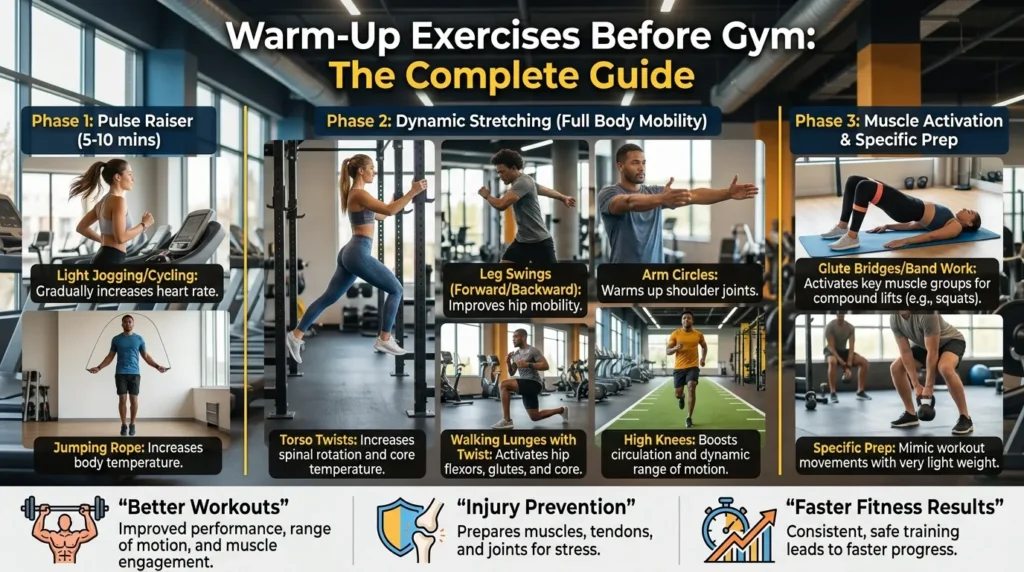
General Warm-Up
A general warm-up increases overall body temperature.
Examples:
- Walking
- Light jogging
- Cycling
- Jumping jacks
Dynamic Warm-Up
Dynamic movements prepare muscles and joints for exercise.
Examples:
- Arm circles
- Leg swings
- Walking lunges
- Hip rotations
Sport-Specific Warm-Up
These exercises mimic movements used during your workout.
Examples:
- Bodyweight squats before leg training
- Push-ups before chest workouts
- Light rowing before rowing workouts
Best Warm-Up Exercises Before Gym Workouts
Jumping Jacks
Jumping jacks quickly elevate heart rate and warm the entire body.
Benefits:
- Improves circulation
- Activates multiple muscle groups
- Increases body temperature
Perform for 30–60 seconds.
Arm Circles
Arm circles prepare the shoulders for upper-body training.
Benefits:
- Improves shoulder mobility
- Reduces stiffness
- Activates shoulder muscles
Leg Swings
Leg swings improve lower-body flexibility and mobility.
Benefits:
- Loosen hip joints
- Activate hamstrings
- Improve range of motion
Bodyweight Squats
Bodyweight squats prepare the legs and core.
Benefits:
- Activates glutes
- Warms leg muscles
- Improves movement patterns
Walking Lunges
Walking lunges are excellent for lower-body activation.
Benefits:
- Improves balance
- Activates multiple muscle groups
- Enhances hip mobility
High Knees
High knees increase heart rate and improve coordination.
Benefits:
- Boost cardiovascular readiness
- Activate core muscles
- Improve athletic performance
Arm Crossovers
These help loosen chest and shoulder muscles before upper-body workouts.
Hip Rotations
Hip mobility is essential for many gym exercises.
Benefits:
- Improves movement quality
- Reduces stiffness
- Supports squat performance
Warm-Up Routines for Different Workout Styles
Strength Training Warm-Up
Recommended exercises:
- Jumping jacks
- Arm circles
- Bodyweight squats
- Light resistance exercises
Duration:
- 10 minutes
Cardio Workout Warm-Up
Recommended exercises:
- Brisk walking
- Light cycling
- Dynamic stretching
Duration:
- 5–10 minutes
HIIT Training Warm-Up
HIIT requires more preparation because of its intensity.
Include:
- High knees
- Leg swings
- Arm circles
- Walking lunges
Duration:
- 10–15 minutes
Weightlifting Warm-Up
Before lifting heavy weights:
- Perform mobility drills
- Use lighter warm-up sets
- Focus on technique
Understanding Different Workout Styles
Strength Training
Strength training builds muscle and increases overall strength.
Examples:
- Squats
- Deadlifts
- Bench press
- Rows
Cardio Workouts
Cardio improves heart health and endurance.
Examples:
- Running
- Cycling
- Rowing
- Walking
HIIT Workouts
HIIT combines intense exercise intervals with short recovery periods.
Functional Training
Functional training improves movements used in everyday life.
Flexibility Exercises
Stretching and mobility work improve movement quality and reduce stiffness.
Bodyweight Workouts
These exercises use your own body weight as resistance.
Examples:
- Push-ups
- Pull-ups
- Squats
- Planks
Physical Benefits of Warm-Up Exercises
Improved Workout Performance
Warm muscles perform better than cold muscles.
Better Muscle Activation
Activated muscles produce more force and stability.
Enhanced Flexibility
Warm-ups improve movement efficiency and range of motion.
Reduced Muscle Soreness
Although soreness cannot be eliminated entirely, proper preparation can help reduce discomfort.
Mental Benefits of Warm-Up Exercises
Improved Focus
Warm-ups allow you to mentally transition into workout mode.
Reduced Stress
Light movement helps relieve tension and improve mood.
Increased Confidence
Feeling physically prepared often leads to better workout performance.
Common Gym Equipment and Their Uses
Dumbbells
Used for:
- Strength training
- Muscle building
- Balance development
Barbells
Ideal for:
- Heavy lifting
- Compound exercises
- Strength development
Treadmills
Excellent for:
- Walking
- Running
- Cardiovascular conditioning
Resistance Machines
Helpful for beginners learning exercise form.
Cable Machines
Provide constant resistance throughout movements.
Exercise Bikes
Low-impact cardio option suitable for all fitness levels.
Rowing Machines
Provide a full-body cardiovascular workout.
Smith Machines
Offer added stability during lifting exercises.
Nutrition Before a Workout
A proper warm-up works even better when combined with good nutrition.
Pre-Workout Meals
Choose foods such as:
- Oatmeal
- Bananas
- Whole-grain toast
- Greek yogurt
Benefits
These foods provide:
- Energy
- Better focus
- Improved performance
Protein and Muscle Preparation
Protein supports:
- Muscle repair
- Recovery
- Growth
Good protein sources include:
- Eggs
- Chicken
- Fish
- Greek yogurt
- Lean beef
Hydration Before Exercise
Water is critical for workout performance.
Benefits of Hydration
- Improved energy
- Better endurance
- Reduced fatigue
- Enhanced recovery
Daily Hydration Goal
Most active adults benefit from:
- 3–4 liters of water daily
Recovery After Workouts
Warm-ups are important, but recovery is equally essential.
Post-Workout Recovery Tips
- Stretch after exercise
- Rehydrate
- Eat protein-rich meals
- Get adequate sleep
Active Recovery Options
- Walking
- Yoga
- Light cycling
- Mobility exercises
Importance of Sleep
Sleep supports:
- Muscle recovery
- Hormone balance
- Mental focus
- Physical performance
Aim for:
- 7–9 hours of sleep every night
Common Warm-Up Mistakes
Skipping Warm-Ups Entirely
This increases injury risk and reduces performance.
Performing Static Stretching First
Long static stretches are usually better after workouts.
Rushing Through the Warm-Up
Take enough time to prepare properly.
Using Too Much Intensity
Warm-ups should prepare the body, not exhaust it.
Beginner Tips for Safe Gym Training
Start Slowly
Focus on learning proper movement patterns.
Use Correct Form
Good technique helps prevent injuries.
Listen to Your Body
Avoid pushing through pain.
Stay Consistent
Regular exercise produces the best long-term results.
Conclusion
Warm-up exercises before gym workouts are one of the simplest yet most effective ways to improve performance, prevent injuries, and maximize fitness results. Whether your goal is weight loss, muscle building, increased strength, or overall wellness, preparing your body before exercise should never be overlooked.
A proper warm-up increases blood flow, activates key muscles, improves flexibility, and prepares your mind for training. Combined with consistent workouts, proper nutrition, hydration, recovery, and quality sleep, warm-up routines help create a strong foundation for long-term fitness success.
Remember that fitness is a journey built on smart habits. Spending just a few extra minutes warming up can make every workout safer, more productive, and more enjoyable. Make warm-up exercises a permanent part of your routine, and your body will thank you for it.